4/20 grew from humble roots to marijuana’s high holiday
Advertisement
Read this article for free:
or
Already have an account? Log in here »
To continue reading, please subscribe:

Digital Subscription
One year of digital access for only $205*
- Enjoy unlimited reading on winnipegfreepress.com
- Read the E-Edition, our digital replica newspaper
- Access News Break, our award-winning app
- Play interactive puzzles
*First annual payment billed as $205.00 + GST for one year. This annual subscription will automatically renew at $233.00 + GST every 52 weeks (10% off the regular annual price of $259.35). Offer available to new and qualified returning subscribers only. Cancel any time.
To continue reading, please subscribe:
Add Free Press access to your Brandon Sun subscription for only an additional
$1 for the first 4 weeks*
- Enjoy unlimited reading on winnipegfreepress.com
- Read the E-Edition, our digital replica newspaper
- Access News Break, our award-winning app
- Play interactive puzzles
*Your next Brandon Sun subscription payment will increase by $1.00 and you will be charged $17.95 plus GST for four weeks. After four weeks, your payment will increase to $24.95 plus GST every four weeks.
Read unlimited articles for free today:
or
Already have an account? Log in here »
Hey there, time traveller!
This article was published 19/04/2024 (902 days ago), so information in it may no longer be current.
SEATTLE (AP) — Saturday marks marijuana culture’s high holiday, 4/20, when college students gather — at 4:20 p.m. — in clouds of smoke on campus quads and pot shops in legal-weed states thank their customers with discounts.
This year’s edition provides an occasion for activists to reflect on how far their movement has come, with recreational pot now allowed in nearly half the states and the nation’s capital. Many states have instituted “social equity” measures to help communities of color, harmed the most by the drug war, reap financial benefits from legalization. And the White House has shown an openness to marijuana reform.
Here’s a look at 4/20’s history:
WHY 4/20?
The origins of the date, and the term “420” generally, were long murky. Some claimed it referred to a police code for marijuana possession or that it derived from Bob Dylan’s “Rainy Day Women No. 12 & 35,” with its refrain of “Everybody must get stoned” — 420 being the product of 12 times 35.
But the prevailing explanation is that it started in the 1970s with a group of bell-bottomed buddies from San Rafael High School, in California’s Marin County north of San Francisco, who called themselves “the Waldos.” A friend’s brother was afraid of getting busted for a patch of cannabis he was growing in the woods at nearby Point Reyes, so he drew a map and gave the teens permission to harvest the crop, the story goes.
During fall 1971, at 4:20 p.m., just after classes and football practice, the group would meet up at the school’s statue of chemist Louis Pasteur, smoke a joint and head out to search for the weed patch. They never did find it, but their private lexicon — “420 Louie” and later just “420” — would take on a life of its own.
The Waldos saved postmarked letters and other artifacts from the 1970s referencing “420,” which they now keep in a bank vault, and when the Oxford English Dictionary added the term in 2017, it cited some of those documents as the earliest recorded uses.
HOW DID ‘420’ SPREAD?
A brother of one of the Waldos was a close friend of Grateful Dead bassist Phil Lesh, as Lesh once confirmed in an interview with the Huffington Post, now HuffPost. The Waldos began hanging out in the band’s circle and the slang spread.
Fast-forward to the early 1990s: Steve Bloom, a reporter for the cannabis magazine High Times, was at a Dead show when he was handed a flyer urging people to “meet at 4:20 on 4/20 for 420-ing in Marin County at the Bolinas Ridge sunset spot on Mt. Tamalpais.” High Times published it.
“It’s a phenomenon,” one of the Waldos, Steve Capper, now 69, once told The Associated Press. “Most things die within a couple years, but this just goes on and on. It’s not like someday somebody’s going to say, ‘OK, Cannabis New Year’s is on June 23rd now.’”
While the Waldos came up with the term, the people who made the flier distributed at the Dead show — and effectively turned 4/20 into a holiday — remain unknown.
HOW IS IT CELEBRATED?
With weed, naturally.
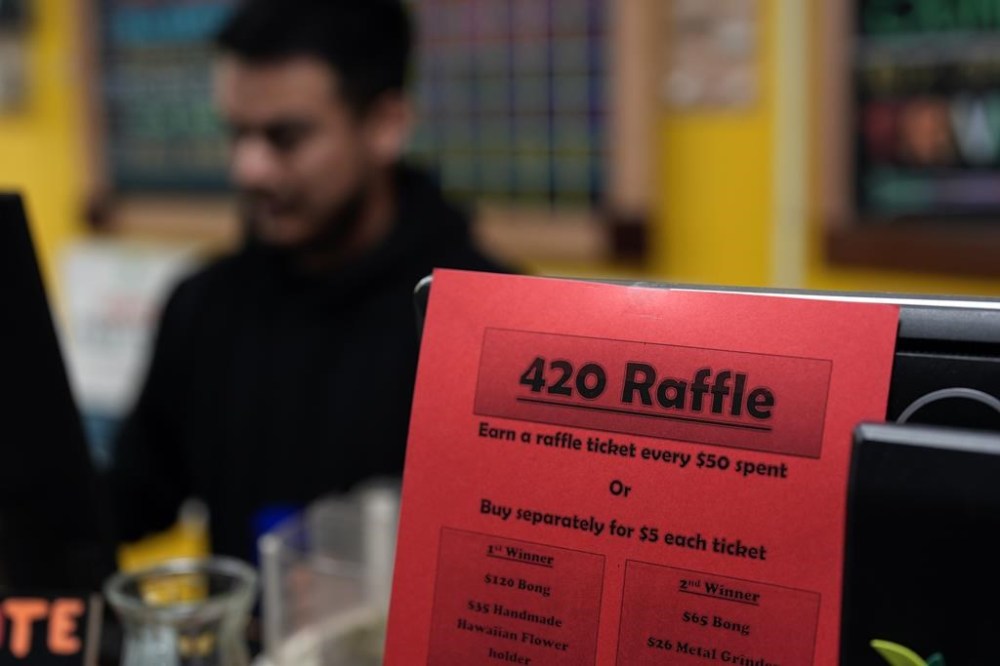
Some celebrations are bigger than others: The Mile High 420 Festival in Denver, for example, typically draws thousands and describes itself as the largest free 4/20 event in the world. Hippie Hill in San Francisco’s Golden Gate Park has also attracted massive crowds, but the gathering was canceled this year, with organizers citing a lack of financial sponsorship and city budget cuts.
College quads and statehouse lawns are also known for drawing 4/20 celebrations, with the University of Colorado Boulder historically among the largest, though not so much since administrators banned the annual smokeout over a decade ago.
Some breweries make beers that are 420-themed, but not laced, including SweetWater Brewing in Atlanta, which is throwing a 420 music festival this weekend and whose founders went to the University of Colorado.
Lagunitas Brewing in Petaluma, California, releases its “Waldos’ Special Ale” every year on 4/20 in partnership with the term’s coiners. That’s where the Waldos will be this Saturday to sample the beer, for which they picked out “hops that smell and taste like the dankest marijuana,” one Waldo, Dave Reddix, said via email.
4/20 has also become a big industry event, with vendors gathering to try each other’s wares.
THE POLITICS
The number of states allowing recreational marijuana has grown to 24 after recent legalization campaigns succeeded in Ohio, Minnesota and Delaware. Fourteen more states allow it for medical purposes, including Kentucky, where medical marijuana legislation that passed last year will take effect in 2025. Additional states permit only products with low THC, marijuana’s main psychoactive ingredient, for certain medical conditions.
But marijuana is still illegal under federal law. It is listed with drugs such as heroin under Schedule I of the Controlled Substances Act, meaning it has no federally accepted medical use and a high potential for abuse.
The Biden administration, however, has taken some steps toward marijuana reform. The president has pardoned thousands of people who were convicted of “simple possession” on federal land and in the District of Columbia.
The Department of Health and Human Services last year recommended to the Drug Enforcement Administration that marijuana be reclassified as Schedule III, which would affirm its medical use under federal law.
According to a Gallup poll last fall, 70% of adults support legalization, the highest level yet recorded by the polling firm and more than double the roughly 30% who backed it in 2000.
Vivian McPeak, who helped found Seattle’s Hempfest more than three decades ago, reflected on the extent to which the marijuana industry has evolved during his lifetime.

“It’s surreal to drive by stores that are selling cannabis,” he said. “A lot of people laughed at us, saying, ‘This will never happen.’”
WHAT DOES IT MEAN?
McPeak described 4/20 these days as a “mixed bag.” Despite the legalization movement’s progress, many smaller growers are struggling to compete against large producers, he said, and many Americans are still behind bars for weed convictions.
“We can celebrate the victories that we’ve had, and we can also strategize and organize to further the cause,” he said. “Despite the kind of complacency that some people might feel, we still got work to do. We’ve got to keep burning that shoe leather until we get everybody out of jails and prisons.”
For the Waldos, 4/20 signifies above all else a good time.
“We’re not political. We’re jokesters,” Capper has said. “But there was a time that we can’t forget, when it was secret, furtive. … The energy of the time was more charged, more exciting in a certain way.
“I’m not saying that’s all good — it’s not good they were putting people in jail,” he continued. “You wouldn’t want to go back there.”
___
Associated Press writer Claire Rush contributed from Portland, Oregon.