Experts fear ‘catastrophic’ college declines thanks to botched FAFSA rollout
Advertisement
Read this article for free:
or
Already have an account? Log in here »
To continue reading, please subscribe:

Digital Subscription
One year of digital access for only $205*
- Enjoy unlimited reading on winnipegfreepress.com
- Read the E-Edition, our digital replica newspaper
- Access News Break, our award-winning app
- Play interactive puzzles
*First annual payment billed as $205.00 + GST for one year. This annual subscription will automatically renew at $233.00 + GST every 52 weeks (10% off the regular annual price of $259.35). Offer available to new and qualified returning subscribers only. Cancel any time.
To continue reading, please subscribe:
Add Free Press access to your Brandon Sun subscription for only an additional
$1 for the first 4 weeks*
- Enjoy unlimited reading on winnipegfreepress.com
- Read the E-Edition, our digital replica newspaper
- Access News Break, our award-winning app
- Play interactive puzzles
*Your next Brandon Sun subscription payment will increase by $1.00 and you will be charged $17.95 plus GST for four weeks. After four weeks, your payment will increase to $24.95 plus GST every four weeks.
Read unlimited articles for free today:
or
Already have an account? Log in here »
Hey there, time traveller!
This article was published 01/05/2024 (886 days ago), so information in it may no longer be current.
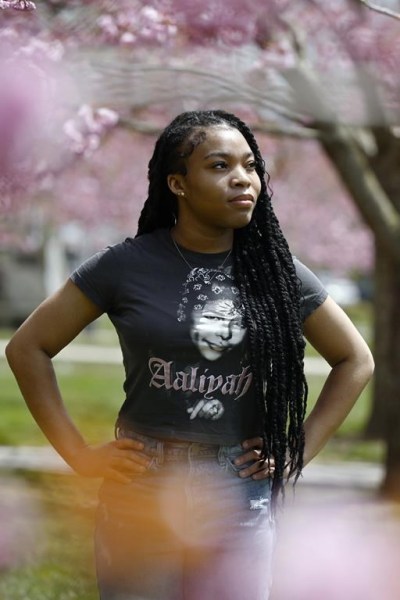
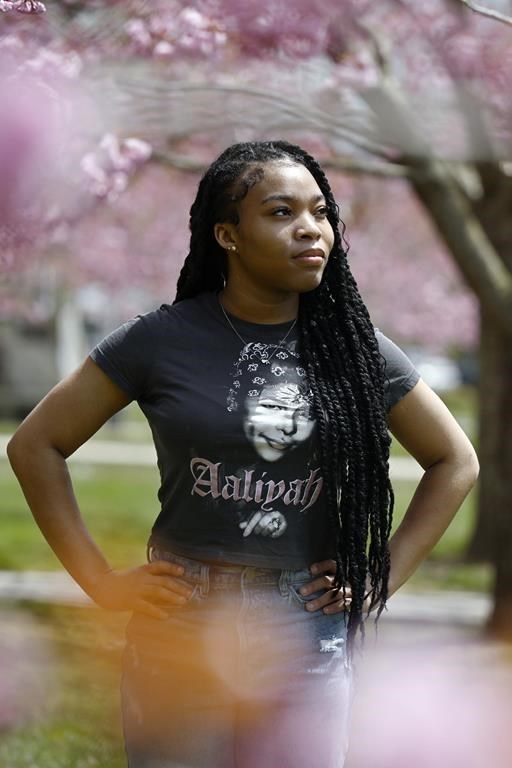
WASHINGTON (AP) — The last thing standing between Ashnaelle Bijoux and her college dream is the FAFSA form — a financial aid application that’s supposed to help students go to college, but is blocking her instead. She has tried to submit it over and over. Every time, it fails to go through.
“I feel overwhelmed and stressed out,” said Bijoux, 19. She came close to tears the last time she tried the form. “I feel like I’m being held back.”
Normally a time of celebration for high school seniors, this spring has been marred by the federal government’s botched rollout of the new FAFSA application. By May 1, students usually know where they’re headed to college in the fall. This year, most still haven’t received financial aid offers. Three months before the start of fall classes, many don’t know where they’re going to college, or how they’re going to pay for it.
“We’re asking them to make probably one of the biggest financial decisions — and decisions that will have the biggest implications on their lives going forward — without all of the information,” said Justin Draeger, president and CEO of the National Association of Student Financial Aid Administrators.
The FAFSA, or Free Application for Federal Student Aid, went through a massive overhaul that was supposed to make it simpler and shorter. But a series of blunders by the Education Department made it harder than ever, delaying college decisions by months and raising fears that hundreds of thousands of students will forgo college entirely.
Across the United States, the number of students who have successfully submitted the FAFSA is down 29% from this time last year, and it’s even worse at schools with more low-income students, according to the National College Attainment Network.
The group’s CEO, Kim Cook, warned members of Congress this month about a potentially “catastrophic” drop in college enrollments that would make the decreases of the pandemic seem mild.
For Bijoux, of Norwich, Connecticut, the FAFSA problems threaten to undermine the promise of higher education.
To her, college is a chance to seize the opportunities that weren’t available to her mother, who immigrated from Haiti to the U.S. as an adult. Bijoux hopes to become a therapist and set a positive example for her three younger brothers.
If her FAFSA goes through, she should be eligible for enough financial aid to help with the $ 13,000-a-year tuition at Southern Connecticut State University. If not, she might go to a local community college, but even that would require loans if she can’t complete the FAFSA.
“That’s why it hurts, because it’s like you work so hard to go somewhere and do something and make something of yourself,” Bijoux said. “I thought I would start at a four-year (college) and then work hard continuously, like I’ve been doing basically my whole life. But that’s not the case.”
The updated FAFSA form has one section filled out by students and another by their parents. But when Bijoux finishes her part, nothing shows up on her mom’s online account. She keeps trying, but nothing seems to change.
Similar problems have been reported across the country, along with numerous other bugs that the Education Department has scrambled to fix. Families who call for customer service have faced long wait times or say the call center hung up on them.
It “drains all the momentum” from families working to send their children to college, especially those navigating the process for the first time, said Anne Zinn, a counselor at Norwich Free Academy, where Bijoux goes to school.
“I can only say so many times, ‘Just be patient, just be patient,’ before they throw their hands up and they’re like, ‘Why am I doing this? I’m just gonna go get a job,'” she said.
The rollout has attracted bipartisan criticism in Congress, and it’s being investigated at the request of Republicans. Last week, Richard Cordray, the federal student loan chief who oversaw the FAFSA update, announced he’s stepping down at the end of June.
For colleges, too, the delays pose a major threat.
Enrollment decreases like those being projected now could put many small colleges out of business, or necessitate deep cuts in staff. Some colleges are pushing for emergency relief just to stay afloat, said Angel Pérez, CEO of the National Association for College Admission Counseling.
“If they don’t get checks from the federal government to basically get them through next year, they will not survive,” Pérez said.
The FAFSA has been the linchpin of student financial aid for decades. It’s used to determine eligibility for the federal Pell grant, a scholarship for low-income students, and it’s required to receive federal student loans. Colleges and states also use FAFSA to distribute their own scholarships.
FAFSA had long been maligned for being tedious, difficult and intimidating to families without college experience. Congress passed legislation in 2020 meant to simplify the form. The Education Department was ordered to reduce the number of questions from more than 100 to about 40, and change the formula to expand aid to more students.
Problems started piling up as soon as the new form went online in December, already months overdue.
The first applications were incorrectly processed using an outdated calculation for inflation. Later, a federal contractor miscalculated a different formula on more than 200,000 applications. Each mistake added to delays, leaving students waiting longer to hear anything about financial aid.
Even more worrisome is a misstep that blocked students from finishing the form if they have a parent without a Social Security number. Advocates say the system locked out hundreds of thousands of students who are U.S. citizens or permanent residents but whose parents are not.
The Education Department on Tuesday said it’s giving those parents a new way to enter their tax information manually. But as recently as this week, some students said they were still blocked from submitting the form.
Federal education officials say they’re addressing lingering bugs but making progress. More than 8 million student applications have now been processed and sent to colleges, the agency said, and new applications are being processed within three days.
Still, the wait is far from over. It usually takes weeks for schools to prepare financial aid offers. Some colleges have extended decision deadlines to give students more time to weigh their options. But some stuck to May 1, forcing students to choose a college — and make a nonrefundable payment to hold their spot — without knowing all their scholarship options.
In West Virginia, Gov. Jim Justice on Tuesday declared a state of emergency that allows students to receive state scholarships without having their FAFSA processed by the federal government. West Virginia has the lowest number of college graduates in the nation, and the state’s high school FAFSA completion rates are currently down nearly 40%, said Justice, a Republican.
“Really and truly, a lot of kids are sitting on the sidelines … wondering, ‘Am I going to be able to go to college?’ ” he said during a news briefing.
In Baltimore, Camryn Carter is waiting to find out if he’ll get a full ride to the University of Maryland or face tens of thousands of dollars in student loans.
A top student and captain of his baseball and wrestling teams, Carter sees college as a step up in life. He thinks back to the times in the grocery store line when he had to put items back on the shelf because his mom couldn’t afford the bill. A college degree would give him the stability he didn’t always have, the 18-year-old said.
But when he looks at tuition, it’s intimidating. Along with Maryland, he’s also considering McDaniel College, a private school in Maryland. If he enrolls there, he expects to borrow almost $30,000 a year.

“I try to make the best decisions now so I can have a good future,” he said. “I’m a little nervous that things won’t work out. But I’m faithful.”
__
Leah Willingham contributed reporting from Charleston, West Virginia.
__
The Associated Press’ education coverage receives financial support from multiple private foundations. AP is solely responsible for all content. Find AP’s standards for working with philanthropies, a list of supporters and funded coverage areas at AP.org.