Armenians, Hmong and other groups feel US race and ethnicity categories don’t represent them
Advertisement
Read this article for free:
or
Already have an account? Log in here »
To continue reading, please subscribe:

Digital Subscription
One year of digital access for only $205*
- Enjoy unlimited reading on winnipegfreepress.com
- Read the E-Edition, our digital replica newspaper
- Access News Break, our award-winning app
- Play interactive puzzles
*First annual payment billed as $205.00 + GST for one year. This annual subscription will automatically renew at $233.00 + GST every 52 weeks (10% off the regular annual price of $259.35). Offer available to new and qualified returning subscribers only. Cancel any time.
To continue reading, please subscribe:
Add Free Press access to your Brandon Sun subscription for only an additional
$1 for the first 4 weeks*
- Enjoy unlimited reading on winnipegfreepress.com
- Read the E-Edition, our digital replica newspaper
- Access News Break, our award-winning app
- Play interactive puzzles
*Your next Brandon Sun subscription payment will increase by $1.00 and you will be charged $17.95 plus GST for four weeks. After four weeks, your payment will increase to $24.95 plus GST every four weeks.
Read unlimited articles for free today:
or
Already have an account? Log in here »
Hey there, time traveller!
This article was published 27/05/2024 (856 days ago), so information in it may no longer be current.
The federal government recently reclassified race and ethnicity groups in an effort to better capture the diversity of the United States, but some groups feel the changes miss the mark.
Hmong, Armenian, Black Arab and Brazilian communities in the U.S. say they are not represented accurately in the official numbers. While the revisions were widely applauded, these communities say the changes have created a tension between how the federal government classifies them versus how they identify themselves.
The groups say money, political power and even health could be at stake. Being lumped into the wrong column can mean a gain or loss of government funds that are distributed based on data. For some, it’s about their identity and feeling seen by their own country.
The Office of Management and Budget said the working group that oversaw the revisions held 94 “listening sessions” with many advocacy groups, academics and the general public, and it will continue to reach out to communities.
HMONG AND THE SECRET WAR
During the Vietnam War and unbeknownst to the American public, the CIA recruited Lao and Hmong people to fight the spread of communism throughout Southeast Asia. Tens of thousands of Hmong soldiers died while others fled to the U.S. as a result of what became known as the “secret war.”
By the 1970s, many Hmong had resettled in Minnesota, Wisconsin and central California. Today, Hmong in the U.S. number more than 300,000. Some states recognize Hmong and Lao veterans with annual ceremonies, and in April, the Wisconsin governor signed a law mandating that Hmong American history be taught in schools.
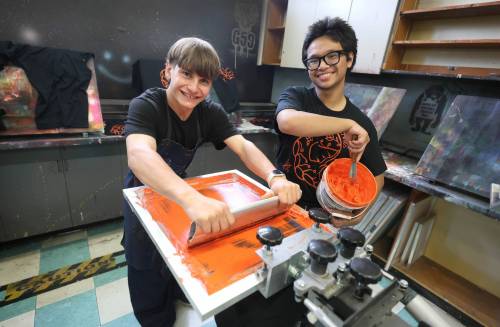
Given their history fighting in that region for the U.S., many Hmong feel strongly that they should be classified as Southeast Asian. But because China is considered the Hmong ancestral homeland, the U.S. Census Bureau categorized them as East Asian after the 2020 census.
“That has been very hurtful to our elders and to our veterans who sacrificed so much to get us here to this country after everything they did to help the U.S. during the Vietnam War,” said May yer Thao, president and CEO of the St. Paul, Minnesota-based Hmong American Partnership.
The East Asian label also pains them because the Hmong were oppressed in China as an ethnic minority and sought refuge in Cambodia, Laos and Vietnam, according to Quyên Dinh, executive director of the Washington, D.C.-based Southeast Asia Resource Action Center.
Those who object to the classification also have a practical concern: the East Asian grouping could hide socioeconomic disparities between Hmong and other Asian households that need to be addressed. The per capita income of Hmong was almost $26,000, while it was more than $53,000 for Asians overall, according to the 2022 American Community Survey.
“We are still one of the most impoverished communities in this nation,” Thao said.
The Census Bureau says it’s working with the Hmong community to improve their classification.
THE EXCLUDED BACKGROUNDS
When the government revised its race and ethnicity standards in March — it’s first major alteration since 1997 — its seven categories included a new one, Middle Eastern or North African, or MENA. The revisions also encouraged detailed data collection about respondents’ backgrounds, such as African American, Jamaican and Haitian under the Black category.
Missing from the list of backgrounds under the new MENA category: Black Arabs from such countries as Somalia and Sudan, and Armenians. The groups were left out after a 2015 field test by the Census Bureau found that most Armenians still identified as white and most Somali and Sudanese respondents identified as Black even when MENA was an option.
Some advocates said the decision to omit Black Arabs from being included in the MENA category was based on outdated research.
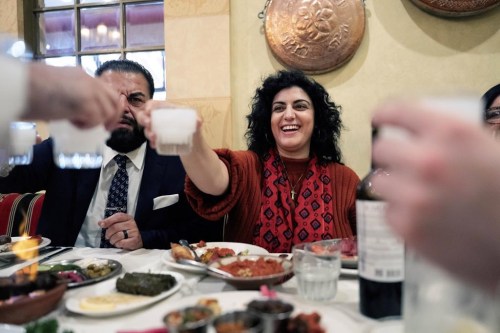
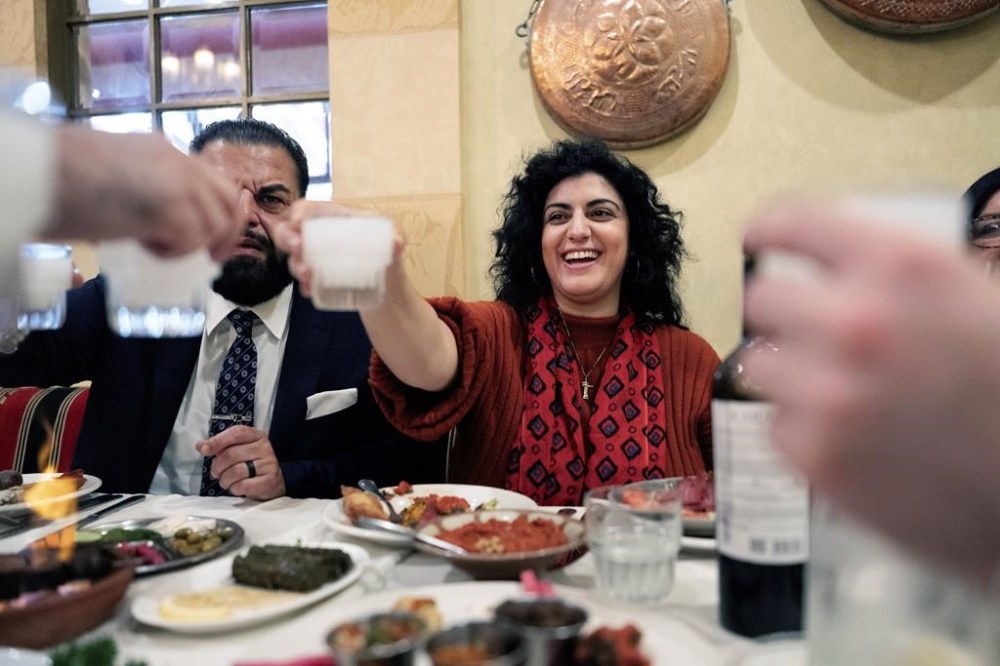
For many Armenian Americans, not having their own category amounts to an existential threat as a large part of their diaspora’s culture is now concentrated in the United States. Ethnic Armenians also have communities around Europe and the Middle East, in particular Lebanon.
Many are descendants of those who fled the 1915 campaign by Ottoman Turks in which some 1.5 million Armenians died in massacres, deportations and forced marches. The atrocities, which emptied many ethnic areas in eastern Turkey, are widely viewed by historians as genocide. Turkey rejects the description of genocide, saying the toll has been inflated and that those killed were victims of civil war and unrest during World War I.
Without Armenian inclusion in the MENA subcategories, many will likely categorize themselves as being from a different country. That could diminish their official numbers and reduce their power when it comes to redrawing political districts in places with large Armenian communities, said Sophia Armen, chair of the Census Taskforce of the Armenian National Committee of America-Western Region.
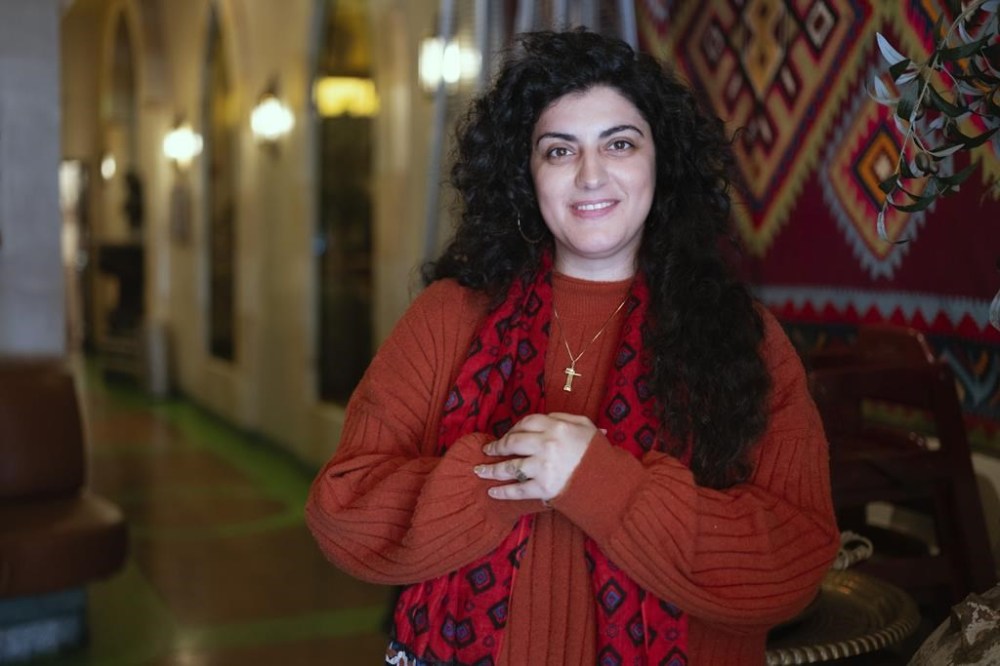
“We will now be undercounted by potentially hundreds of thousands of people,” Armen said. “It spells out a very real destruction of Armenian identity in the next two generations.”
During the last redistricting round following the 2020 census, Armenians in greater Los Angeles — which has the largest concentration of Armenians outside Armenia — were almost split up into different city districts, but the redistricting plan was modified after they sounded the alarm. There are an estimated 460,000 Armenian Americans in the U.S., with half living in California, according to the 2022 American Community Survey.
Being identified in the data correctly also is important to local health departments. It can influence anything from vaccination outreach in the proper language to tailoring health campaigns for specific communities.
Armenian Americans, for instance, are more likely to suffer from hypertension than the general population, but there’s not a lot of data.
MANY BRAZILIANS IDENTIFY AS HISPANIC
A coding error last year in an annual Census Bureau survey offered unprecedented insight into how large numbers of Brazilians in the U.S. identify as Hispanic or Latino.
An analysis by Pew Research Center showed that the coding mistake revealed at least 416,000 Brazilians, or more than two-thirds of Brazilians in the U.S., also identified as Hispanic in the 2020 American Community Survey.
Usually, if someone marks Hispanic and Brazilian on the survey, they are recoded as “not Hispanic” when the numbers are crunched.
Not including Brazilians, or Haitians for that matter, in the definition of Hispanic or Latino, means that large numbers of Afro-Latinos aren’t counted, Michelle Bueno Vásquez, a Ph.D. candidate in political science at Northwestern University, wrote the Office of Management and Budget.
“The OMB as it stands fails Latinos, especially Afro-Latinos who continually suffer double discrimination and marginalization, on top of statistical invisibility, in the United States,” she said.
Researching the impacts of categorizing Brazilians as Hispanic was among the recommendations a Census Bureau advisory committee made last month.
“Policy is driven by data, first and foremost,” Armen said of people who feel missed in the classifications. “It just seems like we are purposely being ignored.”
___
Follow Mike Schneider on X, formerly known as Twitter: @MikeSchneiderAP. Tang is a Phoenix-based member of AP’s Race and Ethnicity team. Follow her on X at @ttangAP.