Alzheimer’s drug that can slow disease gets backing from FDA advisers

Advertisement

Advertise with us

WASHINGTON (AP) — A closely watched Alzheimer's drug from Eli Lilly won the backing of federal health advisers on Monday, setting the stage for the treatment's expected approval for people with mild dementia caused by the brain-robbing disease.

Read this article for free:


By clicking the button above, an account will be created and you will begin to receive some of our recommended newsletters. You may opt out of any newsletter by visiting your Email and Communication Preferences page or by clicking "unsubscribe" at the bottom of any email.

or

Already have an account? Log in here »

To continue reading, please subscribe:

Digital Subscription

One year of digital access for only $1.44 a week*

  • Enjoy unlimited reading on winnipegfreepress.com
  • Read the E-Edition, our digital replica newspaper
  • Access News Break, our award-winning app
  • Play interactive puzzles

*Billed as $5.77 plus GST every four weeks. After 52 weeks, price increases to the regular rate of $19.95 plus GST every four weeks. Offer available to new and qualified returning subscribers only. Cancel any time.

To continue reading, please subscribe:

Add Free Press access to your Brandon Sun subscription for only an additional

$1 for the first 4 weeks*

  • Enjoy unlimited reading on winnipegfreepress.com
  • Read the E-Edition, our digital replica newspaper
  • Access News Break, our award-winning app
  • Play interactive puzzles
Start now

*Your next Brandon Sun subscription payment will increase by $1.00 and you will be charged $17.95 plus GST for four weeks. After four weeks, your payment will increase to $24.95 plus GST every four weeks.

Hey there, time traveller!
This article was published 10/06/2024 (865 days ago), so information in it may no longer be current.

WASHINGTON (AP) — A closely watched Alzheimer’s drug from Eli Lilly won the backing of federal health advisers on Monday, setting the stage for the treatment’s expected approval for people with mild dementia caused by the brain-robbing disease.

Food and Drug Administration advisers voted unanimously that the drug’s ability to slow the disease outweighs its risks, including side effects like brain swelling and bleeding that will have to be monitored.

“I thought the evidence was very strong in the trial showing the effectiveness of the drug,” said panel member Dean Follmann, a National Institutes of Health statistician.
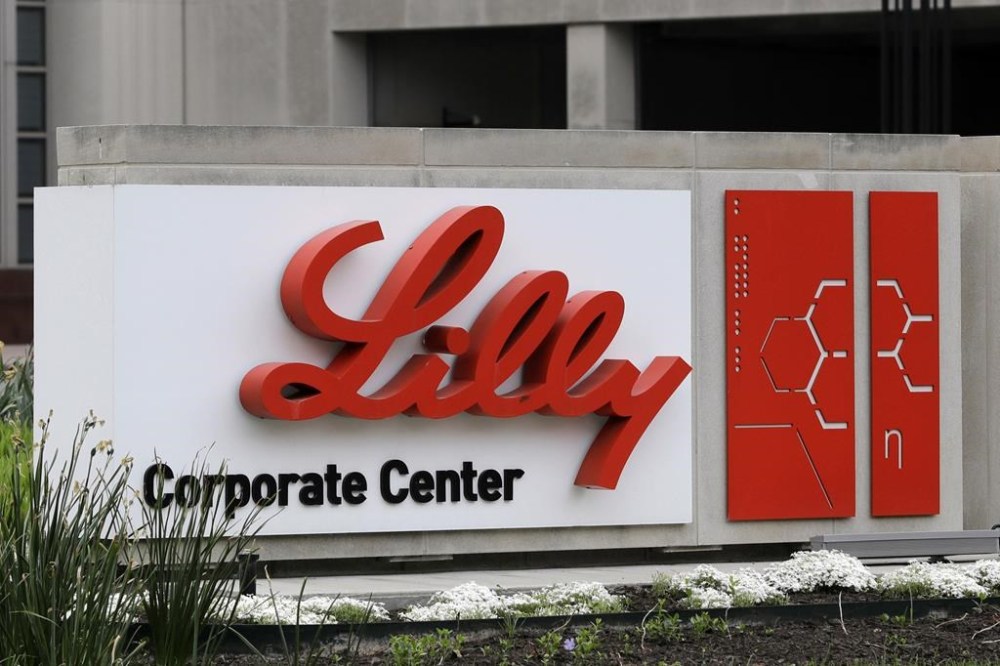
FILE - A sign for Eli Lilly & Co. sits outside their corporate headquarters in Indianapolis on April 26, 2017. A closely watched Alzheimer's drug from Eli Lilly won the backing of federal health advisers on Monday, June 10, 2024, setting the stage for the treatment's expected approval for people with mild dementia caused by the brain-robbing disease. (AP Photo/Darron Cummings, File)

The FDA will make the final decision on approval later this year. If the agency agrees with the panel’s recommendation, the drug, donanemab, would only be the second Alzheimer’s drug cleared in the U.S. that’s been shown to convincingly slow cognitive decline and memory problems due to Alzheimer’s. The FDA approved a similar infused drug, Leqembi, from Japanese drugmaker Eisai last year.

The slowdown seen with both drugs amounts to several months and experts disagree on whether patients or their loved ones will be able to detect the difference.

But Lilly’s approach to studying its once-a-month treatment prompted questions from FDA reviewers.

Patients in the company’s study were grouped based on their levels of a brain protein, called tau, that predicts severity of cognitive problems. That led FDA to question whether patients might need to be screened via brain scans for tau before getting the drug. But most panelists thought there was enough evidence of the drug’s benefit to prescribe it broadly, without screening for the protein.

“Imposing a requirement for tau imaging is not necessary and would raise serious practical and access concerns to the treatment,” said Dr. Thomas Montine of Stanford University, who chaired the panel and summarized its opinion.

At a high level, Lilly’s results mirrored those of Leqembi, with both medications showing a modest slowing of cognitive problems in patients with early-stage Alzheimer’s. The Indianapolis-based company conducted a 1,700-patient study showing patients who received monthly IV infusions of its drug declined about 35% more slowly than those who got a sham treatment.

The FDA had been widely expected to approve the drug in March. But instead the agency said it would ask its panel of neurology experts to publicly review the company’s data, an unexpected delay that surprised analysts and investors.

Several unusual approaches in how Lilly tested its drug led to the meeting.

One change was measuring patients’ tau, and excluding patients with very low or no levels of the protein. But panelists said there was enough data from other measures to feel confident that nearly all patients could benefit from the drug, regardless of their levels.

In another key difference, Lilly studied taking patients off its drug when they reached very low levels of amyloid, a sticky brain plaque that’s a contributor to Alzheimer’s.

Lilly scientists suggested stopping treatment is a key advantage for its drug, which could reduce side effects and costs. But FDA staff said Lilly provided little data supporting the optimal time to stop or how quickly patients might need to restart treatment.

Despite those questions, many panelists thought the possibility of stopping doses held promise.

“It’s a huge cost savings for the society, we’re talking about expensive treatment, expensive surveillance,” said Dr. Tanya Simuni of Northwestern University. She and other experts said patients would need to be tracked and tested to see how they fare and whether they need to resume treatment.

The main safety issue with donanemab was brain swelling and bleeding, a problem common to all amyloid-targeting drugs. Most cases identified in Lilly’s trial were mild.

Three deaths in the donanemab study were linked to the drug, according to the FDA, all involving brain swelling or bleeding. One of the deaths was caused by a stroke, a life-threatening complication that occurs more frequently among Alzheimer’s patients.

FDA’s panel agreed that those the risks could be addressed by warning labels and education for doctors as well as medical scans to identify patients at greater risk of stroke.

___

The Associated Press Health and Science Department receives support from the Howard Hughes Medical Institute’s Science and Educational Media Group. The AP is solely responsible for all content.

Report Error Submit a Tip

More Stories

Chief medical officer quits, cites work environment ‘challenges’

Chris Kitching 6 minute read Preview

Chief medical officer quits, cites work environment ‘challenges’

Chris Kitching 6 minute read 5:47 PM CDT

Manitoba’s provincial chief medical officer is resigning from his position at Shared Health, citing the role’s demands and work environment challenges in an email viewed by the Free Press.

Dr. José François, who’s held the executive position since April 2024, sent an email to provincial medical specialty leads that said his final day will be Jan. 17, 2027, after he submitted his resignation Wednesday. Several other senior leaders have departed the provincial health authority in recent months.

“Serving in this role has been a privilege,” François, a longtime family physician from Ste. Anne, wrote in the email.

He said his “greatest pleasure” was working alongside and supporting an “exceptional group” of provincial medical specialty leads and chief medical officers.

Read
5:47 PM CDT

Puck set to drop on Heritage Classic festivities

Mike McIntyre 7 minute read Preview

Puck set to drop on Heritage Classic festivities

Mike McIntyre 7 minute read 5:01 PM CDT

It’s the ultimate Manitoba mash-up: Cottage country meets hockey heaven.

And it will be the central theme for the 2026 Tim Hortons NHL Heritage Classic, which features the Winnipeg Jets and Montreal Canadiens facing off Sunday evening at Princess Auto Stadium.

“We’re really excited about this one. It pops. It looks amazing. We think this is one of our better-looking field designs,” Steve Mayer, the president of NHL content and events, told reporters this week as preparation of the outdoor rink and related components reached a fever pitch.

“We want people to walk in the stadium and go, ‘Wow.’”

Read
5:01 PM CDT

Outbreak should never have happened

Editorial 4 minute read Preview

Outbreak should never have happened

Editorial 4 minute read 2:00 AM CDT

The headline offered a vague sense that something had been accomplished, but it most certainly did not describe anything worth celebrating:

“Manitoba declares measles outbreak over.”

The news item in the Oct. 17 Free Press noted provincial public health officials had confirmed Manitoba’s last laboratory-confirmed case of measles was identified in August, and that the absence of any new cases since had allowed for the aforementioned declaration.

The end of the outbreak — which began in February 2025 and included a significant stretch this year during which Manitoba experienced more measles cases than any other province — is certainly worth noting. But it bears reminding that the real story here is that this province, and others across Canada, experienced a resurgence of this highly communicable but successfully eradicated disease in the first place.

Read
2:00 AM CDT

Rich get richer as NDP policy shifts leave opponents in dust

Dan Lett 5 minute read Preview

Rich get richer as NDP policy shifts leave opponents in dust

Dan Lett 5 minute read Yesterday at 2:21 PM CDT

Last week, Finance Minister Adrien Sala made two announcements that showed why the NDP will remain the party to beat in the next provincial election.

Read
Yesterday at 2:21 PM CDT

Alzheimer’s drug that can slow disease gets backing from FDA advisers

Matthew Perrone, The Associated Press 5 minute read Preview

Alzheimer’s drug that can slow disease gets backing from FDA advisers

Matthew Perrone, The Associated Press 5 minute read Monday, Jun. 10, 2024

WASHINGTON (AP) — A closely watched Alzheimer's drug from Eli Lilly won the backing of federal health advisers on Monday, setting the stage for the treatment's expected approval for people with mild dementia caused by the brain-robbing disease.

Food and Drug Administration advisers voted unanimously that the drug's ability to slow the disease outweighs its risks, including side effects like brain swelling and bleeding that will have to be monitored.

“I thought the evidence was very strong in the trial showing the effectiveness of the drug,” said panel member Dean Follmann, a National Institutes of Health statistician.

The FDA will make the final decision on approval later this year. If the agency agrees with the panel's recommendation, the drug, donanemab, would only be the second Alzheimer’s drug cleared in the U.S. that's been shown to convincingly slow cognitive decline and memory problems due to Alzheimer's. The FDA approved a similar infused drug, Leqembi, from Japanese drugmaker Eisai last year.

Read
Monday, Jun. 10, 2024

Is Osborne a street or a road? ‘Stroad’ status fails everyone

Mel Marginet 6 minute read Preview

Is Osborne a street or a road? ‘Stroad’ status fails everyone

Mel Marginet 6 minute read 2:00 AM CDT

Last month, the City of Winnipeg said it would soon begin to study ways to improve pedestrian and cyclist safety along Osborne Street, which runs between two of the city’s densest neighbourhoods, where residents walk and bike for many of their daily activities.

Read
2:00 AM CDT