Schools are competing with cellphones. Here’s how they think they could win
Advertisement
Read this article for free:
or
Already have an account? Log in here »
To continue reading, please subscribe:

Digital Subscription
One year of digital access for only $205*
- Enjoy unlimited reading on winnipegfreepress.com
- Read the E-Edition, our digital replica newspaper
- Access News Break, our award-winning app
- Play interactive puzzles
*First annual payment billed as $205.00 + GST for one year. This annual subscription will automatically renew at $233.00 + GST every 52 weeks (10% off the regular annual price of $259.35). Offer available to new and qualified returning subscribers only. Cancel any time.
To continue reading, please subscribe:
Add Free Press access to your Brandon Sun subscription for only an additional
$1 for the first 4 weeks*
- Enjoy unlimited reading on winnipegfreepress.com
- Read the E-Edition, our digital replica newspaper
- Access News Break, our award-winning app
- Play interactive puzzles
*Your next Brandon Sun subscription payment will increase by $1.00 and you will be charged $17.95 plus GST for four weeks. After four weeks, your payment will increase to $24.95 plus GST every four weeks.
Read unlimited articles for free today:
or
Already have an account? Log in here »
Hey there, time traveller!
This article was published 24/08/2024 (754 days ago), so information in it may no longer be current.
Isabella Pires first noticed what she calls the “gradual apathy pandemic” in eighth grade. Only a handful of classmates registered for service projects she helped organize at her Massachusetts school. Even fewer actually showed up.
When she got to high school last fall, Isabella found the problem was even worse: a lackluster Spirit Week and classes where students seldom spoke.
In some ways, it’s as if students “just care less and less about what people think, but also somehow care more,” said Isabella, 14. Some teens, she said, no longer care about appearing disengaged, while others are so afraid of ridicule they keep to themselves. She blames social media and the lingering isolation of the post-COVID era.
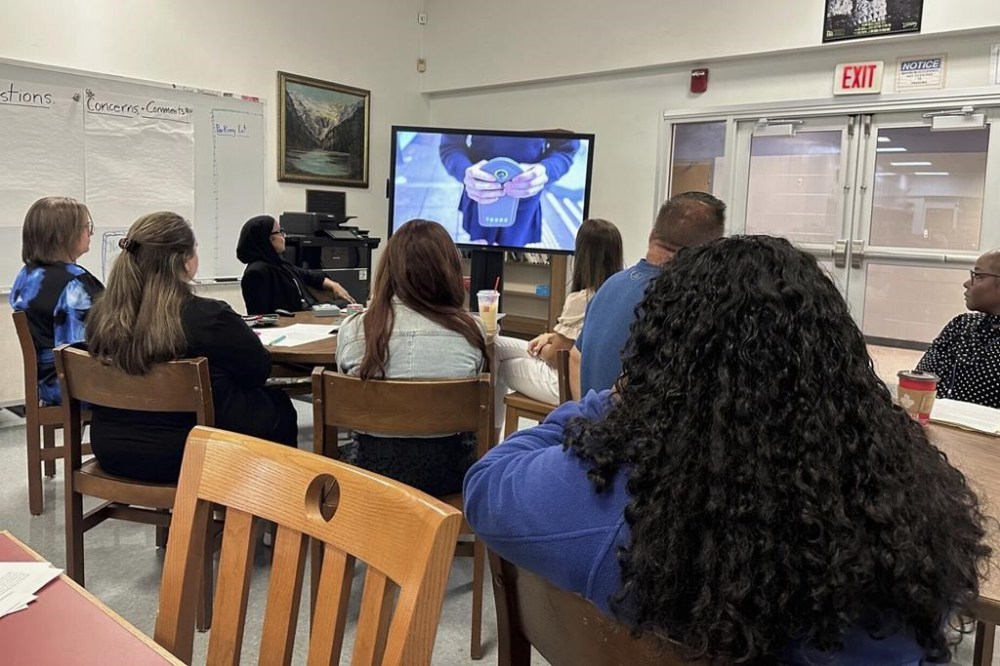
Educators say their tried and true lesson plans are no longer enough to keep students engaged at a time of struggling mental health, shortened attention spans, reduced attendance and worsening academic performance. At the crux of these challenges? Addiction to cellphones. Now, adults are trying new strategies to reverse the malaise.
Cellphone bans are gaining traction, but many say they’re not enough. They argue for alternative stimulation: steering students outdoors or toward extracurriculars to fill time they might otherwise spend alone online. And students need outlets, they say, to speak about taboo topics without fear of being “ canceled ” on social media.
“To get students engaged now, you have to be very, very creative,” said Wilbur Higgins, lead English teacher at Dartmouth High School, where Isabella will be a sophomore this fall.
Lock them up
Cellphone pouches, lockers and bins have grown in popularity to help enforce device bans.
John Nguyen, a chemistry teacher in California, invented a pouch system because he was so distressed by bullying and fights on phones during class, often without adults interfering. Many teachers are afraid to confront students using phones during lessons, Nguyen said, and others have given up trying to stop it.
At Nguyen’s school, students lock their phones in neoprene pouches during classes or even all day. A teacher or principal’s magnetic key unlocks the pouches.
It doesn’t matter how dynamic the lesson, said Nguyen, who teaches at Marina Valley High School and now markets the pouches to other schools. “There’s nothing that can compete with the cell phone.”
Do something (else)
Some schools are locking up smartwatches and wireless headphones, too. But the pouches don’t work once the final bell rings.
So in Spokane, Washington, schools are ramping up extracurriculars to compete with phones after hours.
An initiative launching this month, “ Engage IRL ” — in real life — aims to give every student something to look forward to after the school-day grind, whether it’s a sport, performing arts or a club.
“Isolating in your home every day after school for hours on end on a personal device has become normalized,” Superintendent Adam Swinyard said.
Students can create clubs around interests like board games and knitting or partake in neighborhood basketball leagues. Teachers will help students make a plan to get involved during back-to-school conferences, the district says.
“From 3 to 5:30 you are in a club, you’re in a sport, you’re at an activity,” instead of on a phone, Swinyard said. (The district has a new ban on phones during class, but will allow them after school.)
At a time of high absenteeism, he also hopes the activities will be the extra push some students need to attend school. In a Gallup poll conducted last November, only 48% of middle or high school students said they felt motivated to go to school, and only 52% felt they did something interesting every day. The poll was funded by the Walton Family Foundation, which also supports environmental journalism at the AP.
Vivian Mead, a rising senior in Spokane, said having more after-school activities helps but won’t work for everyone. “There’s definitely still some people who just want to be alone, listen to their music, do their own thing, or, like, be on their phone,” said Vivian, 17.
Her 15-year-old sister, Alexandra, said morning advisory sessions have improved participation in the drama club that keeps the sisters busy. “It forces everyone, even if they don’t want to get involved, to have to try something, and maybe that clicks,” she said.
Get outside
Thirteen middle schools in Maine adopted a similar approach, bringing students outdoors for 35,000 total hours during a chosen week in May.
It’s empowering for students to connect with each other in nature, away from screens, said Tim Pearson, a physical education and health teacher. His students at Dedham School participated in the statewide “Life Happens Outside” challenge.
Teachers adapted their lessons to be taught outdoors, and students bonded in the open air during lunch and recess. At night, about half of Dedham’s students camped, incentivized by a pizza party. Several students told Pearson they camped out again after the challenge.
“Whether they had phones with them or not, they’re building fires, they’re putting up their tents,” Pearson said. “They’re doing things outside that obviously are not on social media or texting.”
Plea to parents
Parents must also make changes to their family’s cellphone culture, some teachers say. At home, Ohio teacher Aaron Taylor bars cellular devices when his own children have friends over.
And when kids are at school, parents shouldn’t distract them with check-in texts throughout the day, he said.
“Students are so tied to their families,” said Taylor, who teaches at Westerville North High School, near Columbus. “There’s this anxiety of not being able to contact them, rather than appreciating the freedom of being alone for eight hours or with your friends.”
Fight fears of being ‘canceled’
Some say other forces behind teen disengagement are only amplified by the cellphone. The divisive political climate often makes students unwilling to participate in class, when anything they say can rocket around the school in a messaging app.
Taylor’s high school English students tell him they don’t talk in class because they don’t want to be “ canceled ” — a term applied to public figures who are silenced or boycotted after offensive opinions or speech.
“I’m like, ‘Well, who’s canceling you? And why would you be canceled? We’re talking about `The Great Gatsby,’” not some controversial political topic, he said.
Students “get very, very quiet” when topics such as sexuality, gender or politics come up in novels, said Higgins, the Massachusetts English teacher. “Eight years ago, you had hands shooting up all over the place. Nobody wants to be labeled a certain way anymore or to be ridiculed or to be called out for politics.”
So Higgins uses websites such as Parlay that allow students to have online discussions anonymously. The services are expensive, but Higgins believes the class engagement is worth it.
“I can see who they are when they’re responding to questions and things, but other students can’t see,” Higgins said. “That can be very, very powerful.”
Alarmed at her peers’ disengagement, Isabella, Higgins’ student, wrote an opinion piece in her school’s newspaper.

“Preventing future generations from joining this same downward cycle is up to us,” she wrote.
A comment on the post highlighted the challenge, and what’s at stake.
“All in all,” the commenter wrote, “why should we care?”
___
The Associated Press’ education coverage receives financial support from multiple private foundations. AP is solely responsible for all content. Find AP’s standards for working with philanthropies, a list of supporters and funded coverage areas at AP.org.
Related Articles
Cellphone bans miss the point
Advertisement Advertise With Us
Advertisement Advertise With Us