Global players’ union builds on FIFA regulations with a guide for expectant mothers
Advertisement
Read this article for free:
or
Already have an account? Log in here »
To continue reading, please subscribe:

Digital Subscription
One year of digital access for only $205*
- Enjoy unlimited reading on winnipegfreepress.com
- Read the E-Edition, our digital replica newspaper
- Access News Break, our award-winning app
- Play interactive puzzles
*First annual payment billed as $205.00 + GST for one year. This annual subscription will automatically renew at $233.00 + GST every 52 weeks (10% off the regular annual price of $259.35). Offer available to new and qualified returning subscribers only. Cancel any time.
To continue reading, please subscribe:
Add Free Press access to your Brandon Sun subscription for only an additional
$1 for the first 4 weeks*
- Enjoy unlimited reading on winnipegfreepress.com
- Read the E-Edition, our digital replica newspaper
- Access News Break, our award-winning app
- Play interactive puzzles
*Your next Brandon Sun subscription payment will increase by $1.00 and you will be charged $17.95 plus GST for four weeks. After four weeks, your payment will increase to $24.95 plus GST every four weeks.
Read unlimited articles for free today:
or
Already have an account? Log in here »
Hey there, time traveller!
This article was published 27/08/2024 (769 days ago), so information in it may no longer be current.
When Cheyna Matthews got pregnant with her first child back in 2018, she had a lot of questions.
In addition to concerns about her legal rights as a professional soccer player, how would she manage pregnancy and the birth? And, importantly, when could she safely play again?
“We play a lot of times because we love it. But now it’s also providing the financial security. So when you’re thinking of having children it’s like, `OK, I also have to figure out how I can get back to work.’ And when you’re working with your body, it’s one of the most important things,” Matthews said.
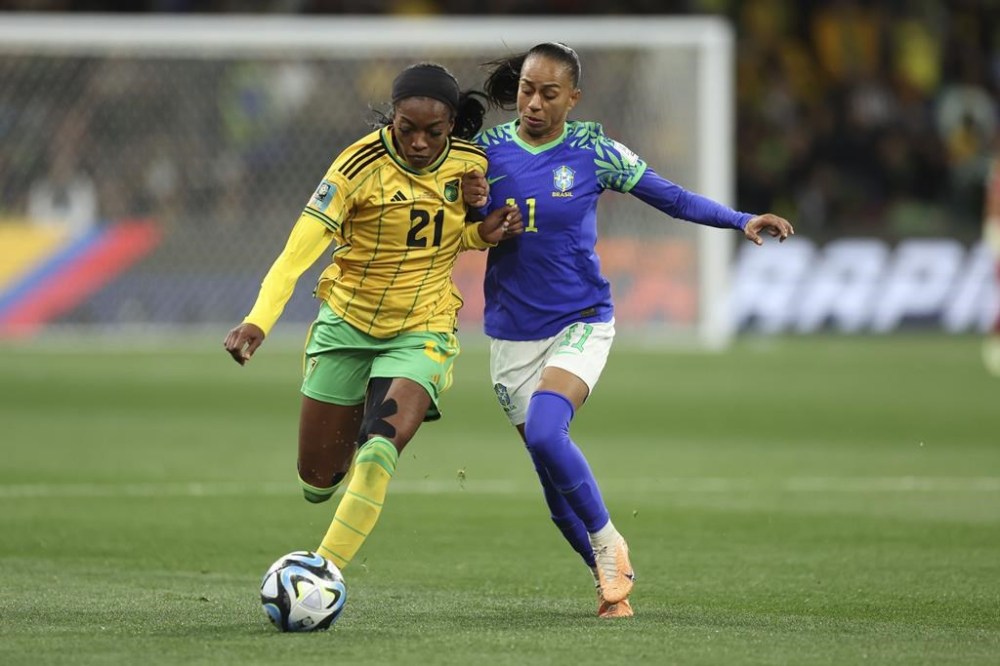
In an effort to give players and teams alike a guide for best practices surrounding maternity, global players’ union FIFPRO released a guide on Tuesday that covers how to manage pregnancy, what to expect in childbirth and how to prepare for a return to soccer.
Matthews, who retired from pro soccer in 2023, along with United States left back Crystal Dunn, Germany goalkeeper Almuth Schult and Iceland midfielder Sara Bjork Gunnarsdottir, helped devise FIFPRO’s “Postpartum Return to Play Guide.”
The protocol builds on FIFA’s groundbreaking regulations concerning maternity and parental rights that were first enacted in 2021 and expanded earlier this year.
Dr. Alex Culvin, FIFPRO director of policy and strategic relations for women’s soccer, said FIFA’s new regulations and the protections that were put in place increased the likelihood that more players would feel comfortable starting families during their playing careers, but there was very little guidance about what pregnancy, childbirth and recovery looked like.
“There is this perceived incompatibility, not just in football, in sport more generally, that you can’t have a child and be an athlete. And actually there are players out there who have disproven this on a daily basis,” Culvin said. “So we wanted to kind of bring all of this together, and elevate and listen to the player voice, centralize their experiences alongside experts on the scientific literature, and create something that hadn’t been produced before, with the FIFPRO stamp on it.”
The medical professionals who contributed to the guide were Dr. Pippa Bennett of the U.K. Sports Institute, Dr. Rita Tomas, the team physician for the Portuguese women’s national team, professor Kirsty Elliott-Sale with the Manchester Metropolitan University’s Institute of Sport, and FIFPRO Chief Medial Officer Dr. Vincent Gouttebarge.
Matthews, who played in the 2019 and 2023 Women’s World Cup for Jamaica, has three sons with husband Jordan Matthews, a tight end for the NFL’s Carolina Panthers.

She had her first child when she was with the Washington Spirit in the National Women’s Soccer League. She was among the league’s first players to have a child at what would be considered the peak of her playing career. Nine months after she gave birth, she played for Jamacia at the Women’s World Cup.
Matthews said she was lucky to have both a national team and club team that supported her before the FIFA regulations and the NWSL’s collective bargaining agreement were adopted.
“We are seeing more pregnancies, and I’ve had a lot of players coming to me asking questions, and I’ve been able to kind of help just from my experiences,” Matthews said. “But to have this guideline just from the initial finding out that you’re pregnant — even that experience itself, you have so many thoughts, so many ideas. What do I do? But having a guideline for the players, it does ease the stress.”
___
AP soccer: https://apnews.com/hub/soccer
Related Articles
Andrea Pirlo fired as coach by Sampdoria after just 1 point from 3 matches







Advertisement Advertise With Us
Advertisement Advertise With Us