Canadian non-profit that facilitates abortion pill access sees surge in U.S. requests
Advertisement
Read this article for free:
or
Already have an account? Log in here »
To continue reading, please subscribe:

Digital Subscription
One year of digital access for only $205*
- Enjoy unlimited reading on winnipegfreepress.com
- Read the E-Edition, our digital replica newspaper
- Access News Break, our award-winning app
- Play interactive puzzles
*First annual payment billed as $205.00 + GST for one year. This annual subscription will automatically renew at $233.00 + GST every 52 weeks (10% off the regular annual price of $259.35). Offer available to new and qualified returning subscribers only. Cancel any time.
To continue reading, please subscribe:
Add Free Press access to your Brandon Sun subscription for only an additional
$1 for the first 4 weeks*
- Enjoy unlimited reading on winnipegfreepress.com
- Read the E-Edition, our digital replica newspaper
- Access News Break, our award-winning app
- Play interactive puzzles
*Your next Brandon Sun subscription payment will increase by $1.00 and you will be charged $17.95 plus GST for four weeks. After four weeks, your payment will increase to $24.95 plus GST every four weeks.
Read unlimited articles for free today:
or
Already have an account? Log in here »
Hey there, time traveller!
This article was published 27/11/2024 (679 days ago), so information in it may no longer be current.
A Canadian non-profit that helps women obtain the abortion pill in countries with restrictions says it saw a fourfold increase in U.S. requests after the presidential election.
The majority of inquiries came from women who were not pregnant, suggesting many want the drug on hand in case they need it, says Venny Ala-Siurua, executive director of Women on Web.
Ala-Siurua, based in Montreal, says some women fear abortions could become illegal or harder to access in the U.S. after Donald Trump takes office.
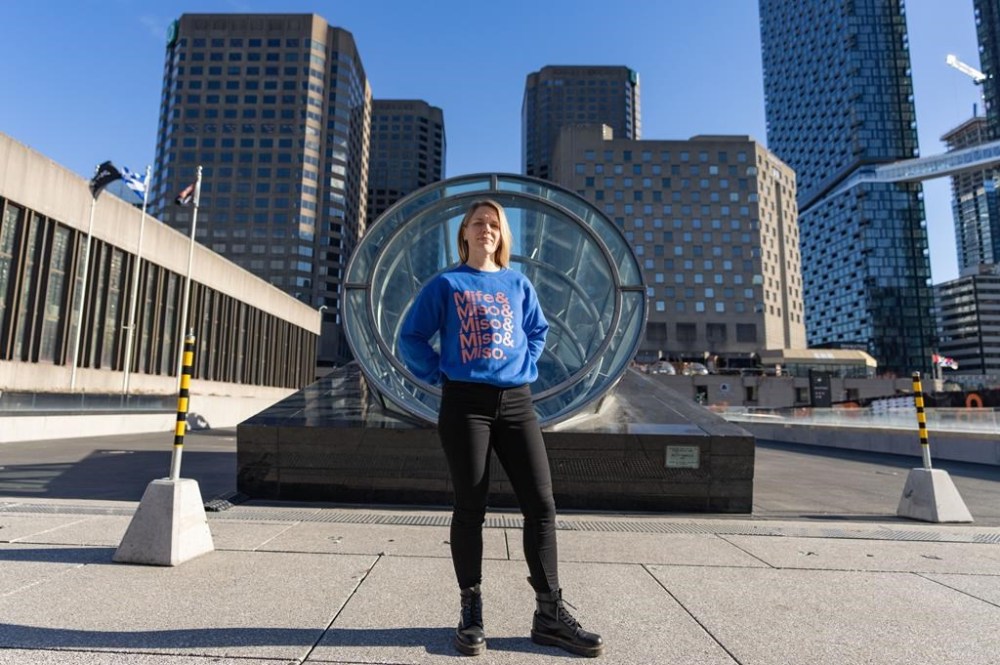
Reproductive health experts say global networks like Women on Web can help maintain women’s access to abortion even when political and legal hurdles emerge. As anti-abortion groups grow emboldened by a new presidency, so do organizers motivated to keep coming up with creative ways to get abortion pills to those who need them.
In the 10 days leading up to the Nov. 5 election, Ala-Siurua says the non-profit received 35 requests per day coming from the United States. In the 10 days after, they got 145 per day.
“People are really scared and they want to be prepared,” says Ala-Siurua.
Advocates say providing abortion pills before someone is pregnant – a practice referred to as advance provision – reduces delays in getting the medication in places where women face barriers to access.
The pill – which is actually two medications, mifepristone and misoprostol – is taken to end an early pregnancy. Misoprostol has a shelf life of about two years and mifepristone has a shelf life of about five years. Studies show it’s 95 to 98 per cent effective.
In the U.S., the medication is branded as Mifeprex, which the U.S. Food and Drug Administration says can be taken through 10 weeks gestation. In Canada the brand is Mifegymiso, which Health Canada says should not be prescribed to patients who are further than nine weeks pregnant.
Women on Web does not provide the abortion pill directly, but rather connects people to doctors and pharmacies that can prescribe and dispense the drug.
The platformis registered in Canada but says it does not involve Canadian doctors or pharmacies. When Canadians call, it’s because of difficulty accessing abortions in remote parts of the country. In these cases, Ala-Siurua says they find a local service that can help.
Initially, Women on Web’s resources were primarily dedicated to pill-seekers outside of North America while its sister organization Aid Access catered to American women. But in July, Women on Web expanded service to the U.S. in response to abortion bans and restrictions.
During his 2024 campaign, Trump distanced himself from abortion rhetoric, saying he wants to leave reproductive rights to the states to determine. But his stance on abortion has wavered over the years, and he has bragged about appointing justices to the Supreme Court that eliminated a national right to abortion.
Research shows U.S. women sought advance prescriptions of abortion pills in 2022 after the Supreme Court overturned Roe v. Wade. Aid Access said it saw a surge of 48,400 requests for advance provisions in the U.S. between September 2021 and April 2023 that peaked right after news leaked of the court’s decision.
In the U.S., abortion pill manufacturer Danco Laboratories said it is not aware of any laws prohibiting advance provisions.
Dr. Daniel Grossman, a professor of obstetrics and gynecology at the University of California, San Francisco (UCSF), says doctors prescribe advance provisions off-label, a very common FDA-approved practice.
However, Grossman says a clinician should be involved in the process to screen and follow-up with a patient. “I don’t see this as just handing out pills,” says Grossman, who directs the research program Advancing New Standards in Reproductive Health at UCSF.
Patients need to be able to get medical help within 14 days of taking mifepristone.
Women on Web says the doctors it works withreview request forms and write prescriptions, and pharmacy partnersship the drugs to home addresses in discreet envelopes. Applicants are asked to pay $170 if they can as a donation, but Ala-Siurua says the fee is waived for those who can’t afford it. The cost of the medication is separate and varies.
They ask women seeking advance provisions to get in touch if they use the pill so they can explain what to expect when taking the medication, which causes cramping and bleeding to end the pregnancy.
At least a handful of similar virtual groups exist for women in the United States.
Plan C, which has a virtual team scattered throughout the U.S., has provided information to Americans on how to access abortions pills since 2016. Co-founder Elisa Wellssays the site had around 4,000 to 4,500 visitors per day before the election. The day after, they had more than 82,000 per day.
“We know that people are afraid,” Wells says. Those who are already struggling will be the most impacted if reproductive rights roll back more, she says. “Those include people of colour, people who live in rural areas, people whose incomes are lower.”
U.S. anti-abortion group Students for Life Action recently urged Trump to outlaw telehealth for abortion pills when he takes office, and endorsed Project 2025, a far-right think-tank policy paper that proposes reversing the FDA’s approval of the abortion pill and criminalizing mailing the drug.
Women on Web began as an abortion clinic on a boat that brought women from places where abortion was restricted — for instance Ireland, Portugal and Poland — to international waters to provide the procedure. It started as Women on Waves in 1999.
But its founder, Dutch physician Dr. Rebecca Gomperts wanted to widen her reach and evolved the non-profit in 2005, registering Women on Web in Toronto.
Health Canada said in a statement to The Canadian Press that because the organization doesn’t prescribe or distribute the pill, and it doesn’t directly provide medical services, it is not breaking FDA regulations.
After Roe was overturned, doctors in shield states stepped in to help people in places where abortion became banned or restricted. Shield laws came into effect to legally protect providers mailing pills to states where they are banned. Still, legal analysis shows shield laws can never completely protect a provider, and can be challenged in court.
“They’re taking their own personal risk, deciding to help people regardless of abortion bans,” Ala-Siurua says of providers who participate.
If abortion is further restricted in the U.S., people who can afford to travel to another state, take time off work, have access to child care and feel safe speaking to their partner will be less directly impacted than those unable to do so, says Laura Schummers, a reproductive epidemiologist and assistant professor of health outcomes at the University of British Columbia.
The pill accounted for 63 per cent of abortions in the United States in 2023, compared to surgical abortions, Guttmacher Institute data shows. In Canada, almost 40 per cent of abortions were medical compared to surgical in 2022, according to the Canadian Institute for Health Information.
Schummers says even if restrictions in the U.S. spread, the existence of groups like Women on Web and Plan C means there likely won’t be a sudden influx of women crossing the border to seek the pill in Canada.
However, Schummers says that could change if the pill is banned, citing concerns around Project 2025.
She says that would be a “worst-case scenario.”

But with so much uncertainty, Ala-Siurua says the world should be watching.
“I think it’s very clear that our human rights and reproductive freedoms are under attack across the world and we need to remain vigilant everywhere, also in Canada.”
This report by The Canadian Press was first published Nov. 27, 2024.
Canadian Press health coverage receives support through a partnership with the Canadian Medical Association. CP is solely responsible for this content.
Note to readers: This is a corrected story. The previous version erroneously stated the shelf life of misoprostol and mifepristone. In fact, misoprostol has a shelf life of about two years and mifepristone has a shelf life of about five years.