Here’s where Canadian experts stand on fluoridating drinking water
Advertisement
Read this article for free:
or
Already have an account? Log in here »
To continue reading, please subscribe:

Digital Subscription
One year of digital access for only $205*
- Enjoy unlimited reading on winnipegfreepress.com
- Read the E-Edition, our digital replica newspaper
- Access News Break, our award-winning app
- Play interactive puzzles
*First annual payment billed as $205.00 + GST for one year. This annual subscription will automatically renew at $233.00 + GST every 52 weeks (10% off the regular annual price of $259.35). Offer available to new and qualified returning subscribers only. Cancel any time.
To continue reading, please subscribe:
Add Free Press access to your Brandon Sun subscription for only an additional
$1 for the first 4 weeks*
- Enjoy unlimited reading on winnipegfreepress.com
- Read the E-Edition, our digital replica newspaper
- Access News Break, our award-winning app
- Play interactive puzzles
*Your next Brandon Sun subscription payment will increase by $1.00 and you will be charged $17.95 plus GST for four weeks. After four weeks, your payment will increase to $24.95 plus GST every four weeks.
Read unlimited articles for free today:
or
Already have an account? Log in here »
Hey there, time traveller!
This article was published 02/12/2024 (666 days ago), so information in it may no longer be current.
For decades, water fluoridation has played a key role in improving the oral health of North Americans, experts say, but the practice is coming under scrutiny in some communities as opponents gain new prominence in the U.S., pointing to research that cautions about the risks of exposure to the mineral in high doses.
A low level of fluoride has been added to tap water in parts of Canada and the U.S. since the 1940s to help reduce tooth decay and cavities.
It varies by region and municipality – most British Columbia, Newfoundland and Quebec communities, for instance, do not fluoridate water, while the majority of Ontarians live in places where water is fluoridated.
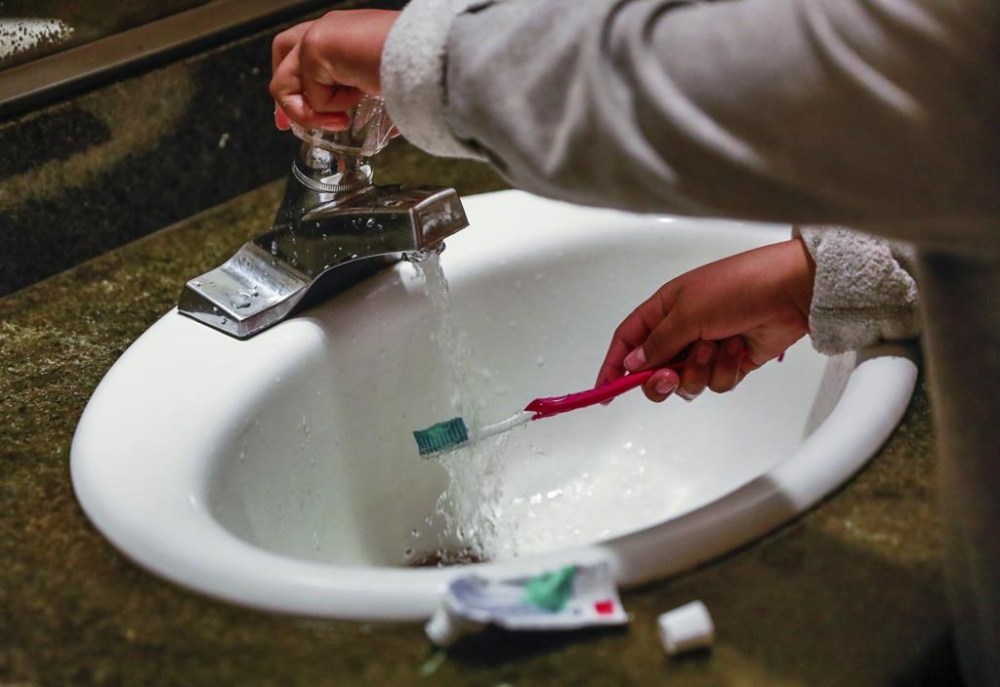
Recently, opponents have questioned the science that supports this practice, including U.S. president-elect Donald Trump’s pick for health secretary, Robert F. Kennedy Jr., who says he plans to put an end to water fluoridation in the United States.
Here’s what you need to know about where Canadian communities and researchers stand on the issue:
WHAT ARE THE BENEFITS?
Health Canada, the Canadian Dental Association and the Canadian Medical Association say decades of scientific evidence shows fluoridating water has dental-health benefits, particularly for people who don’t have the means to go to the dentist or brush their teeth.
Fluoride, a mineral naturally present in soil and water, strengthens tooth enameland can prevent tooth decay, which is the most common childhood chronic disease in Canada and around the world, according to Health Canada and the World Health Organization.
The Ontario Dental Association says water fluoride can reduce tooth decay in children’s primary teeth by up to 60 per cent, and in their permanent teeth by up to 35 per cent. Adults with a lifelong exposure to water fluoridation can see a 20 to 40 per cent reduction in tooth decay.
A University of Calgary study published in 2021compared the dental health of children in Calgary and Edmonton over a seven-year period. Calgary stopped fluoridating its water supply in 2011 and Edmonton has kept doing it.
Researchers found “significantly” more cavities in the Calgary kids – 64.8 per cent compared to 55.1 per cent in Edmonton.
In 2021 Calgary voted in favour of reintroducing fluoride to its water supply, and it’s expected to resume in 2025.
WHAT DO WE KNOW ABOUT THE RISKS?
A U.S. National Toxicology Program review of scientific literature published in August concluded with “moderate confidence” that there is a link between higher fluoride levels and lower IQ in children.
The review only included studies involving fluoride levels at about twice the recommended limit for drinking water, containing more than 1.5 milligrams of fluoride per litre.
The report says that there was “insufficient data” to determine if the low fluoride level of 0.7 mg/L that is currently recommended in Canada and the U.S. has a negative effect on children’s IQ.
The U.S. Environmental Protection Agency was ordered in September to further regulate fluoride in drinking water. A federal judge ruled that while it’s not certain the amount of fluoride typically added to water is causing lower IQ in kids, some research points to a risk that it could be.
York University research published in JAMA Pediatrics in 2019 associated fluoride exposure during pregnancy to lower IQ scores in children.
The study used information from a Health Canada database on maternal-infant exposure to environmental chemicals. Researchers analyzed fluoride in pregnant women’s urine samples, and then their children’s IQ levels between the ages of three and four. They found an increase of one milligram of fluoride in pregnant women was associated with a decrease of 3.7 IQ points in children.
None of the mothers were drinking more than the recommended level of fluoride in their tap water. Christine Till, one of the study’s authors, said the urine samples could have captured other sources of fluoride consumed, such as black tea or toothpaste.
“Now that’s just one study. I always say we need to look at the totality of the evidence when we’re talking about this topic,” Till, also a clinical neuropsychologist and professor of psychology at York University, said.
A similar study in the U.S., published in JAMA in 2024, also found prenatal fluoride exposure may increase risk of neurobehavioral problems in children.
“Adding fluoride to water should only be considered if scientific evidence clearly demonstrates substantial benefit accompanied by minimal risk. And I will leave it up to the policymakers to determine that risk-benefit for a particular community,” Till said. She continues to study this subject, recently researching fluoride exposure and maternal thyroid hormone levels.
Juliet Guichon, a professor at the University of Calgary’s Cumming School of Medicine, co-authored a critique of the study in the journal Community Dentistry and Oral Epidemiology. One of the criticisms in the 2024 commentary is that the mother-infant data used in Till’s study was a “flawed” way to measure fetal exposure to fluoride.
In response, Till said she agrees measuring fluoride in maternal urine is a proxy of the fetus’ exposure, and that future work will examine this further.
In 2023, a Health Canada expert panel reviewed research on fluoride exposure, and concluded there was “not a sufficient basis” to draw conclusions on neurocognitive effects.
“Questions remain regarding whether the weight of evidence supports a causal relationship,” the expert panel said in its 2023 report.
Health Canada does note that too much fluoride can cause dental fluorosis, which is when white patches appear on children’s permanent teeth. But severe cases are very rare, the federal agency says.
WHY DON’T SOME PROVINCES FLUORIDATE WATER?
Water treatment decisions in Canada fall within municipal jurisdictions. Overall, Health Canada data from 2022 shows that 38.8 per cent of drinking water in Canada is fluoridated.
In Ontario, 73.2 per cent of drinking water is through fluoridated systems. Meanwhile, in provinces including British Columbia, Quebec, and New Brunswick, less than two per cent of drinking water is fluoridated.
Health Canada says these inconsistencies could be tied to community concerns about potential health effects, as well as financial cost.
Last month, Montreal city council voted to stop adding fluoride in the water of six West Island suburbs after a resident started a petition he said had the support of Kennedy.
HealthLinkBC, a provincial government website, states some communities have stopped fluoridation due to health concerns, but didn’t specify those concerns. It notes fluoride is “safe in low doses.”
Dr. James Dickinson, a professor of family medicine and of community health sciences at the University of Calgary, says municipal officials who determine if fluoride will be in a community’s water supply are not trained to review science and can be persuaded by loud voices in the anti-fluoride movement.
“They are susceptible to strong views of influential community members and vitriolic campaigns against public health.”
WHAT ARE THE COSTS?
The upfront cost of water fluoridation can be expensive at a city level. Calgary saved $750,000 a year when the city stopped adding fluoride to the water in 2011. Reinstating it was estimated to cost $28.1 million.
Health Canada cites reports that show a “high return on investment” for fluoride in drinking water, with a per capita annual benefit ranging from $5.49 to $93.193 per dollar invested. The federal agency says the return on investment increases in communities with larger populations.
Another study cited by the Ontario Dental Association (ODA) shows for every $1 invested, approximately $43 is saved in reduced dental costs. A single filling costs $200, according to the ODA’s fee guide.
Guichon said in an interview that Calgary’s investment will pay off in the future for the city. “Over a 20-year life of the project divided by 1.4 million people makes the cost a dollar per person per year.”
DO WE STILL NEED TO FLUORIDATE?
In a report published in the Cochrane Library in October, researchers in the United Kingdom reviewed 157 international studies on fluoridation and found the benefit of fluoride has declined since toothpaste became more widely available in the 1970s.
“To me this suggests that when we look at more contemporary science, based on studies that were done post 1975, when fluoride toothpaste is quite abundant, we see a smaller benefit of fluoride than when we compare it to when it was first introduced,” Till said.
Researchers compared studies on communities that had fluoride added to their water supplies in the United Kingdom and Australia with those that did not. Studies published in 1975 or earlier show a “clear and important” effect on the prevention of tooth decay in children.
However, studies conducted after that period show adding fluoride to water made little or no difference.
The Cochrane review says researchers weren’t able to distinguish how these results might differ in richer and poorer communities, and that fluoridation might still be relevant in places where people don’t have easy access to toothpaste or a dentist.
Joe Schwarcz, director of Science and Society at McGill University, said the necessity of fluoride in water is less relevant in affluent communities.
“Why not do it when some people will benefit, others may not, but nobody is harmed?”
This report by The Canadian Press was first published Dec. 2, 2024.
Canadian Press health coverage receives support through a partnership with the Canadian Medical Association. CP is solely responsible for this content.
Note to readers: This is a corrected story. A previous version misstated the name and year of the journal Juliet Guichon’s critique was published in. It is called Community Dentistry and Oral Epidemiology and the commentary was published in 2024.