Toronto Zoo warns of extinctions if Ontario mining bill becomes law
Advertisement
Read this article for free:
or
Already have an account? Log in here »
To continue reading, please subscribe:

Digital Subscription
One year of digital access for only $205*
- Enjoy unlimited reading on winnipegfreepress.com
- Read the E-Edition, our digital replica newspaper
- Access News Break, our award-winning app
- Play interactive puzzles
*First annual payment billed as $205.00 + GST for one year. This annual subscription will automatically renew at $233.00 + GST every 52 weeks (10% off the regular annual price of $259.35). Offer available to new and qualified returning subscribers only. Cancel any time.
To continue reading, please subscribe:
Add Free Press access to your Brandon Sun subscription for only an additional
$1 for the first 4 weeks*
- Enjoy unlimited reading on winnipegfreepress.com
- Read the E-Edition, our digital replica newspaper
- Access News Break, our award-winning app
- Play interactive puzzles
*Your next Brandon Sun subscription payment will increase by $1.00 and you will be charged $17.95 plus GST for four weeks. After four weeks, your payment will increase to $24.95 plus GST every four weeks.
Read unlimited articles for free today:
or
Already have an account? Log in here »
Hey there, time traveller!
This article was published 23/05/2025 (509 days ago), so information in it may no longer be current.
TORONTO – Species could go extinct if Ontario passes a controversial mining bill that is set to transform its approach to endangered species and the environment, the Toronto Zoo warned the province.
Bill 5, the Protect Ontario by Unleashing our Economy Act, would strike a blow to the recovery of several species the institution has been trying to save, said Dolf DeJong, the zoo’s CEO, at a committee hearing at Queen’s Park on Thursday.
If and when the bill becomes law, DeJong wants the province to step up with funding so it can dramatically increase its biobank with Ontario species that could die off as a result of the legislation.
“We’re concerned this act will result in the erosion of biodiversity and the loss of species at risk,” DeJong said.
“This bill, if passed, could undo decades of conservation efforts and threaten some of Ontario’s most vulnerable species, species your Toronto Zoo works directly for.”
The zoo is concerned that this bill, combined with the rollback of environmental protections under U.S. President Donald Trump, further threaten endangered species.
“I think we all understand that endangered species don’t recognize political boundaries, and these policy changes makes their survival on both sides of the border more questionable,” DeJong said.
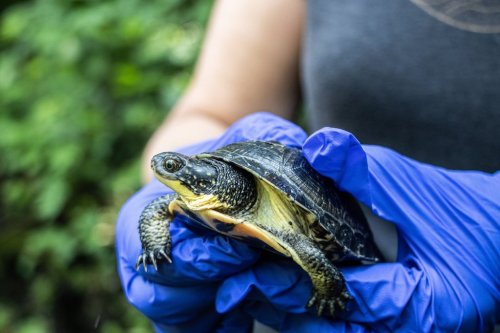
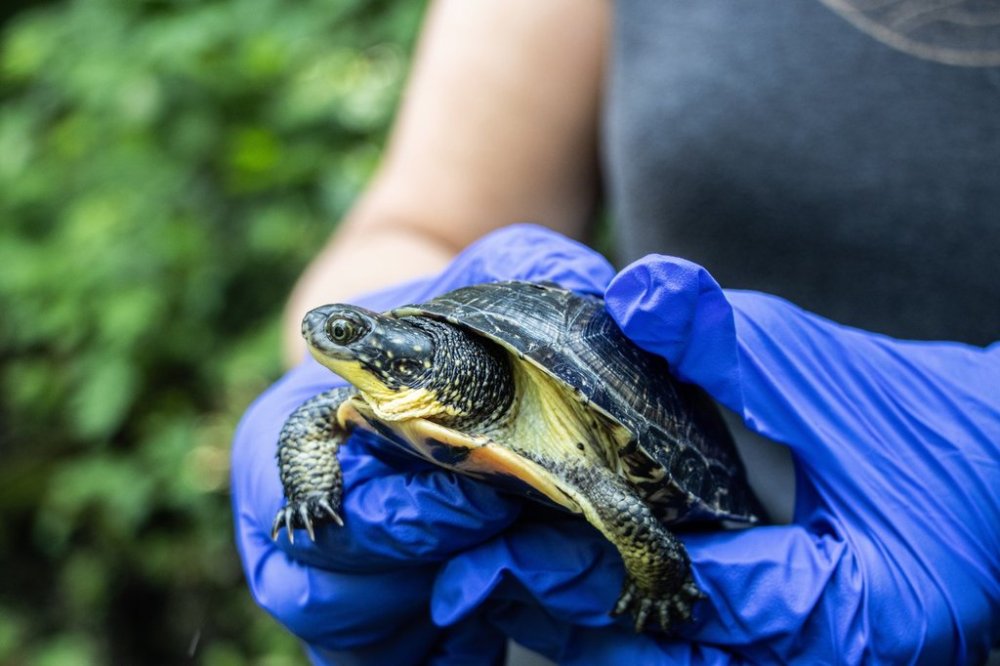
The zoo has an ongoing program to help the recovery of the Blanding’s turtle with the help of Parks Canada. The animal is considered threatened in Ontario and, by the province’s own definition, is “likely to become endangered if steps are not taken to address factors threatening it.”
“Together with Parks Canada, your Toronto Zoo has helped release more than 700 individuals into Rouge National Urban Park,” DeJong said.
“And while they may not move quickly, these turtles travel up to six kilometres a year around the watershed as they move between nesting, feeding and hibernation sites.”
Anything that would disrupt that habitat would be catastrophic for the Blanding’s turtle, he said.
The province’s omnibus bill seeks to speed up the approval of mining projects through a variety of measures. It includes eventually repealing the Endangered Species Act, removing significant habitat protections and doing away with requirements to create recovery strategies for at-risk species.
The definition of habitat would change from the entire area needed for a species to survive, to just its nest or den and the area immediately surrounding it. The province is also giving itself greater power over an independent, science-based committee to add and remove species from a protected list.
And the bill also proposes to give the government power to create so-called “special economic zones” where it can suspend provincial and municipal laws, including environmental laws, on certain projects. Premier Doug Ford said the province will designate the Ring of Fire in northern Ontario as the first such zone, a move that has sparked anger and protest from First Nations living there.
They would also allow companies to start developing a project that could destroy habitat or kill at-risk species without first getting a permit. Instead, the government is proposing to move to a not-yet-defined “registration-first approach” for all projects
But Ford also mused non-mining projects such as his idea of a massive transit and traffic tunnel under Highway 401 could also receive the designation along with other major infrastructure projects.
“If the government decides to move forward as written, we have one ask, establish an insurance policy for these species and their well-being,” DeJong said. “This government needs to commit to funding to create an Ontario wildlife biobank at your Toronto Zoo, our reproductive science team can play a critical role, working with partners across all walks of life to ensure we have a backup plan for future generations.”
The zoo currently has about 100 animal species in its biobank, largely from animals in its own collection and other accredited zoos across the country.
A few years ago the zoo began working with non-governmental organizations and scientists to explore the idea of collecting samples from the wild for its growing repository, said Gabriela Mastromonaco, the institution’s chief science officer.
The zoo has worked with Parks Canada and the University of Saskatchewan over the past 10 years on its wood bison conservation program. The zoo’s biobank is a collection of living cells, not DNA, that can be used to procreate the species, Mastromonaco said.
The zoo collected sperm and eggs from wood bison populations, which are susceptible to disease, across the province
“We can disinfect them, we can make the embryos, we can store them as clean material, and then we can use surrogate herds like Toronto Zoo’s and the one at the University of Saskatchewan to make the calves clean — disinfected calves — to repopulate the wild with the right genetics,” Mastromonaco said.
From that technique, the zoo was able to help create 15 bison that now live there. They are still working on reintroduction programs for the bison, but they’ve had success with other animals like the dusky gopher frog, which they artificially inseminated before releasing the resulting tadpoles back into the wild.

But the zoo is worried the new law, when passed, will ramp up the loss of species.
“We have to protect against outright genetic loss and the potential for genetic erosion where the populations are getting smaller and smaller,” Mastromonaco said.
The province maintains the proposed law will balance environmental concerns with economic ones.
“We’re always going to be very conscious of making sure that we take care of the environment,” Ford said Friday when asked about the blowback on the bill.
This report by The Canadian Press was first published May 23, 2025.