‘General acceptance’: A year of banning cellphones in Canadian classrooms
Advertisement
Read this article for free:
or
Already have an account? Log in here »
To continue reading, please subscribe:

Digital Subscription
One year of digital access for only $205*
- Enjoy unlimited reading on winnipegfreepress.com
- Read the E-Edition, our digital replica newspaper
- Access News Break, our award-winning app
- Play interactive puzzles
*First annual payment billed as $205.00 + GST for one year. This annual subscription will automatically renew at $233.00 + GST every 52 weeks (10% off the regular annual price of $259.35). Offer available to new and qualified returning subscribers only. Cancel any time.
To continue reading, please subscribe:
Add Free Press access to your Brandon Sun subscription for only an additional
$1 for the first 4 weeks*
- Enjoy unlimited reading on winnipegfreepress.com
- Read the E-Edition, our digital replica newspaper
- Access News Break, our award-winning app
- Play interactive puzzles
*Your next Brandon Sun subscription payment will increase by $1.00 and you will be charged $17.95 plus GST for four weeks. After four weeks, your payment will increase to $24.95 plus GST every four weeks.
Read unlimited articles for free today:
or
Already have an account? Log in here »
Hey there, time traveller!
This article was published 09/06/2025 (485 days ago), so information in it may no longer be current.
EDMONTON – Sixteen-year-old Roha Akram was skeptical when teachers in Calgary announced a cellphone ban during the first assembly of the school year.
“I was like, ‘No one’s going to follow this,'” the Grade 11 student recalled of the change in September.
“It’s just the nature of teenagers. We don’t like rules.”
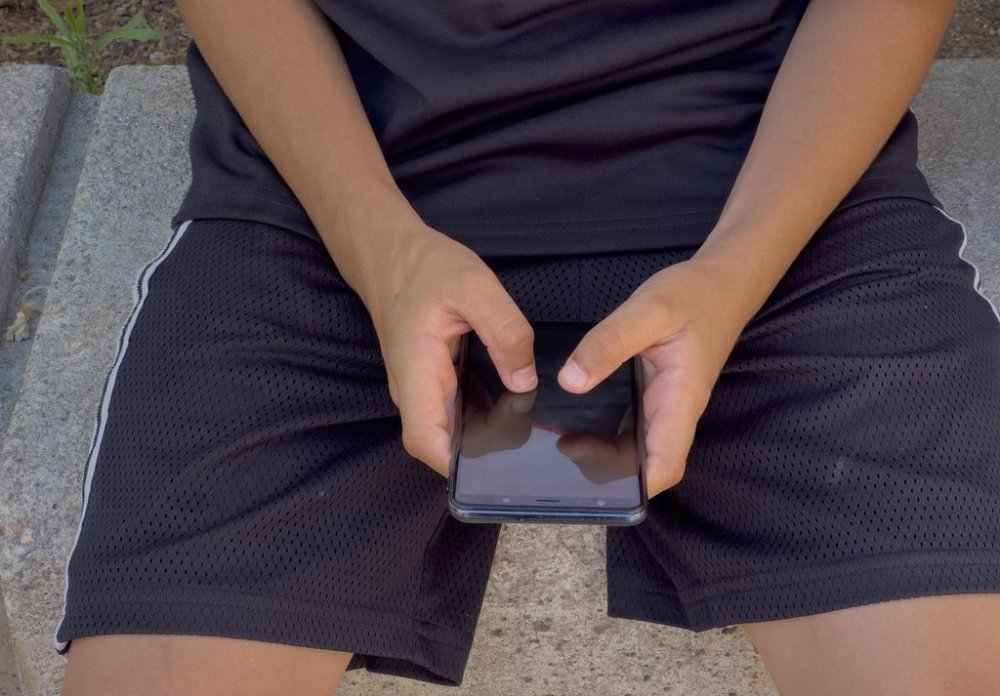
Teachers didn’t want to see phones on desks or in pockets, Akram added. “They wanted it in the backpack, in the locker, in the car.”
She said the ban has been good for some students, who just need a reminder to focus in class, particularly when teachers are speaking. But some have struggled.
One teacher took a phone away from a boy who was really attached to his device, she said. “He started acting crazy. He went around asking everyone, ‘Can I use your phone? Can I use your phone? I need to go on Instagram.’
“I saw phones are kind of becoming an addiction.”
As the school year wraps up this month, education ministries across Canada say there have been overall positive results from banning cellphones.
They say it has taught students not to develop unhealthy attachments to their phones and to focus on lessons in the classroom.
Last fall, most provinces introduced policies to limit cellphone use in schools, similar to jurisdictions in other countries.
Before the ban in Manitoba, Education Minister Tracy Schmidt said a school librarian complained to her that students were too quiet sitting around the stacks of books.
“The students would come in groups, sit down at a table together, pull out their cellphones and they would all sit there. You could hear a pin drop,” said Schmidt.
The cellphone ban has returned the chatter and socialization among students, she said.
“They still come with their groups of friends, but now they’re sitting, they’re talking, they’re laughing. They might pick up a board game. (The librarian) was really, really grateful to the province for taking this step.”
Ontario’s education ministry said parents and teachers find the ban has created a better learning environment.
“As we close out the first full year of implementation, we will continue gathering input to understand how the policy has worked in practice, where it has been effective, and where further support may be needed,” said spokesperson Emma Testani.
In Nova Scotia, school staff were surprised by how smoothly it was to implement the new directive, said education spokesperson Alex Burke.
“While not all students like leaving their devices out of the classroom, there is a general acceptance of the benefit of limiting cellphone use and appreciation of the opportunity to ignore their phones,” said Burke.
The Edmonton Public School Board, Alberta’s largest school division, said it didn’t notice any significant issues.
“Schools had the flexibility to determine how best to implement the ban, whether it meant introducing new practices or adjusting current ones,” said spokesperson Kim Smith.
A year of the ban doesn’t mean students aren’t still using phones in class, admitted Akram. Some have just become more sneaky.
One fellow student used a textbook to hide his phone while teachers were talking, she said.
“He just watches YouTube Shorts the whole class.”
Akram said she also occasionally uses her phone during work time in class — her AirPods in her ears, under her hijab — so she can listen to music.
When teachers do confiscate phones, they’re typically returned at the end of class or the school day, she added.
Akram said she can see why the ban might be necessary for generation Z and students with unhealthy attachments to their phones.
“We were born when people were inventing iPads and iPhones … so we grew up with screens.”
She said she thinks teachers will be stricter with the ban next year.
This report by The Canadian Press was first published June 9, 2025.