Wegovy and Zepbound prices fall, but access to the obesity drugs still isn’t guaranteed
Advertisement
Read this article for free:
or
Already have an account? Log in here »
To continue reading, please subscribe:

Digital Subscription
One year of digital access for only $205*
- Enjoy unlimited reading on winnipegfreepress.com
- Read the E-Edition, our digital replica newspaper
- Access News Break, our award-winning app
- Play interactive puzzles
*First annual payment billed as $205.00 + GST for one year. This annual subscription will automatically renew at $233.00 + GST every 52 weeks (10% off the regular annual price of $259.35). Offer available to new and qualified returning subscribers only. Cancel any time.
To continue reading, please subscribe:
Add Free Press access to your Brandon Sun subscription for only an additional
$1 for the first 4 weeks*
- Enjoy unlimited reading on winnipegfreepress.com
- Read the E-Edition, our digital replica newspaper
- Access News Break, our award-winning app
- Play interactive puzzles
*Your next Brandon Sun subscription payment will increase by $1.00 and you will be charged $17.95 plus GST for four weeks. After four weeks, your payment will increase to $24.95 plus GST every four weeks.
Read unlimited articles for free today:
or
Already have an account? Log in here »
Hey there, time traveller!
This article was published 07/07/2025 (453 days ago), so information in it may no longer be current.
Prices are falling for the popular obesity treatments Wegovy and Zepbound, but steady access to the drugs remains challenging.
The medications still amount to around $500 per month for those without insurance — out of reach for many patients. And even for people with insurance, coverage remains uneven.
“The medications should be available, the question is at what price and can people sustain that,” said Matt Maciejewski, a Duke University professor who studies obesity treatment coverage.
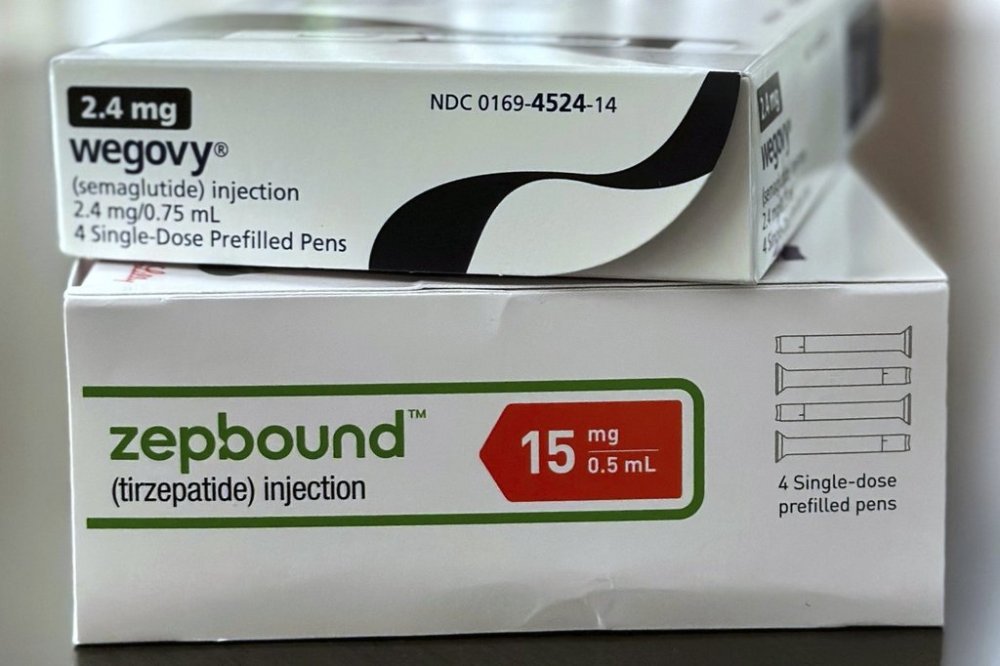
Doctors say the situation forces them to get creative in treating patients, but there’s hope that prices may fall more in the future.
The drugs are still in high demand
Wegovy and Zepbound are part of a wave of obesity medications known as GLP-1 receptor agonists that have soared in popularity.
Zepbound brought in $2.3 billion in U.S. sales during this year’s first quarter, making it one of drugmaker Eli Lilly’s best sellers.
Novo Nordisk says Wegovy has about 200,000 weekly prescriptions in the U.S., where it brought in nearly $1.9 billion in first-quarter sales.
Insurance coverage is increasing — for some
The benefits consultant Mercer says more businesses with 500 or more employees are adding coverage of the injected drugs for their workers and family members.
And Novo says 85% of its patients who have coverage in the U.S. pay $25 or less per month.
Plus some patients with diabetes can get coverage of the GLP-1 drugs Ozempic and Mounjaro from Novo and Lilly that are approved to treat that condition.
But most state and federally funded Medicaid programs don’t cover the drugs for obesity and neither does Medicare, the federal program mainly for people age 65 and older.
Even the plans that cover the drugs often pay only a portion of the bill, exposing patients to hundreds of dollars in monthly costs, said Dr. Beverly Tchang.
Drugmakers offer help with these out-of-pocket costs, but that assistance can be limited.
“Coverage is not the same as access,” said Tchang, a New York-based doctor who serves as a paid advisor to both Novo and Lilly.
But coverage remains inconsistent
Bill-payers like employers are nervous about drugs that might be used by a lot of people indefinitely.
Some big employers have dropped coverage of the drugs due to the expense. Pharmacy benefit managers, or PBMs, also are starting to pick one brand over the other as they negotiate deals with the drugmakers.
One of the nation’s largest PBMs, run by CVS Health, dropped Zepbound from its national formulary, or list of covered drugs, on July 1 in favor of Wegovy.
That forced Tchang to figure out another treatment plan for several patients, many of whom took Zepbound because it made them less nauseous.
Dr. Courtney Younglove’s office sends prospective patients a video link showing them how to check their insurer’s website for coverage of the drugs before they visit.
“Then some of them just cancel their appointment because they don’t have coverage,” the Overland Park, Kansas, doctor said.
Cheaper compounded drugs are still being sold
Compounding pharmacies and other entities were allowed to make off-brand, cheaper copies of Wegovy and Zepbound when there was a shortage of the drugs. But the U.S. Food and Drug Administration determined earlier this year that the shortage had ended.
That should have ended the compounded versions, but there is an exception: Some compounding is permitted when a drug is personalized for the patient.
The health care company Hims & Hers Health offers compounded doses of semaglutide, the drug behind Wegovy, that adjust dose levels to help patients manage side effects. Hims says these plans start at $165 a month for 12 months, with customers paying in full upfront.
It’s a contentious issue. Eli Lilly has sued pharmacies and telehealth companies trying to stop them from selling compounded versions of its products.
Novo recently ended a short-lived partnership with Hims to sell Wegovy because the telehealth company continued compounding. Novo says the compounded versions of its drug put patient safety at risk because ingredients are made by foreign suppliers not monitored by US regulators.
Hims says it checks all ingredients to make sure they meet U.S. quality and safety standards. It also uses a third-party lab to verify that a drug’s strength is accurately labeled.
Prices have dropped
Both drugmakers are selling most of their doses for around $500 a month to people without insurance, a few hundred dollars less than some initial prices.
Even so, that expense would eat up about 14% of the average annual per person income in the U.S., which is around $43,000.
There are some factors that may suppress prices over time. Both companies are developing pill versions of their treatments. Those could hit the market in the next year or so, which might drive down prices for the older, injectable doses.

Younglove said some of her patients save as much as 15% by getting their doses shipped from a pharmacy in Canada. They used to get them from an Israeli pharmacy until the Canadians dropped their prices.
She says competition like this, plus the introduction of pill versions, will pressure U.S. prices.
“I think price wars are going to drive it down,” she said. “I think we are in the early stages. I have hope.”
___
The Associated Press Health and Science Department receives support from the Howard Hughes Medical Institute’s Science and Educational Media Group. The AP is solely responsible for all content.