Scientists document a death from a meat allergy tied to certain ticks

Advertisement

Advertise with us

NEW YORK (AP) — Researchers have reported what they believe is the first documented death from a meat allergy that can be triggered by tick bites.

Read this article for free:


or

Already have an account? Log in here »

To continue reading, please subscribe:

Subscribe and receive a limited-edition Free Press branded hat or tote.

Digital Subscription

One year of digital access for only $205*

  • Enjoy unlimited reading on winnipegfreepress.com
  • Read the E-Edition, our digital replica newspaper
  • Access News Break, our award-winning app
  • Play interactive puzzles

*First annual payment billed as $205.00 + GST for one year. This annual subscription will automatically renew at $233.00 + GST every 52 weeks (10% off the regular annual price of $259.35). Offer available to new and qualified returning subscribers only. Cancel any time.

To continue reading, please subscribe:

Add Free Press access to your Brandon Sun subscription for only an additional

$1 for the first 4 weeks*

  • Enjoy unlimited reading on winnipegfreepress.com
  • Read the E-Edition, our digital replica newspaper
  • Access News Break, our award-winning app
  • Play interactive puzzles
Start now

*Your next Brandon Sun subscription payment will increase by $1.00 and you will be charged $17.95 plus GST for four weeks. After four weeks, your payment will increase to $24.95 plus GST every four weeks.

Hey there, time traveller!
This article was published 14/11/2025 (323 days ago), so information in it may no longer be current.

NEW YORK (AP) — Researchers have reported what they believe is the first documented death from a meat allergy that can be triggered by tick bites.

A 47-year-old New Jersey man died last year from alpha-gal syndrome, which in 2011 was first linked to bites from the Lone Star tick.

More than 100,000 people in the U.S. have become allergic to red meat since 2010 because of the syndrome, according to one estimate.
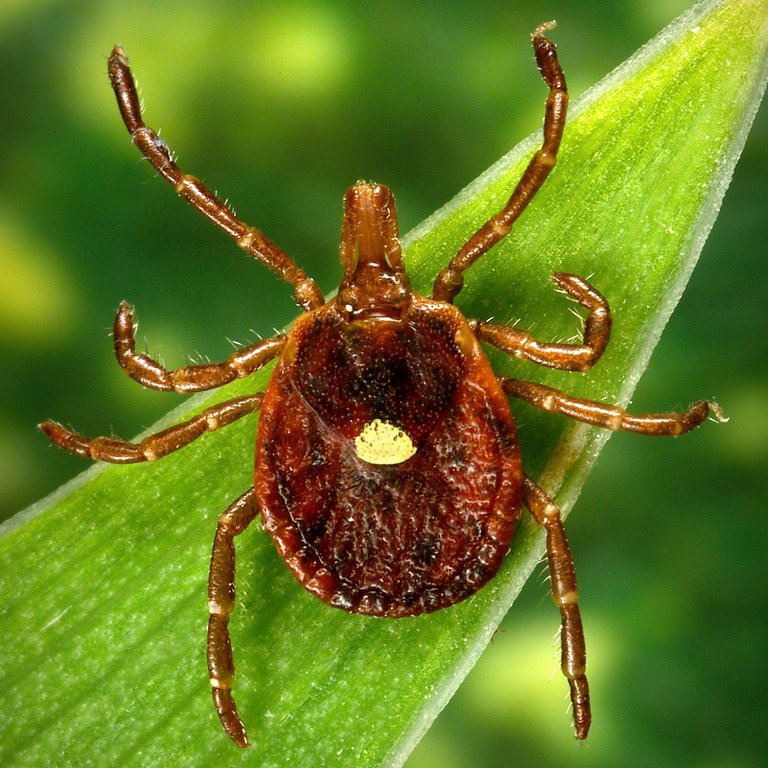
FILEW - This undated photo provided by the U.S. Centers for Disease Control and Prevention shows a female Lone Star tick, which despite its Texas-sounding name, is found mainly in the Southeast. (James Gathany/CDC via AP)

Some outside experts said it appears to be the first documented case of someone suffering a deadly alpha-gal reaction shortly after eating meat.

It’s possible other deaths have happened but were assumed to be from other causes and not thoroughly investigated like this one was, said Joshua Benoit, a tick biologist at the University of Cincinnati.

A Centers for Disease Control and Prevention spokesperson said the agency was not involved in this investigation and could not speak definitively about whether it’s the first such death. The CDC recently released a free online training module to increase awareness and improve diagnosing, she added.

Dr. Scott Commins, a leading alpha-gal syndrome researcher at the University of North Carolina, called the death an “unmitigated tragedy.”

“Totally unnecessary and with increased awareness, this won’t happen again,” he said in an email.

The case report was published this week in the Journal of Allergy and Clinical Immunology. The lead author was the University of Virginia’s Dr. Thomas Platts-Mills, who led the 2011 paper that first linked Lone Star tick bites to the meat allergy.

People with alpha-gal syndrome can experience symptoms including hives, nausea, vomiting, diarrhea, severe stomach pain, difficulty breathing, dizziness and swelling of the lips, throat, tongue or eye lids. Unlike some other food allergies, which occur soon after eating, these reactions typically hit hours later.

The new report tells of a healthy airline pilot who in the summer of 2024 went on a camping trip with his wife and children. They had steak as part of a late supper. That was unusual — the man rarely ate meat.

He woke up at 2 a.m. with severe stomach pain, diarrhea and vomiting. He gradually felt better, went back to sleep, and the next morning he felt well enough to eat breakfast and walk 5 miles.

Two weeks later, back home in New Jersey, he went to a barbecue, where he ate a hamburger. About four hours later, he grew ill. A short time after that, his son found him unconscious on the bathroom floor. The son called paramedics, but the man was declared dead that night at a hospital.

The researchers said blood tests revealed evidence of alpha-gal syndrome. Proof that it came from a Lone Star tick is incomplete. The authors made the link based on a statement from the man’s wife, who had said he had 12 or 13 “chigger” bites around his ankles earlier in the summer.

But the conclusion makes sense, as people in the eastern U.S. sometimes mistake the bites from mites with those from larval ticks, Commins said.

The number of cases of Alpha-gal syndrome is growing for a variety of reasons, including the Lone Star tick’s expanding range, more people coming into contact with the ticks and more doctors learning about it and ordering tests for it.

It can take weeks or longer for infected people to develop the syndrome, which is named for the alpha-gal carbohydrate found in the tick’s saliva. Initial reactions to red meat may be milder but grow progressively more severe, Benoit said.

Some patients have only stomach symptoms, and the American Gastroenterological Association has advised that people with unexplained diarrhea, nausea and abdominal pain should be tested for the syndrome.

___

The Associated Press Health and Science Department receives support from the Howard Hughes Medical Institute’s Department of Science Education and the Robert Wood Johnson Foundation. The AP is solely responsible for all content.


Report Error Submit a Tip

More Stories

May be whiff of truth to ex’s odour ardour

Maureen Scurfield 5 minute read 2:01 AM CDT

DEAR MISS LONELYHEARTS: I ran into an old boyfriend I used to curl on a team with, and we went for drinks. We’ve been almost eight years apart, and I couldn’t remember why we broke up, as we always had such a great time together.

It wasn’t until the second date — this time on a weekend — that it came back to me, with a jolt. Pee-yew! I remembered he doesn’t use deodorant on weekends. Why? He enjoys his own body odour. I recalled that a bit too late, and it was just as awful as ever! I went home early.

Tonight, he called and I refused him another date. I said, “Think back. You remember why we broke up?” Then he said, “Oh yeah, you hated my no-deodorant weekend policy. Well, guess what? Some women don’t mind!” I said I really doubted that, and that ended the conversation. Miss L., wouldn’t any women find stinky underarms offensive?

— Sensitive Nose, Fort Richmond

Letters, Oct. 3

7 minute read 2:01 AM CDT

A morning in the life …

My very first lesson does not start when I walk into that lecture hall, oh no — it starts long before. It begins when I walk to my car, check the estimated arrival time to the University of Manitoba and hope that Winnipeg traffic agrees with it.

A drive that appears completely manageable changes almost immediately when I’m greeted by a tsunami of orange pylons and a line of cars that appears to go on forever. Traffic moves by the inch, lanes magically disappear and the detour I took yesterday now has a detour of its own. These factors make me do a calculation that I have become all too familiar with. How late can I arrive and still find parking, run to my class across campus and get to class with enough time left to make it worth it?

I have grown used to people saying, “Why not just leave earlier?” I do. But when I’m already leaving for my 8:30 a.m. class at 7 a.m., there’s only so much I can do. This drive that some would think is relaxing is one that feels like an assignment that I didn’t know I had to complete and is due at 8:30 a.m.

Jets bench boss Arniel talks rebuilding from last season’s struggles

Mike McIntyre and Ken Wiebe 12 minute read Preview

Jets bench boss Arniel talks rebuilding from last season’s struggles

Mike McIntyre and Ken Wiebe 12 minute read Thursday, Oct. 1, 2026

Scott Arniel has a lot on his plate these days.

But the head coach of the Winnipeg Jets took some time Thursday to sit down with Free Press hockey writers Mike McIntyre and Ken Wiebe to discuss a number of topics on the eve of a new hockey season. This interview has been condensed and edited for clarity.

Wiebe: What was the evaluation of last season like? What did you personally do in an attempt to improve after going from first-overall to 26th-overall?

I just went back and looked at things and made sure my communication was where it needed to be with my players. Was my communication where it needed to be with my boss, with my general manager (Kevin Cheveldayoff)? How our coaching staff worked. How we handled highs and lows. Things I felt I could have done better.

Read
Thursday, Oct. 1, 2026

Scientists document a death from a meat allergy tied to certain ticks

Mike Stobbe, The Associated Press 4 minute read Preview

Scientists document a death from a meat allergy tied to certain ticks

Mike Stobbe, The Associated Press 4 minute read Friday, Nov. 14, 2025

NEW YORK (AP) — Researchers have reported what they believe is the first documented death from a meat allergy that can be triggered by tick bites.

A 47-year-old New Jersey man died last year from alpha-gal syndrome, which in 2011 was first linked to bites from the Lone Star tick.

More than 100,000 people in the U.S. have become allergic to red meat since 2010 because of the syndrome, according to one estimate.

Some outside experts said it appears to be the first documented case of someone suffering a deadly alpha-gal reaction shortly after eating meat.

Read
Friday, Nov. 14, 2025

Gordon Bell rings in a century

Maggie Macintosh 13 minute read Preview

Gordon Bell rings in a century

Maggie Macintosh 13 minute read Updated: Yesterday at 8:06 PM CDT

Mischka Valencia had gotten used to the hum of heavy machinery at Gordon Bell High School.

“Ever since I’ve been here, it’s all been under construction,” the Grade 12 student said, standing on the sidelines of the brightly painted revamped outdoor basketball court. “I had no idea this was a court.”

The Filipina teenager landed in Winnipeg several months after the inner-city campus had transformed into a construction site.

It was the fall of 2023 and Mischka’s priorities were fitting in, befriending classmates and learning a third language via first-period French.

Read
Updated: Yesterday at 8:06 PM CDT

Six high school hockey programs ceased operations following new Hockey Manitoba policy

Joshua Frey-Sam 7 minute read Preview

Six high school hockey programs ceased operations following new Hockey Manitoba policy

Joshua Frey-Sam 7 minute read Updated: Yesterday at 8:19 PM CDT

She lived the best of both worlds.

For the last three years, the 17-year-old wore a sweater for two different hockey programs — her high school team and AAA club in the Manitoba Female Hockey League — and was preparing to flourish in both colours again this winter.

Recently, however, the blue-liner was disappointed to learn she is no longer eligible to play her Grade 12 season with her school owing to a new policy imposed by Hockey Manitoba that bans players from participating in the Manitoba Women’s High School Hockey League if they are rostered on a U18 AAA team.

The rule applies to all athletes who play for both Winnipeg-based and rural AAA teams.

Read
Updated: Yesterday at 8:19 PM CDT