Scarification: The simple seed-starting trick that helps tough-coated seeds sprout faster

Advertisement

Advertise with us

I’m currently dusting off my seed-starting supplies and sorting through seed packets from years past. Seed starting is an annual ritual for many gardeners, but if you’re new to the party, it would be helpful to know that not all seeds should be treated the same way.

Read this article for free:


or

Already have an account? Log in here »

To continue reading, please subscribe:

Subscribe and receive a limited-edition Free Press branded hat or tote.

Digital Subscription

One year of digital access for only $205*

  • Enjoy unlimited reading on winnipegfreepress.com
  • Read the E-Edition, our digital replica newspaper
  • Access News Break, our award-winning app
  • Play interactive puzzles

*First annual payment billed as $205.00 + GST for one year. This annual subscription will automatically renew at $233.00 + GST every 52 weeks (10% off the regular annual price of $259.35). Offer available to new and qualified returning subscribers only. Cancel any time.

To continue reading, please subscribe:

Add Free Press access to your Brandon Sun subscription for only an additional

$1 for the first 4 weeks*

  • Enjoy unlimited reading on winnipegfreepress.com
  • Read the E-Edition, our digital replica newspaper
  • Access News Break, our award-winning app
  • Play interactive puzzles
Start now

*Your next Brandon Sun subscription payment will increase by $1.00 and you will be charged $17.95 plus GST for four weeks. After four weeks, your payment will increase to $24.95 plus GST every four weeks.

Hey there, time traveller!
This article was published 23/02/2026 (227 days ago), so information in it may no longer be current.

I’m currently dusting off my seed-starting supplies and sorting through seed packets from years past. Seed starting is an annual ritual for many gardeners, but if you’re new to the party, it would be helpful to know that not all seeds should be treated the same way.

Many seeds only require soil and water to sprout. Others, however, have a harder coating that makes germination a bit difficult. That’s because in the wild, they rely on birds and other wildlife that eat them to carry them far distances before dropping them.

It’s a good plan: The journey ensures biodiversity by introducing the species to another location. And the seed’s tough outer coating ensures its survival through an animal’s digestive tract, which erodes only enough of the protective layer to allow water to enter. The remaining coating prevents the seed from waking up too early, which would otherwise spell death for tender sprouts in cold temperatures.
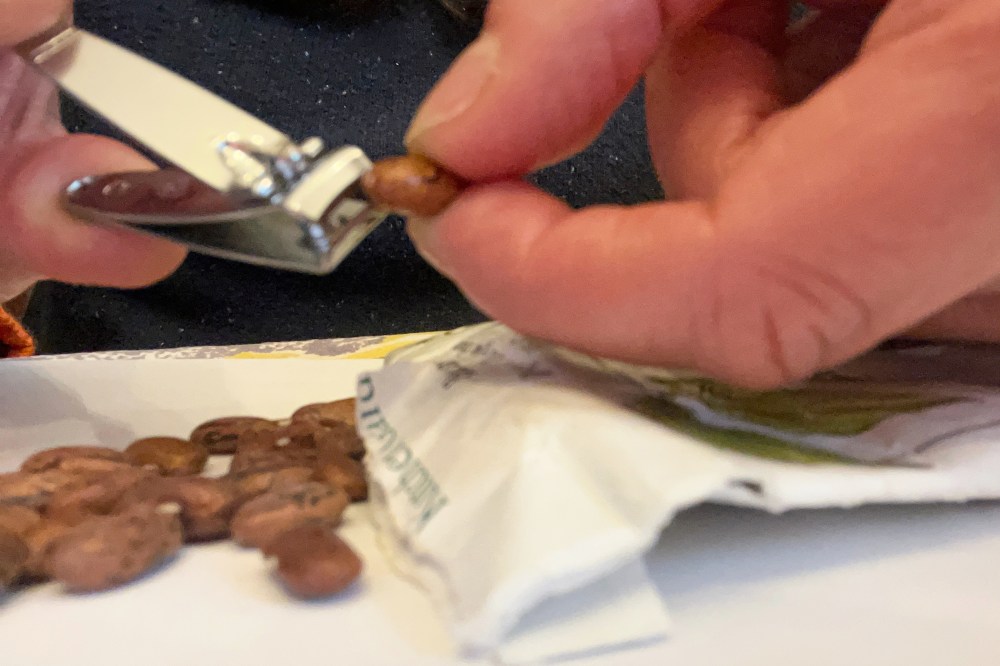
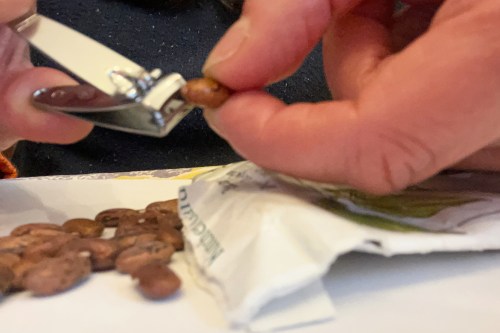
A bean seed undergoes scarification with a set of nail clippers on Feb. 17, 2026. (Jessica Damiano via AP)

But nature’s survival plan creates a bit of a challenge for home gardeners because the hard coating prevents those seeds from sprouting easily. So it’s up to us to mimic the effects of stomach acid to expose the seed’s inner layer so that moisture can penetrate.

This is called scarification, and there are a few ways to do it, all of which are simple.

Sanding

Rub each seed lightly against medium-grit sandpaper, an emery board or a nail file until you see a hint of its paler inner layer. This method works best with larger seeds, but you can also tuck several small ones between two sheets of sandpaper and gently rub the sheets together. Just a little friction should do the trick.

Nicking

Sometimes I use small nail clippers intended for babies to snip a tiny sliver off the edge of the seed’s coat.

Soaking

If you have more time than wherewithal, this is the easiest method: place the seeds in a bowl, cover them with warm water, and let them sit for a few hours or overnight. They’ll swell slightly as they take in moisture, which is exactly what you want.

Some tips

Never use hot water; cooked seeds won’t grow. Keep the temperature below 150 degrees Fahrenheit (66 degrees Celsius). And whatever method you choose, do it right before planting. Once the seed’s inner tissue is exposed, it will begin to dry out.

Is scarification absolutely required? No. Seeds will often sprout without it, but it could take much longer, and you’ll likely end up with far fewer seedlings. Scarified seeds don’t have to wait around for their coats to break down under soil, which is a real advantage if your growing season is short, your elevation is high or you’re a procrastinator.

Some common annuals and perennials that benefit from the practice include Indian mallow (Abutilon), columbine (Aquilegia), hollyhock (Alcea), sweet alyssum (Alyssum), milkweed (Asclepias), wild indigo (Baptisia), beautyberry (Callicarpa), bellflower (Campanula), Joe Pye weed (Eutrochium), sweet pea (Lathyrus odoratus), bluebonnet (Lupine), mallow (Malva), poppy (Papaver), beardtongue (Penstemon) and nasturtium (Tropaeolum).

Edibles to scarify include all bean types, luffa, spinach, strawberry and winter squash.

Some of the really stubborn seeds — chickpeas, lima beans, nasturtiums — respond well to a one-two approach: a little nick or sanding, followed by a soak.

___

Jessica Damiano writes weekly gardening columns for the AP and publishes the award-winning Weekly Dirt Newsletter. You can sign up here for weekly gardening tips and advice.

___

For more AP gardening stories, go to https://apnews.com/hub/gardening.

Report Error Submit a Tip

More Stories

RMTC finds charm behind Cyrano’s prominent proboscis

Ben Waldman 7 minute read Preview

RMTC finds charm behind Cyrano’s prominent proboscis

Ben Waldman 7 minute read 5:25 PM CDT

There are more flattering places to have your body described than in a book called Les Grotesques, but it was in that 1844 work that French readers such as playwright Edmond Rostand were reintroduced to a 17th-century firebrand named Cyrano de Bergerac, the subject of Royal Manitoba Theatre Centre’s season-opening production.

Yes, he was real.

And yes, his nose was apparently spectacular.

“Less doughy, less fleshy in its contours, it shows more bone and cartilage, more flat planes and highlights — it is most heroic,” wrote French poet Théophile Gautier, sparing no detail in his facial analysis.

Read
5:25 PM CDT

Duo accused in random Osborne Village attacks no strangers to police

Dean Pritchard and Chris Kitching 5 minute read Preview

Duo accused in random Osborne Village attacks no strangers to police

Dean Pritchard and Chris Kitching 5 minute read Updated: Yesterday at 6:48 PM CDT

A man arrested following a violent, random attack on two men in Osborne Village late Sunday night was released from jail a week earlier after a dozen charges, including crimes of violence, were stayed against him, court records show.

A man in his 40s was sent to hospital in critical condition and another man in his 20s in stable condition following separate attacks shortly before midnight in the vicinity of River Avenue and Osborne Street.

Police have charged Reginald Owen, 26, and Meaghan Owen, 32, both from Little Grand Rapids, with assault with a weapon and aggravated assault. They both remain in custody.

Court records show Reginald Owen was sentenced Sept. 24 to 30 days time served after pleading guilty to simple possession of magic mushrooms. Owen remained in custody until the following day when he was set to apply for bail on charges including assault, sexual assault, choking to overcome resistance, pointing a firearm, and carrying a concealed weapon.

Read
Updated: Yesterday at 6:48 PM CDT

Canadian Mennonite University students, staff victims of cyberattack

Free Press staff 3 minute read Preview

Canadian Mennonite University students, staff victims of cyberattack

Free Press staff 3 minute read Updated: 6:29 PM CDT

Canadian Mennonite University fell victim to a cyberattack that compromised the data of current and former students and employees last month.

School officials became aware of the cybersecurity incident, in which an “unknown third party” accessed its information technology systems without authorization, on Sept. 18, university president Cheryl Pauls said in a recent statement.

The university has since confirmed the third party used that access to steal information from its systems.

“We immediately initiated our incident response plan, retained expert assistance, and informed the university community whose workflows were affected as soon as we became aware of the incident,” Pauls said. “We also reported this incident to law enforcement and will be filing a report with the Office of the Privacy Commissioner of Canada.”

Read
Updated: 6:29 PM CDT

Klein claims he was offered PC party position to exit 2022 mayoral race to help Gillingham win

Carol Sanders 6 minute read Preview

Klein claims he was offered PC party position to exit 2022 mayoral race to help Gillingham win

Carol Sanders 6 minute read Updated: 12:32 PM CDT

Mayoral candidate Kevin Klein said he was offered a position with the provincial Tories if he pulled out of the 2022 mayoral race that saw then-city councillor Scott Gillingham defeat former mayor Glen Murray.

Read
Updated: 12:32 PM CDT

Infill development on minds of all three River Heights-Fort Garry candidates

Joyanne Pursaga 4 minute read Preview

Infill development on minds of all three River Heights-Fort Garry candidates

Joyanne Pursaga 4 minute read Yesterday at 1:07 PM CDT

A trio of candidates will compete to become the first new city councillor in River Heights-Fort Garry since 2009.

Coun. John Orlikow, who won the seat in a byelection, is not running for another term.

Georgina Sabesky, who served as Orlikow’s executive assistant for 17 years, is now one of the candidates vying for the council seat.

Sabesky said that job gave her ample knowledge of the ward.

Read
Yesterday at 1:07 PM CDT

Scarification: The simple seed-starting trick that helps tough-coated seeds sprout faster

Jessica Damiano, The Associated Press 4 minute read Preview

Scarification: The simple seed-starting trick that helps tough-coated seeds sprout faster

Jessica Damiano, The Associated Press 4 minute read Monday, Feb. 23, 2026

I’m currently dusting off my seed-starting supplies and sorting through seed packets from years past. Seed starting is an annual ritual for many gardeners, but if you’re new to the party, it would be helpful to know that not all seeds should be treated the same way.

Many seeds only require soil and water to sprout. Others, however, have a harder coating that makes germination a bit difficult. That’s because in the wild, they rely on birds and other wildlife that eat them to carry them far distances before dropping them.

It’s a good plan: The journey ensures biodiversity by introducing the species to another location. And the seed’s tough outer coating ensures its survival through an animal’s digestive tract, which erodes only enough of the protective layer to allow water to enter. The remaining coating prevents the seed from waking up too early, which would otherwise spell death for tender sprouts in cold temperatures.

But nature’s survival plan creates a bit of a challenge for home gardeners because the hard coating prevents those seeds from sprouting easily. So it’s up to us to mimic the effects of stomach acid to expose the seed’s inner layer so that moisture can penetrate.

Read
Monday, Feb. 23, 2026