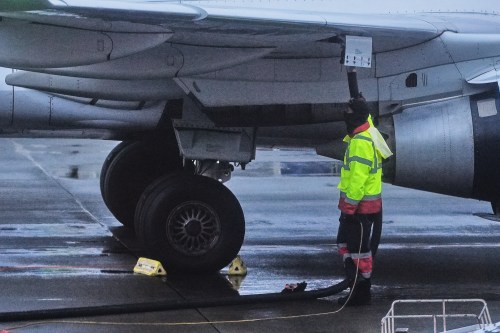
Jet fuel prices are rising. That could make summer flights more expensive
Advertisement
Read this article for free:
or
Already have an account? Log in here »
To continue reading, please subscribe:

Digital Subscription
One year of digital access for only $205*
- Enjoy unlimited reading on winnipegfreepress.com
- Read the E-Edition, our digital replica newspaper
- Access News Break, our award-winning app
- Play interactive puzzles
*First annual payment billed as $205.00 + GST for one year. This annual subscription will automatically renew at $233.00 + GST every 52 weeks (10% off the regular annual price of $259.35). Offer available to new and qualified returning subscribers only. Cancel any time.
To continue reading, please subscribe:
Add Free Press access to your Brandon Sun subscription for only an additional
$1 for the first 4 weeks*
- Enjoy unlimited reading on winnipegfreepress.com
- Read the E-Edition, our digital replica newspaper
- Access News Break, our award-winning app
- Play interactive puzzles
*Your next Brandon Sun subscription payment will increase by $1.00 and you will be charged $17.95 plus GST for four weeks. After four weeks, your payment will increase to $24.95 plus GST every four weeks.
Read unlimited articles for free today:
or
Already have an account? Log in here »
Hey there, time traveller!
This article was published 13/03/2026 (188 days ago), so information in it may no longer be current.
Jet fuel prices are rising as the war in the Middle East disrupts global oil supplies, putting cost pressure on airlines as the busy summer travel season approaches.
Experts say it’s not a question of if airfares will go up, but when, for how long and by how much. The impact may be felt most on long-haul international routes, which burn significantly more fuel than shorter flights.
Some airlines outside of the U.S. have announced fare increases or fuel surcharges in an effort to offset the growing expense. In the U.S., United Airlines CEO Scott Kirby recently warned that airfare increases will “probably start quick” as increasing fuel costs work their way through the industry.
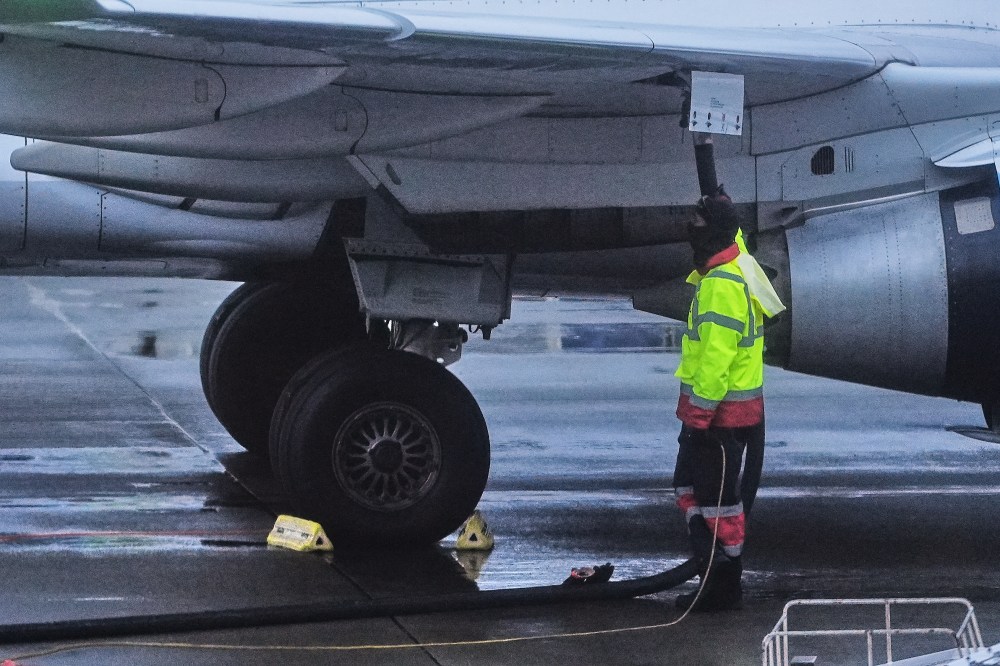
Why are jet fuel prices rising?
The war is constraining oil exports and prompting major producers like Kuwait, Saudi Arabia and Iraq to scale back output as shipments face growing obstacles.
Iran has attacked commercial ships across the Persian Gulf and targeted oil infrastructure in Gulf Arab nations following U.S. and Israeli strikes. The attacks have effectively halted traffic through the Strait of Hormuz, a narrow passage that carries about one-fifth of the world’s oil supply.
The volatile crude oil prices causing retail gasoline prices to swing up sharply have had the same effect on the price of jet fuel. The average price in the U.S. reached $3.99 per gallon on Friday, up from $2.50 the day before the war started two weeks ago, according to the Argus U.S. Jet Fuel Index. The index tracks the average price airlines pay for jet fuel across major U.S. airports.
Figures from the U.S. Department of Transportation’s Bureau of Transportation Statistics show that U.S. airlines paid about $2.36 per gallon for fuel in January, the most recent data available.
What does it mean for airlines?
Some airlines are partially protected from sudden price spikes through fuel hedging, a strategy that allows them to lock in fuel prices months or even years in advance. But not all airlines hedge, and those that do are usually only protected for a portion of their fuel needs, meaning prolonged price surges may cause more carriers to raise fares.
“No one hedges anymore, and even if you do, hedging the crack spread is really hard to do,” Kirby said at a Harvard event last week. The crack spread is the difference between the price of crude oil and the price of products produced from it, like gasoline.
Another factor for airlines: Air space closures have required rerouting flights around parts of the Middle East, which can mean longer routes, additional fuel burn and higher operating costs.
What does it mean for travelers?
Travelers may feel the impact in several ways.
Airlines can add or increase fuel surcharges, an extra fee common among carriers outside of the U.S. that’s added on top of the base ticket price.
Major U.S. carriers, however, don’t charge a separate fuel surcharge. Instead, they build fuel costs into the overall ticket price, meaning any increase is more likely to show up as a higher base fare for travelers, according to Tyler Hosford, security director at global risk management firm International SOS.
Airlines also may adjust what they charge for premium add-ons — such as seat upgrades, extra legroom seats, checked bags or priority boarding — as another way to offset higher operating costs. For consumers, that means even if the base fare doesn’t rise immediately, the total cost of a trip could still increase once additional fees and upgrades are factored in.
If higher fuel prices persist, airlines may also adjust schedules or reduce certain routes, said Christopher Anderson, a professor at Cornell University’s business school whose research includes operations and information management in the hospitality and airline industries.
How high could airfares climb?
It’s difficult to predict exactly how much ticket prices could increase as a result of costlier oil and fuel. Industry analysts say the impact of higher jet fuel costs can vary based on the route, airline and travel demand.
Fuel typically accounts for 20% to 25% of an airline’s operating costs, making it the second-largest expense after labor, according to Rob Britton, an adjunct marketing professor at Georgetown University and retired American Airlines executive. A sharp rise in fuel prices therefore can have a major impact on airlines’ budgets.
Which airlines have announced price hikes?
So far, most fare increases and fuel surcharges are coming from airlines based in the Asia-Pacific region, but experts expect more airlines — especially those without fuel hedging — to follow if high jet fuel prices persist.
Hong Kong’s flag carrier, Cathay Pacific, said it would increase its fuel surcharge starting Wednesday.
“The price of jet fuel has approximately doubled since March amid the latest developments in the Middle East,” the airline said in a statement Thursday.
Other airlines with price increases or new surcharges include:
— Air France-KLM said roundtrip economy fares on long-haul flights could rise by about 50 euros (about $57).
— Air India introduced fuel surcharges Thursday on certain routes. After March 18, the carrier says the surcharge will increase by up to $50 for all tickets to Europe, North America and Australia.
— Hong Kong Airlines increased fuel surcharges across several routes as of Thursday.
— FlySafair in South Africa announced a temporary fuel surcharge

What can travelers do to keep costs down?
Experts say travelers planning summer trips may be able to limit the impact of rising airfares by booking earlier rather than waiting for last-minute deals.
Locking in ticket prices sooner — especially with flexible booking options that allow changes — can help secure lower prices before airlines adjust rates further.
Hosford, the security director at International SOS, suggests travelers stay flexible with travel dates, check fares at nearby airports and set alerts for price drops. He also recommends using frequent flyer miles or credit card points to book flights instead of holding out for a “perfect deal.”
“If you were going to spend cash on the flight but now you’re not, then that’s a good redemption deal,” he said.