Endometriosis painful, lack of research shameful

Advertisement
Read this article for free:
or
Already have an account? Log in here »
To continue reading, please subscribe:
Digital Subscription
One year of digital access for only $1.44 a week*
- Enjoy unlimited reading on winnipegfreepress.com
- Read the E-Edition, our digital replica newspaper
- Access News Break, our award-winning app
- Play interactive puzzles
*Billed as $5.77 plus GST every four weeks. After 52 weeks, price increases to the regular rate of $19.95 plus GST every four weeks. Offer available to new and qualified returning subscribers only. Cancel any time.
To continue reading, please subscribe:
Add Free Press access to your Brandon Sun subscription for only an additional
$1 for the first 4 weeks*
- Enjoy unlimited reading on winnipegfreepress.com
- Read the E-Edition, our digital replica newspaper
- Access News Break, our award-winning app
- Play interactive puzzles
*Your next Brandon Sun subscription payment will increase by $1.00 and you will be charged $17.95 plus GST for four weeks. After four weeks, your payment will increase to $24.95 plus GST every four weeks.
Read unlimited articles for free today:
or
Already have an account? Log in here »
Hey there, time traveller!
This article was published 17/03/2026 (220 days ago), so information in it may no longer be current.
In late 2023, I spent a few weeks in the dark days of winter talking to women about their experiences with endometriosis for a reported feature.
I listened as they told me about the labyrinthian, sometimes decades-long quest to get a diagnosis. They told me about being gaslit and dismissed by doctors. One told me about having to get surgery abroad and pay for it out of pocket.
I listened as they raged and cried.
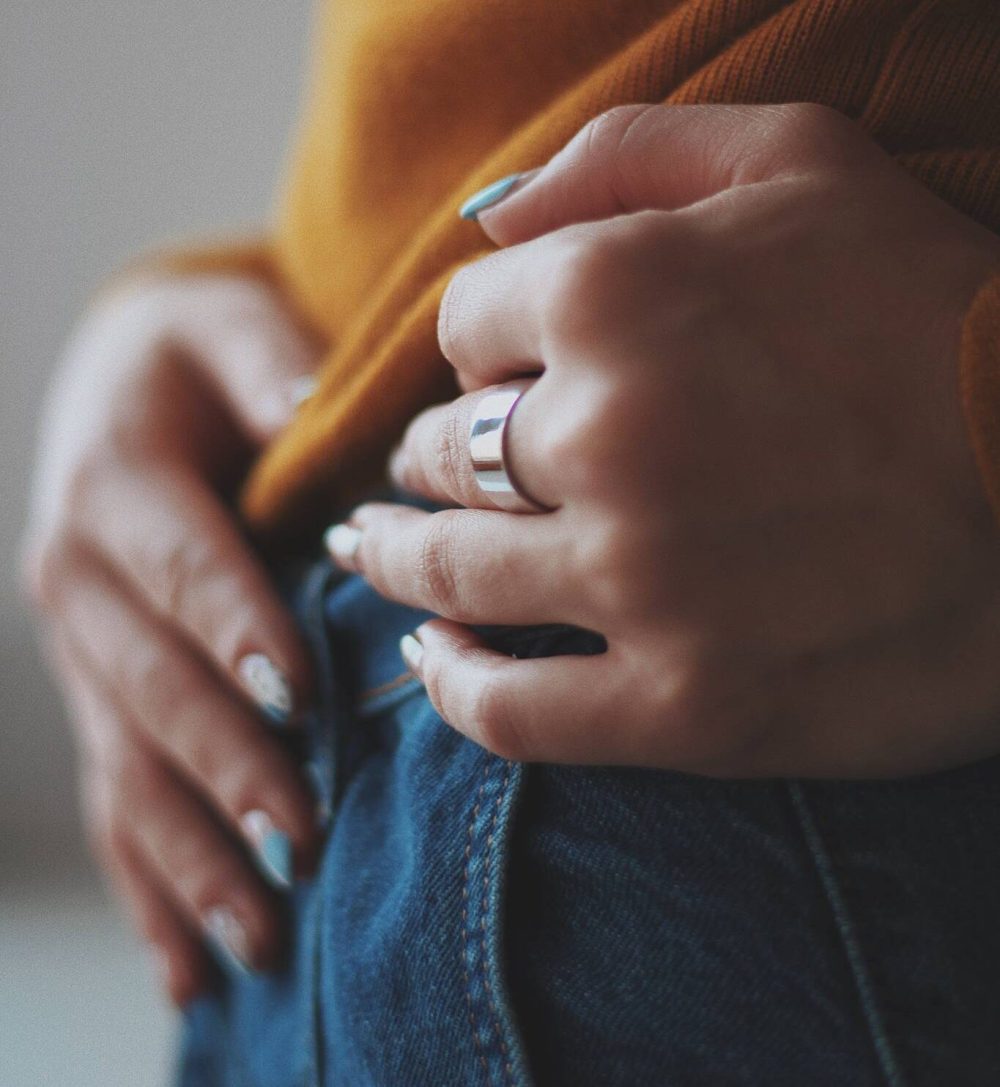
Freepik
Endometriosis causes debilitating pain and can negatively affect fertility.
Through my reporting, I learned the cruel facts of this disease.
That endometriosis is a chronic inflammatory disease in which tissue that looks and behaves similarly to the lining of the uterus grows outside the uterus.
That it’s found on or around reproductive organs in the pelvis or abdomen such as the ovaries, fallopian tubes and the surface of the uterus, but can also grow on or around other organs, such as the intestines, rectum, bladder or even diaphragm and lungs.
That it causes debilitating pain, heavy bleeding, extreme fatigue, brain fog and other symptoms.
That it can negatively impact fertility and organ function and quality of life.
That excision surgeries can offer relief, but it’s often temporary.
That it can grow back.
That there is no cure.
That it affects one in 10 women.
And then, two years later, I found out I am one of them.
In June 2024, I was sent to the ER by a minor injury clinic with what we thought was a rupturing appendix, just to give you a sense of pain level.
Turns out, it was actually a hemorrhagic ovarian cyst that had already burst, so there was nothing to be done except wait for my body to just … reabsorb it. (Man, what I would not give to be a brain in a jar.)
But a followup internal ultrasound in July revealed that a cyst next to it had already increased in size from the imaging taken a month previous.
It was also possible that this cyst was actually an endometrioma or a “chocolate cyst” — as though it’s a sweet lil’ treat that comes nestled in a heart-shaped box and not a growth filled with old blood — which is an indicator of endometriosis.
My GP referred me for an MRI (then a 60-week wait) and to a gynecologist.
Another internal ultrasound in November for an unrelated issue (brain in a jar!) revealed that the cyst had grown again.
When I finally got to see my gyne in February 2025, she took swift action, booking me in for a bilateral salpingectomy — the removal of the fallopian tubes — as well as the removal of the cyst that was now approaching the six-centimetre mark. The MRI, meanwhile, revealed the cyst was taking on an irregular shape.
During my May 2025 laparoscopy, my gynecologist, who also performed my surgery, was able to confirm what she’d suspected: that the cyst was indeed an endometrioma; I had endometriosis. Stage 4 endo, in fact, which, like cancer, is the most severe.
It’s like glue in there — so much so that torsion, a medical emergency (and a recent plot point on the medical drama The Pitt) in which a large cyst can cause the ovary to twist on its ligament, cutting off its blood supply, is not even possible in my body.
I need to stress that roughly one year from ER visit to surgical confirmation of endometriosis is fast. In many ways, mine was a good experience. It takes most women, on average, between seven and 10 years to get a diagnosis, since laparoscopic surgery is still the only way to definitively confirm and diagnose endo; it doesn’t always show up on imaging. (Other than the endometrioma, mine didn’t.)
In fact, had that initial cyst decided not to erupt, I wouldn’t know any of this. And who knows how big ol’ Count Chocula would have grown?
I’d accepted that my period was “weird,” that pain was “normal.” I actually almost didn’t see anyone about that pain in June. The only reason I did is because I suspected my appendix, not my reproductive organs.
And had I had a different care team, things might have gone differently, too.
The endo diagnosis was a relief. My period suddenly made sense. There was a path forward. When my gynecologist, who also held my hand as I was going under for surgery, said, “You belong to me now” at a followup appointment, I almost cried in her office.
I am pursuing medication therapy for now, which has come with its own suite of side effects. More surgery is likely in my future, and I will require a specialist, which will come with a wait.
And while my period is mostly gone, I still get flare-ups with showstopping cramps that radiate down my legs; I had one just last week so bad it caused me to miss work, just like so many other women who have to negotiate this disease every day.
I am one in 10.
March is Endometriosis Awareness Month. Despite how common the condition it is, it remains poorly understood, underdiagnosed, under-researched and underfunded.
There’s a real economic cost, here — women are having to leave their jobs or massively reduce their hours because of chronic pain — but the personal costs are even greater. So many women can’t show up to their lives the way they want to because of the pain.
Earlier this month, the Government of Canada announced $5.4 million to support five national organizations, including the Society of Obstetricians and Gynaecologists of Canada, which will get $1.93 million, and Endometriosis Network Canada, which will get $966,884. That’s not nothing, but it’s also not enough. There is too much endo and not enough specialists to treat it.
There are more studies on male pattern baldness than endometriosis. That’s not to say it’s not studied at all; a (now-retracted, thankfully) paper looked at the attractiveness of women with rectovaginal endometriosis.
There are more studies on male pattern baldness than endometriosis. That’s not to say it’s not studied at all; a (now-retracted, thankfully) paper looked at the attractiveness of women with rectovaginal endometriosis. I wish I were kidding but no, someone made the brave scientific inquiry, “Are women with invasive endo… hotter?”
There is also so much shame, silence and stigma around women’s health that I refuse to contribute to. Luckily, I love talking about periods in the newspaper. One time, a man told me I “ruined his omelette” and I felt no shame at all. Use less ketchup, my guy, I don’t know what to tell you!
I’m going to keep talking about it — loudly — because it matters.

One of my endo sources who had a particularly frustrating journey (we need to find another word!) said something to me at the end of our interview that I never forgot:
“You make it strong, you make it stick, and you make it fiery, OK?”
You got it.
winnipegfreepress.com/jenzoratti
Jen Zoratti is a columnist and feature writer working in the Arts & Life department, as well as the author of the weekly newsletter NEXT. A National Newspaper Award finalist for arts and entertainment writing, Jen is a graduate of the Creative Communications program at RRC Polytech and was a music writer before joining the Free Press in 2013. Read more about Jen.
Every piece of reporting Jen produces is reviewed by an editing team before it is posted online or published in print – part of the Free Press‘s tradition, since 1872, of producing reliable independent journalism. Read more about Free Press’s history and mandate, and learn how our newsroom operates.
Our newsroom depends on a growing audience of readers to power our journalism. If you are not a paid reader, please consider becoming a subscriber.
Our newsroom depends on its audience of readers to power our journalism. Thank you for your support.
Jen Zoratti is a columnist and feature writer working in the Arts & Life department, as well as the author of the weekly newsletter NEXT. A National Newspaper Award finalist for arts and entertainment writing, Jen is a graduate of the Creative Communications program at RRC Polytech and was a music writer before joining the Free Press in 2013. Read more about Jen.
Every piece of reporting Jen produces is reviewed by an editing team before it is posted online or published in print – part of the Free Press‘s tradition, since 1872, of producing reliable independent journalism. Read more about Free Press’s history and mandate, and learn how our newsroom operates.
Our newsroom depends on a growing audience of readers to power our journalism. If you are not a paid reader, please consider becoming a subscriber.
Our newsroom depends on its audience of readers to power our journalism. Thank you for your support.
Advertisement Advertise With Us
Advertisement Advertise With Us