More than 150,000 uncounted COVID-19 deaths occurred early in the pandemic, a study finds

Advertisement

Advertise with us

NEW YORK (AP) — The COVID-19 pandemic's early death toll was much higher than the official U.S. count, according to a new study that spotlights dramatic disparities in the uncounted deaths.

Read this article for free:


or

Already have an account? Log in here »

To continue reading, please subscribe:

Subscribe and receive a limited-edition Free Press branded hat or tote.

Digital Subscription

One year of digital access for only $205*

  • Enjoy unlimited reading on winnipegfreepress.com
  • Read the E-Edition, our digital replica newspaper
  • Access News Break, our award-winning app
  • Play interactive puzzles

*First annual payment billed as $205.00 + GST for one year. This annual subscription will automatically renew at $233.00 + GST every 52 weeks (10% off the regular annual price of $259.35). Offer available to new and qualified returning subscribers only. Cancel any time.

To continue reading, please subscribe:

Add Free Press access to your Brandon Sun subscription for only an additional

$1 for the first 4 weeks*

  • Enjoy unlimited reading on winnipegfreepress.com
  • Read the E-Edition, our digital replica newspaper
  • Access News Break, our award-winning app
  • Play interactive puzzles
Start now

*Your next Brandon Sun subscription payment will increase by $1.00 and you will be charged $17.95 plus GST for four weeks. After four weeks, your payment will increase to $24.95 plus GST every four weeks.

Hey there, time traveller!
This article was published 18/03/2026 (201 days ago), so information in it may no longer be current.

NEW YORK (AP) — The COVID-19 pandemic’s early death toll was much higher than the official U.S. count, according to a new study that spotlights dramatic disparities in the uncounted deaths.

About 840,000 COVID-19 deaths were reported on death certificates in 2020 and 2021. But a group of researchers — using a form of artificial intelligence — estimate that as many as 155,000 unrecognized additional deaths likely occurred in that time outside of hospitals. That would mean about 16% of COVID-19 deaths went uncounted in those years.

The overall findings, published Wednesday by the journal Science Advances, were close to estimates from other studies of pandemic deaths during that time. But the authors of the new study tried to determine exactly which deaths were more likely to be missing from the official tallies.

FILE - Steve Grove, a chaplain at Hennepin County Medical Center, prays in a COVID-19 patient's room, Dec. 10, 2021, in Minneapolis. (AP Photo/Charlie Neibergall, File)

The answer: The undiagnosed dead were more likely to be Hispanic people and other people of color, who had died in the first few months of the pandemic, and who had been in certain states in the South and Southwest — including Alabama, Oklahoma and South Carolina.

Six years after the coronavirus swept through the U.S., barriers remain for many of the same people, said Steven Woolf, a Virginia Commonwealth University researcher not involved in the study.

“People on the margins continue to die at disproportionate rates because they can’t access care,” he said in an email.

Access to care wasn’t the only challenge

While hospital patients were routinely tested for COVID-19, many who grew sick and died outside of hospitals were not tested — often because at-home testing was not readily available early in the pandemic, said one of the study’s authors, the University of Minnesota’s Elizabeth Wrigley-Field.

In some parts of the country, death investigations are handled by elected coroners who don’t necessarily have the specialized training that medical examiners do. Some research has suggested partisan opinions could affect whether a sick person or their family members sought COVID-19 testing, and whether coroners pursued postmortem coronavirus testing. Indeed, some coroners said families had pressed them not to list COVID-19 as a cause of death.

“Our antiquated death investigation system is one key reason why we fell short of accurate counts, particularly outside of big metropolitan areas,” said Andrew Stokes of Boston University, the senior author on the paper.

Death counts were swept up in COVID politics

The Centers for Disease Control and Prevention data count more than 1.2 million COVID-19 deaths since the pandemic erupted in early 2020. More than two-thirds of those reported deaths occurred in 2020 and 2021.

The count has long been debated, as false claims on social media said the number of COVID-19 deaths was inflated. Adding to the rancor was President Donald Trump, who in August 2020 retweeted a post claiming only 6% of reported deaths were actually from COVID-19 — a post Twitter later removed.

To be sure, there were other kinds of pandemic deaths. For example, uninfected people died from other medical conditions because they could not get care at hospitals overloaded with COVID-19 patients. People with drug addictions died of overdoses as a result of social isolation and losing access to treatment. Other studies that have estimated the actual number of pandemic deaths have taken those deaths into account.

But Stokes and his collaborators wanted to focus on the deaths of people infected by the coronavirus. They used machine learning to sift through the death certificates of infected patients who died in hospitals and then used patterns observed in those records to evaluate death certificates of people who died outside hospitals and whose deaths were attributed to things like pneumonia or diabetes.

Scientists’ understanding of the strengths and weaknesses of machine learning-reliant research is still evolving, but Woolf called this team’s use of it “intriguing.”

___

The Associated Press Health and Science Department receives support from the Howard Hughes Medical Institute’s Department of Science Education and the Robert Wood Johnson Foundation. The AP is solely responsible for all content.
Report Error Submit a Tip

More Stories

Jets get first win of new NHL season

1 minute read Updated: Yesterday at 6:25 PM CDT

DETROIT - The Winnipeg Jets have their first victory of the new NHL season.

Stuart Skinner made 33 saves and the visitors struck three times on the power play to skate away with a 3-2 triumph over the Detroit Red Wings on Sunday afternoon.

Kyle Connor led the way with two goals and an assist, while Cole Perfetti had the other tally along with two helpers. Jets defenceman Josh Morrissey chipped in with two assists.

Tyrel Bauer also scored a decisive victory in a fight with Red Wings forward (and Winnipeg native) Keegan Kolesar.

More than 150,000 uncounted COVID-19 deaths occurred early in the pandemic, a study finds

Mike Stobbe, The Associated Press 4 minute read Preview

More than 150,000 uncounted COVID-19 deaths occurred early in the pandemic, a study finds

Mike Stobbe, The Associated Press 4 minute read Wednesday, Mar. 18, 2026

NEW YORK (AP) — The COVID-19 pandemic's early death toll was much higher than the official U.S. count, according to a new study that spotlights dramatic disparities in the uncounted deaths.

About 840,000 COVID-19 deaths were reported on death certificates in 2020 and 2021. But a group of researchers — using a form of artificial intelligence — estimate that as many as 155,000 unrecognized additional deaths likely occurred in that time outside of hospitals. That would mean about 16% of COVID-19 deaths went uncounted in those years.

The overall findings, published Wednesday by the journal Science Advances, were close to estimates from other studies of pandemic deaths during that time. But the authors of the new study tried to determine exactly which deaths were more likely to be missing from the official tallies.

The answer: The undiagnosed dead were more likely to be Hispanic people and other people of color, who had died in the first few months of the pandemic, and who had been in certain states in the South and Southwest — including Alabama, Oklahoma and South Carolina.

Read
Wednesday, Mar. 18, 2026

’Disgusting’ posters being investigated by police

Morgan Modjeski 4 minute read Saturday, Oct. 3, 2026

The Winnipeg Police Service major crimes unit is investigating what some have labelled offensive and hateful posters on full-display at a Winnipeg home.

One of the people irked by the display is Gracie Garrett. She’s has lived on Ashburn Street in Winnipeg’s Minto neighbourhood for almost ten years. She’s never felt unsafe in the neighbourhood before, but now, a set of posters plastered on a nearby house are making her feel uneasy.

The five signs, posted facing the street prominently on a front window, contain a slur, refer to Nazis as “heroes” and call Muslims, Christians and other groups “evil.”

Learning of the signs Friday, Garrett said she’ll be reporting the posters to police, as she worries they incite and promote violence.

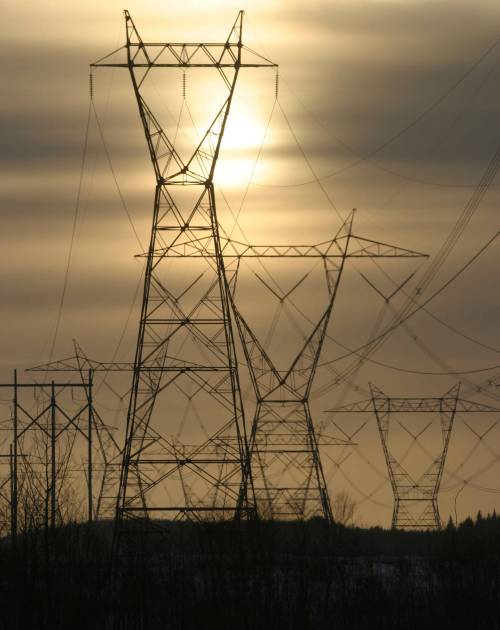
Hydro Québec faces issue we should avoid

Editorial 4 minute read Preview

Hydro Québec faces issue we should avoid

Editorial 4 minute read 2:01 AM CDT

You might be tempted to call it a canary in an electric power generation coal mine.

But instead, it’s just another heads-up into the already-obvious problem with the proliferation of data centres.

This week, Hydro-Québec went before the Régie de l’énergie, Québec’s public utilities board, to change the rules for new and existing large data centres.

Now, it was not that long ago that Hydro Québec was actively wooing data centres — offering bulk power rates to be used to lure labour-intensive, power-hungry heavy industry (think aluminum smelters) with rates substantially lower than they offer Québec’s own residential customers. It was a way to use surplus power to create jobs and drive economic activity.

Read
2:01 AM CDT

Winnipeggers witness unveiling of Japanese Canadian monument in B.C.

Morgan Modjeski 6 minute read Preview

Winnipeggers witness unveiling of Japanese Canadian monument in B.C.

Morgan Modjeski 6 minute read Saturday, Oct. 3, 2026

As Miki Stewart gathered with her family at the Japanese Cultural Association of Manitoba on Saturday afternoon, she was thinking of her parents, Yoshimaru and Yoshi Abe.

Both Stewart, 80, and her sister Yumi Falk, 81, alongside an older brother, were born in the Tashme internment camp in British Columbia. They were among more than 2,600 Japanese Canadians who were forcefully removed and interned at the camp following the bombing of Pearl Harbour and Canada’s declaration of war on Japan in 1941.

“They didn’t talk much about how they suffered,” Stewart said of her parents. “But they did.”

She was amongst a group of more than 150 people who gathered at the association’s McPhillips headquarters on Saturday afternoon to watch the unveiling of the Japanese Canadian Monument in Victoria B.C.

Read
Saturday, Oct. 3, 2026

Today’s horoscope

Georgia Nicols 4 minute read Preview

Today’s horoscope

Georgia Nicols 4 minute read Yesterday at 2:00 AM CDT

MOON ALERT: Caution! Avoid shopping (except food and gas) and important decisions until after 6:30 p.m. today. After that, the moon moves from Cancer into Leo.

ARIES (March 21-April 19)

Don’t expect much co-operation from partners, spouses and close friends. This is why you might feel cut off from others or a bit lonely. There’s the sense a gulf exists between you and everyone else. But this is temporary. Courage!

TAURUS (April 20-May 20)

Read
Yesterday at 2:00 AM CDT