David Tamarkin’s recipe for Greens, Grains and Fried Egg works for any meal

Advertisement

Advertise with us

Eggs are better with carbs, and they’re particularly good with grains like rice, farro and quinoa, which can soak up a runny yolk. The herby-green grains here, from my cookbook, “Cook90,” are good for more than just breakfast, though — you could pair them with sautéed fish, skin-on chicken breasts and almost any roasted vegetable.

Read this article for free:


or

Already have an account? Log in here »

To continue reading, please subscribe:

Subscribe and receive a limited-edition Free Press branded hat or tote.

Digital Subscription

One year of digital access for only $205*

  • Enjoy unlimited reading on winnipegfreepress.com
  • Read the E-Edition, our digital replica newspaper
  • Access News Break, our award-winning app
  • Play interactive puzzles

*First annual payment billed as $205.00 + GST for one year. This annual subscription will automatically renew at $233.00 + GST every 52 weeks (10% off the regular annual price of $259.35). Offer available to new and qualified returning subscribers only. Cancel any time.

To continue reading, please subscribe:

Add Free Press access to your Brandon Sun subscription for only an additional

$1 for the first 4 weeks*

  • Enjoy unlimited reading on winnipegfreepress.com
  • Read the E-Edition, our digital replica newspaper
  • Access News Break, our award-winning app
  • Play interactive puzzles
Start now

*Your next Brandon Sun subscription payment will increase by $1.00 and you will be charged $17.95 plus GST for four weeks. After four weeks, your payment will increase to $24.95 plus GST every four weeks.

Eggs are better with carbs, and they’re particularly good with grains like rice, farro and quinoa, which can soak up a runny yolk. The herby-green grains here, from my cookbook, “Cook90,” are good for more than just breakfast, though — you could pair them with sautéed fish, skin-on chicken breasts and almost any roasted vegetable.

The herby-oily green sauce, a mint and parsley sauce that starts by roasting an entire head of garlic, lasts at least a week in the fridge and sometimes up to three; I top it off with a little olive oil each time I use it to create a seal.

To make a big batch of this recipe and eat from it all week, simply stir the herb sauce into a pot of grains while still warm; start with 2 tablespoons of sauce for every cup of cooked grain, and go up from there.

This image released by Voracious shows a recipe for a fried egg with greens and grains in a garlic herb sauce from the cookbook “Cook90,” by David Tamarkin. (Chelsea Kyle/Voracious via AP)

Greens, Grains and Fried Egg

Servings: 1 (easily doubled) with leftover garlic-herb sauce

ROASTED GARLIC-HERB SAUCE

1 head garlic, separated into cloves, unpeeled

2 cups (packed) fresh flat-leaf parsley leaves with tender stems

1 cup (packed) fresh mint leaves

1 cup extra-virgin olive oil

1 teaspoon finely grated lemon zest (from about 1/2 large lemon)

4 teaspoons fresh lemon juice (from about 1/2 large lemon)

1 teaspoon red pepper flakes

3/4 teaspoon kosher salt

GRAINS AND GREENS

1 cup cooked rice, quinoa, farro or other grain

2 tablespoons Roasted Garlic-Herb Sauce

Kosher salt

2 tablespoons olive oil

1 large egg

Freshly ground black pepper

Hot sauce, for serving

Directions

Heat a medium, heavy (preferably cast-iron) skillet over medium heat. Roast the garlic cloves, stirring occasionally, until the skins have darkened on all sides and the insides are soft, 12 to 15 minutes. Let cool.

Peel away the garlic skins and discard; transfer the cloves to a blender. Add the parsley, mint, oil, lemon zest and juice, red pepper flakes, and kosher salt. Blend until a pesto-like sauce forms. Store the sauce in a jar or other airtight container and keep in the refrigerator, where it will last for at least a week, often longer.

Combine the grains and herb sauce in a medium nonstick skillet and set it over medium-low heat. Cook, stirring occasionally to distribute the herb sauce, until the grains are warm and have come back to life a bit, 1 to 2 minutes. Take the grains, add a little kosher salt if desired, then transfer to a bowl or a plate.

Add the olive oil to the skillet and raise the heat to medium-high. When the oil begins to shimmer, crack the egg into the skillet and give it a sprinkling of kosher salt. Cook the egg until the white is opaque around the perimeter but still translucent near the yolk, about 1 minute. Carefully tilt the pan slightly toward you, just enough to make the oil pool in the front edge of the pan. Spoon the hot oil over the translucent parts of the white, avoiding the yolk as best you can, until the white is set, about 1 minute. Use a slotted spatula to transfer the egg to the rice. Top the egg with a few grinds of black pepper and eat with hot sauce.

___

David Tamarkin is the editorial director at King Arthur Baking and was previously editor and digital director of Epicurious. He is based in New York.

Excerpted from “Cook90” by David Tamarkin. Copyright (copyright) 2018 by David Tamarkin. Used with permission of Voracious, an imprint of Little, Brown and Company. New York, NY. All rights reserved.

Report Error Submit a Tip

More Stories

Acquisition of former residential school grounds will help educate future generations: premier

Connor McDowell and Morgan Modjeski 6 minute read Preview

Acquisition of former residential school grounds will help educate future generations: premier

Connor McDowell and Morgan Modjeski 6 minute read Yesterday at 8:31 PM CDT

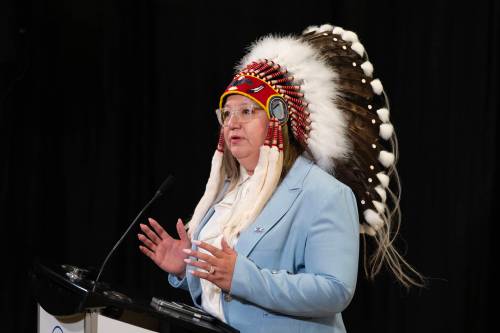
Premier Wab Kinew says a former Brandon-area campground acquired by the province will help educate future generations about the horrors of residential schools.

“We live in an era where people are trying to deny what happened in residential schools,” Kinew said during a Tuesday afternoon visit to Turtle Crossing Campground, near the former Brandon Indian Residential School. “It’s an important part of our national history, and keeping that truth alive.”

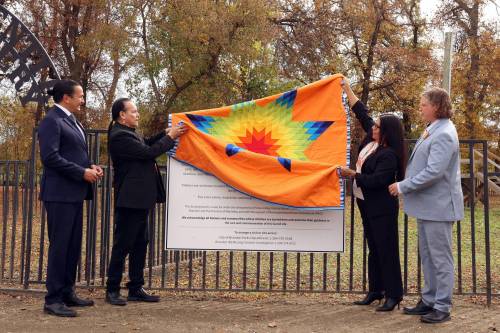
Kinew officially announced the province’s plan Tuesday, in partnership with the City of Brandon, to acquire and protect the site where the bodies of more than 50 Indigenous children are located.

The premier said the property has “huge national significance” for education about residential school history because it is one of the “most documented” in the country. He carried photographs, and some 20th century newspaper clippings from the Brandon Sun around the site Tuesday.

Read
Yesterday at 8:31 PM CDT

What’s open, what’s closed, what’s up in Winnipeg on National Day for Truth and Reconciliation Sept. 30, 2026

Free Press staff 4 minute read Preview

What’s open, what’s closed, what’s up in Winnipeg on National Day for Truth and Reconciliation Sept. 30, 2026

Free Press staff 4 minute read Sunday, Sep. 27, 2026

The National Day of Truth and Reconciliation, or Orange Shirt Day, as it's known in Manitoba, happens Sept. 30 with many commemorative community events scheduled.

Read
Sunday, Sep. 27, 2026

Teacher barred for ‘repeated boundary-crossing conduct’

Maggie Macintosh 3 minute read Monday, Sep. 28, 2026

A disciplinary panel has ordered the cancellation of a Chinese-Canadian teacher’s certificate because of her “repeated boundary-crossing with a student” during her tenure at an international school with local ties.

Janice Wen Ying Ma is permanently barred from teaching on Manitoba soil or at a Manitoba-accredited institution as of Sept. 14.

The new ruling concludes that Ma engaged in inappropriate physical interaction and “emotionally intimate online messages” with a girl who attended Clifford International School in Guangzhou, China in 2024-25.

“This conduct represents a fundamental departure from the standards expected of a teacher,” the panel, chaired by public representative Gordon Schumacher, wrote in its 22-page decision.

Obsessed stalker who shot, killed young woman at bus stop in 1993 dies behind bars at age 74

Erik Pindera 3 minute read Preview

Obsessed stalker who shot, killed young woman at bus stop in 1993 dies behind bars at age 74

Erik Pindera 3 minute read Yesterday at 5:53 PM CDT

A Winnipeg man who stalked a woman for several years before shooting her dead in the street in 1993 has died in Stony Mountain prison.

On Monday, 74-year-old Ronald Edd Bell died of apparent natural causes at the federal prison just north of Winnipeg, the Correctional Service of Canada said.

Bell had been in prison since May 30, 1994, when he was given a life sentence with no chance of parole for 18 years for killing Terry-Lyn Babb, 25, on Jan. 21, 1993.

Bell walked up behind an unsuspecting Babb, who was waiting at a bus stop at Sherbrook Street and Wolseley Avenue, and shot her in the head with a pistol in front of horrified witnesses, says the Free Press report of his sentencing hearing.

Read
Yesterday at 5:53 PM CDT

Klein vows to freeze water, sewer rate for next two years

Joyanne Pursaga 5 minute read Preview

Klein vows to freeze water, sewer rate for next two years

Joyanne Pursaga 5 minute read Yesterday at 6:09 PM CDT

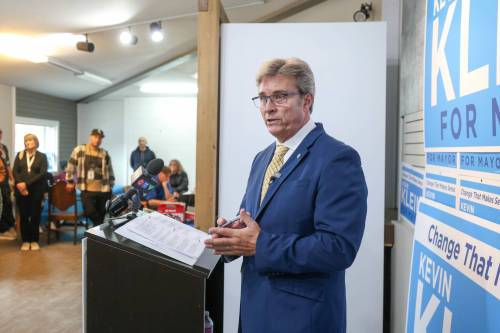
Mayoral candidate Kevin Klein is promising to cancel a water and sewer rate hike proposed for next year and freeze the fee for two years.

Klein said Winnipeggers are simply paying far too much for the utility.

“I think we have to freeze them right now because we’ve seen (a substantial increase) in the last four years. We are facing some of the most difficult financial times for families right now,” he said.

He would also ask the provincial Public Utilities Board to set Winnipeg’s future water and sewer rates, a power currently held by city council.

Read
Yesterday at 6:09 PM CDT

Canada resorting to its tried and true playbook

Niigaan Sinclair 5 minute read Preview

Canada resorting to its tried and true playbook

Niigaan Sinclair 5 minute read Monday, Sep. 28, 2026

In 1846, Britain faced an emergency influenced by the Irish famine, so leaders repealed the country’s “Corn Laws” and restrictions on imported food and grain, transitioning to a system of free trade.

This created a crisis in the then Province of Canada, which had relied on British “preferential” status to prop up its agricultural and resource industries.

As a result, Canada looked south for new markets and eventually negotiated a free trade agreement with the United States.

This required land to be acquired and converted for industrial use quickly, so Canada quickly dispatched Commissioner William Robinson to negotiate with Indigenous communities along Lake Huron and Lake Superior for land.

Read
Monday, Sep. 28, 2026