It seems cigarettes are having a moment — again

Advertisement
Read this article for free:
or
Already have an account? Log in here »
To continue reading, please subscribe:

Digital Subscription
One year of digital access for only $205*
- Enjoy unlimited reading on winnipegfreepress.com
- Read the E-Edition, our digital replica newspaper
- Access News Break, our award-winning app
- Play interactive puzzles
*First annual payment billed as $205.00 + GST for one year. This annual subscription will automatically renew at $233.00 + GST every 52 weeks (10% off the regular annual price of $259.35). Offer available to new and qualified returning subscribers only. Cancel any time.
To continue reading, please subscribe:
Add Free Press access to your Brandon Sun subscription for only an additional
$1 for the first 4 weeks*
- Enjoy unlimited reading on winnipegfreepress.com
- Read the E-Edition, our digital replica newspaper
- Access News Break, our award-winning app
- Play interactive puzzles
*Your next Brandon Sun subscription payment will increase by $1.00 and you will be charged $17.95 plus GST for four weeks. After four weeks, your payment will increase to $24.95 plus GST every four weeks.
Read unlimited articles for free today:
or
Already have an account? Log in here »
Even just a few years ago, it was jarring to see someone smoking a cigarette — like a real honest-to-goodness cigarette, from a package, that you have to manually light — in the wild.
It seemed as if all those graphic packages and health warnings and anti-smoking PSAs had worked, coupled with the added friction of not being able to smoke inside.
But lately, I’ve been noticing a lot of memes about “smokes that don’t count” and think-pieces about craving cigarettes in these chaotic times — from New York Magazine’s The Cut: “I Mean, Why Shouldn’t We All Smoke Cigarettes Again?” Cigarettes are also making a pop culture comeback, glamourized in TV and film and by celebrities themselves.
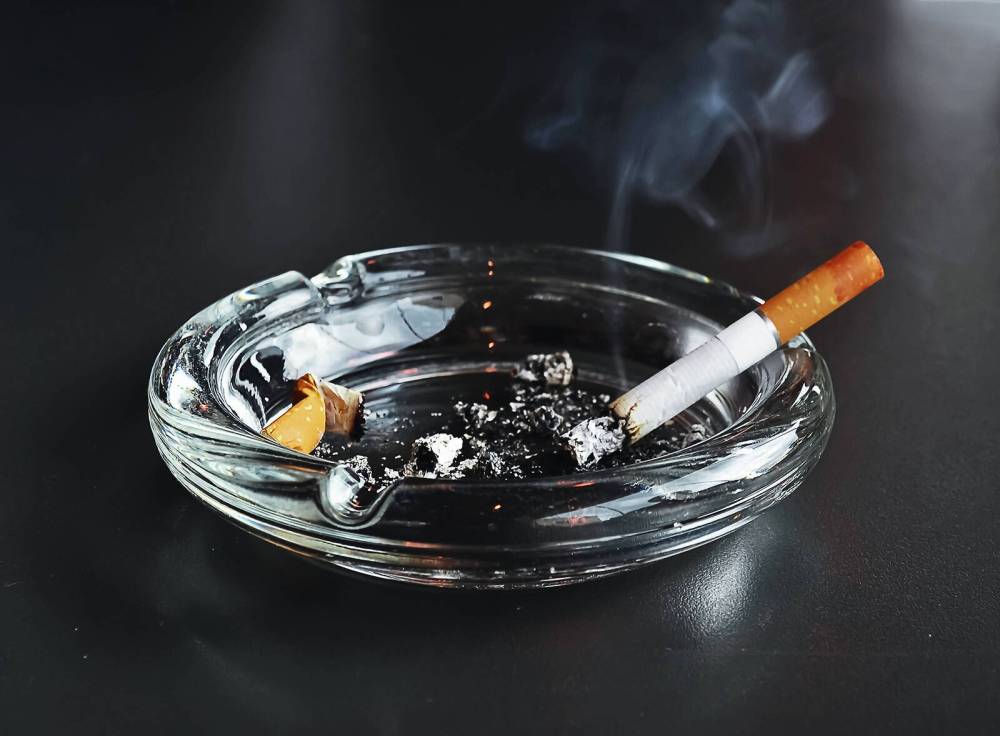
Are cigarettes seriously back?
Smoking cigarettes is not a habit I ever picked up, but as someone who was born in the mid-1980s, it’s a habit I most definitely grew up around.
Everybody smoked back then. In old family photos, there is often a cigarette present — suspended between red painted fingernails, smouldering in an ashtray. Those cigarettes eventually ended up killing a few people in those photos.
I obviously don’t condone smoking, which is disgusting and deadly, but I’m finding it hard to be a full-on finger-wagging scold about it since I do a bunch of other stuff I know isn’t good for me. Glass houses, etc.
“Life is short, and I’ve shortened mine in a thousand delicious, ill-advised ways,” to borrow a line from a poem by Maggie Smith.
I don’t smoke, but I drink wine, sometimes too much. I eat sugar, sometimes too much. I drink too much coffee and not enough water. I unironically love McDonald’s. I scroll when I should read. I don’t know what “manage your stress” means.
There’s also the matter of my daily “fridge cig.” Have you heard of this? Diet Coke — specifically a crispy can of perfectly chilled Diet Coke — has been rebranded as a “fridge cigarette,” since it, too, is a ritual that “takes the edge off” and is, you guessed it, not good for your health.
“Being bad” is a spectrum, is what I’m saying.
I don’t think this cigarette renaissance solely has to do with the fact that smoking a cigarette still looks, unfortunately, very cool, though you aren’t supposed to say that. Cigarettes have never had an image problem that way. Not like vaping, which looks like sucking on a strawberry-flavoured USB jump drive. Cigarettes look chic. They look insouciant. They look rebellious. They look vintage.
But things aren’t always as they appear; the harsh reality of cigarettes is bad breath, stinky clothes, yellow teeth, blackened lungs and, oh yes, a suite of horrific cancers and oxygen tanks and agonizing deaths. We know this. And yet…
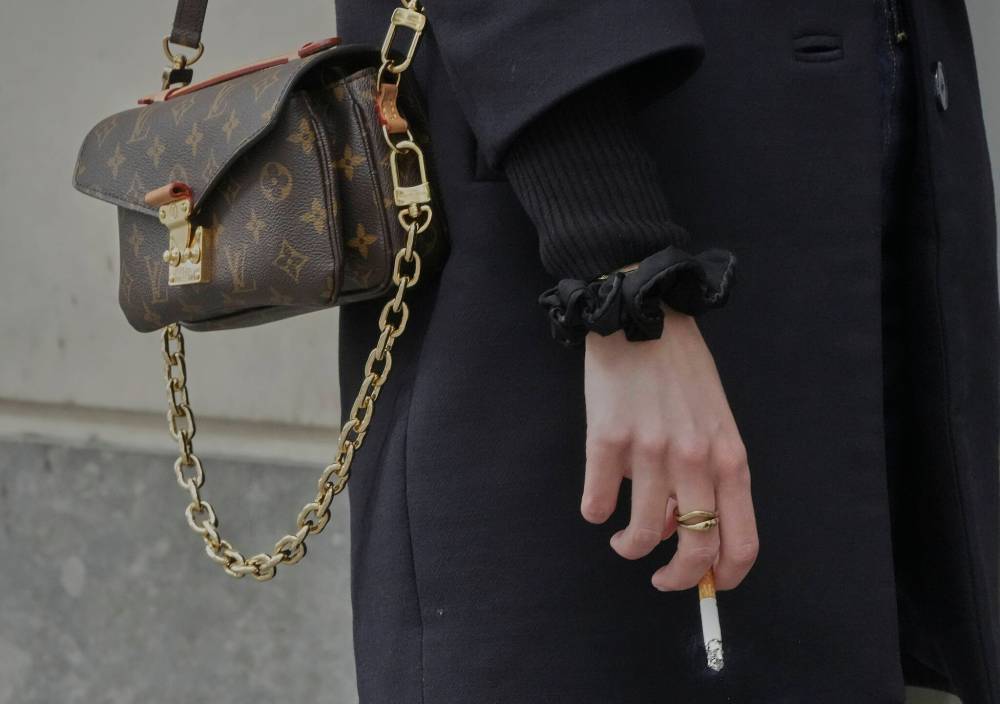
Michel Euler / The Associated Press
Even cigarettes look chic in Paris.
That’s why there’s something so keenly and frighteningly nihilistic about this particular habit coming back into vogue. The world is on fire and the future is bleak, so smoke ’em if you got ’em? Yikes.
I also wonder, as the author of The Cut piece wondered, if people are starting to rebel against optimization culture, against maxxing and girlbossing and striving and being their best selves only for the goal posts to move again. Modern wellness culture is rigid and demanding and virtuous; maybe people just want to be bad after so much being good.

It’s easy to understand why “letting loose” and “living my life” are so often just euphemisms for “being impulsive and reckless.” For some people that means ordering the fries. For others, it means something more dangerous. “Live a little” is what people say to those who refuse a drag or a drink or dessert, because abstention is misinterpreted as judgment.
But I also believe this cultural craving for cigarettes is rooted in nostalgia. Cigarettes and their attendant paraphernalia wouldn’t be out of place in an “analogue” bag, after all. Maybe people are longing for their youths or the ’90s or an imagined sepia past where no one ever worried, even though people have always worried.
What is it that people really want when they wax nostalgic for smoking? Because I’m not convinced it’s actually a cigarette. Maybe it’s a craving for a ritual. Maybe it’s a need to slow down and put a pause in the day. Maybe it’s a desire for communion, and having a spontaneous hang with other people.
Maybe it’s not a cigarette at all, but just permission to exhale.
winnipegfreepress.com/jenzoratti
Jen Zoratti is a columnist and feature writer working in the Arts & Life department, as well as the author of the weekly newsletter NEXT. A National Newspaper Award finalist for arts and entertainment writing, Jen is a graduate of the Creative Communications program at RRC Polytech and was a music writer before joining the Free Press in 2013. Read more about Jen.
Every piece of reporting Jen produces is reviewed by an editing team before it is posted online or published in print – part of the Free Press‘s tradition, since 1872, of producing reliable independent journalism. Read more about Free Press’s history and mandate, and learn how our newsroom operates.
Our newsroom depends on a growing audience of readers to power our journalism. If you are not a paid reader, please consider becoming a subscriber.
Our newsroom depends on its audience of readers to power our journalism. Thank you for your support.
Jen Zoratti is a columnist and feature writer working in the Arts & Life department, as well as the author of the weekly newsletter NEXT. A National Newspaper Award finalist for arts and entertainment writing, Jen is a graduate of the Creative Communications program at RRC Polytech and was a music writer before joining the Free Press in 2013. Read more about Jen.
Every piece of reporting Jen produces is reviewed by an editing team before it is posted online or published in print – part of the Free Press‘s tradition, since 1872, of producing reliable independent journalism. Read more about Free Press’s history and mandate, and learn how our newsroom operates.
Our newsroom depends on a growing audience of readers to power our journalism. If you are not a paid reader, please consider becoming a subscriber.
Our newsroom depends on its audience of readers to power our journalism. Thank you for your support.
Advertisement Advertise With Us
Advertisement Advertise With Us