N.S. could raise low breastfeeding rate by financially supporting families: experts
Advertisement
Read this article for free:
or
Already have an account? Log in here »
To continue reading, please subscribe:

Digital Subscription
One year of digital access for only $205*
- Enjoy unlimited reading on winnipegfreepress.com
- Read the E-Edition, our digital replica newspaper
- Access News Break, our award-winning app
- Play interactive puzzles
*First annual payment billed as $205.00 + GST for one year. This annual subscription will automatically renew at $233.00 + GST every 52 weeks (10% off the regular annual price of $259.35). Offer available to new and qualified returning subscribers only. Cancel any time.
To continue reading, please subscribe:
Add Free Press access to your Brandon Sun subscription for only an additional
$1 for the first 4 weeks*
- Enjoy unlimited reading on winnipegfreepress.com
- Read the E-Edition, our digital replica newspaper
- Access News Break, our award-winning app
- Play interactive puzzles
*Your next Brandon Sun subscription payment will increase by $1.00 and you will be charged $17.95 plus GST for four weeks. After four weeks, your payment will increase to $24.95 plus GST every four weeks.
Read unlimited articles for free today:
or
Already have an account? Log in here »
HALIFAX – Researchers say if Nova Scotia wants to improve its low breastfeeding rates, the province should ensure new parents can afford to take parental leave.
Kyly Whitfield, a human nutrition professor in Halifax, said Canada as a whole is trailing the World Health Organization’s 2025 nutrition target for having 50 per cent of infants fed exclusively with breast milk for their first six months of life.
“We are at about a third of infants in Canada reaching that (six-month feeding target) … and we see better outcomes in B.C. and worse outcomes here in Nova Scotia,” said Whitfield, who also runs the Milk and Micronutrient Assessment Lab at Mount St. Vincent University.
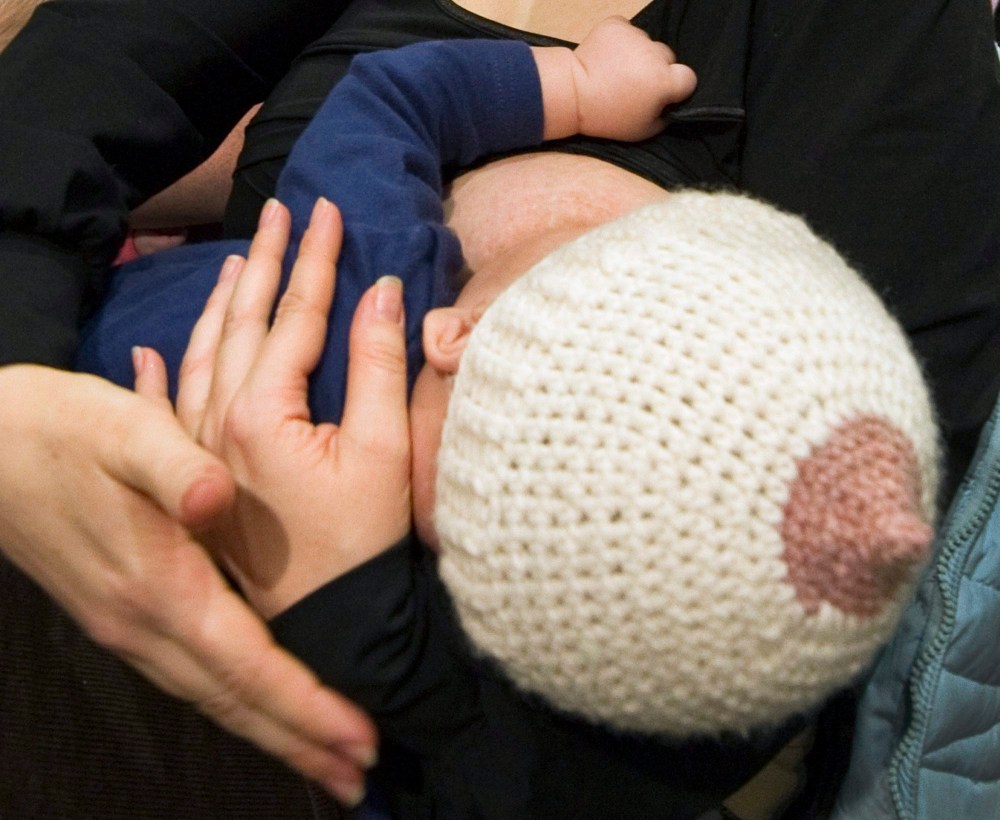
Health Canada data from 2022 says less than 27 per cent of infants in Nova Scotia were exclusively breastfed for six months. The federal agency’s 2024 data, which grouped the Atlantic provinces together, says 36 per cent of infants in the region were fed only breast milk for six months.
Breastfeeding provides babies with vital antibodies that can protect them from infections and other “potentially life-threatening ailments,” says the World Health Organization. The agency has set a 2030 goal of having 60 per cent of infants exclusively fed by breast milk until they are six months old.
Whitfield said her research indicates it’s low-income mothers who struggle most to hit this benchmark.
“It’s really expensive to formula-feed children, so you would logically think that it must be low-income women who are breastfeeding. But it’s the total opposite,” Whitfield said.
The researcher said she believes a major reason low-income mothers in Canada are less likely to breastfeed is because of the “enormous” amount of time it takes to continuously breastfeed a growing infant.
“Breastfeeding is not free, that’s a massive misconception … it is actually a massive amount of time,” she said.
Whitfield said research indicates families with greater financial resources and parents who take maternity leave are more likely to breastfeed exclusively for six months.
“Vulnerable Canadians who are going back to work more quickly, or aren’t able to take advantage of parental leave benefits, sole-income households,” may represent mothers who don’t have time to breastfeed, she said.
“We have a federal parental leave policy … for many families, it’s not enough to survive on. So folks are going back to work instead of breastfeeding,” Whitfield added.
Lesley Frank, the Canada Research Chair in food, health and social justice and director of the Fed Family Lab at Acadia University, agrees.
She said low-income families are just as likely as higher-income households to start breastfeeding, but mothers who deal with food insecurity often stop breastfeeding earlier than their food-secure counterparts. Frank said this is likely due to financial pressures that result in an earlier return to work.
“This is a time of life when it is critical for (babies’) nutrition, and we do not do enough to support families to be economically secure to do the work of feeding their babies,” Frank said in a recent interview.
Frank and Whitfield both said the physical cost of breastfeeding needs to be addressed in government policy, which could be done by raising the provincial child benefit or improving parental leave support at the federal level.
Whitfield said data out of Quebec seems to confirm that increasing financial support could improve breastfeeding rates.
“In Quebec, a higher income did not actually predict better breastfeeding outcomes,” Whitfield said, setting the province apart from the rest of the country.
She said researchers believe this is linked to the additional support for young families that the provincial government offers.
“The financial burden of having young children is not as harsh in Quebec, and you see better breastfeeding outcomes. And so we have this shining star, it’s working in Quebec,” she said.
Nova Scotia’s child benefit provides families whose net income is below $26,000 with $1,525 annually for each child they have.
For families whose net income is between $26,000 and $34,000, they receive $1,525 annually for the first child and then half that rate for subsequent children.
This is in addition to the federal child benefit that provides $8,157 per year for each child under six, and $6,883 per year for each child aged six to 17 to families with a net income of less than $38,237. Families with a net income above that threshold receive a reduced benefit amount based on income and number of children.

Nova Scotia’s Department of Opportunities and Social Development said in an email any increases to the child benefit or new support for parental leave will be considered as part of the province’s regular budget process.
A spokesperson with the Department of Health said how a family feeds their baby is a deeply personal choice influenced by many factors.
“Some parents cannot breastfeed for reasons related to medical, physical, mental health, milk supply, infant-health, finances or other reasons, while others may choose not to. Every parent deserves support and education without barriers or judgment,” Dan Harrison said in an email.
He said the province is working to support feeding through its public health early-years program that offers free infant feeding help from nurses who can support issues with latching, milk supply and pumping.
This report by The Canadian Press was first published June 25, 2026.