St. Bernard dogs still roam the Swiss Alps as part of this ‘living museum’ and its breeding program
Advertisement
Read this article for free:
or
Already have an account? Log in here »
To continue reading, please subscribe:

Digital Subscription
One year of digital access for only $205*
- Enjoy unlimited reading on winnipegfreepress.com
- Read the E-Edition, our digital replica newspaper
- Access News Break, our award-winning app
- Play interactive puzzles
*First annual payment billed as $205.00 + GST for one year. This annual subscription will automatically renew at $233.00 + GST every 52 weeks (10% off the regular annual price of $259.35). Offer available to new and qualified returning subscribers only. Cancel any time.
To continue reading, please subscribe:
Add Free Press access to your Brandon Sun subscription for only an additional
$1 for the first 4 weeks*
- Enjoy unlimited reading on winnipegfreepress.com
- Read the E-Edition, our digital replica newspaper
- Access News Break, our award-winning app
- Play interactive puzzles
*Your next Brandon Sun subscription payment will increase by $1.00 and you will be charged $17.95 plus GST for four weeks. After four weeks, your payment will increase to $24.95 plus GST every four weeks.
Read unlimited articles for free today:
or
Already have an account? Log in here »
BOURG-SAINT-PIERRE, Switzerland (AP) — At the Great St. Bernard Pass high in the Swiss Alps, the eponymous dogs still walk the same mountain paths their ancestors patrolled for hundreds of years to find travelers buried beneath the snow.
Down in the valley, a living museum honoring the Swiss national dog’s history — and its future — is marking its first year.
More than 130,000 people have visited Barryland, the world’s only space dedicated to St. Bernards, since it opened last summer in Martigny, Switzerland, after outgrowing a much smaller space. Tourists can watch live grooming and physiotherapy sessions, explore the mountain pass with augmented reality technology and learn more about the dogs.
“We have a lot of demand and interest for this breed and this whole history and patrimony,” said Barryland director Mélanie Glassey-Roth. “So we decided to create a new park, a big one.”
At 2,469 meters (8,100 feet) above sea level on the Swiss-Italian border, the Great St. Bernard Pass is one of the country’s highest and most treacherous.
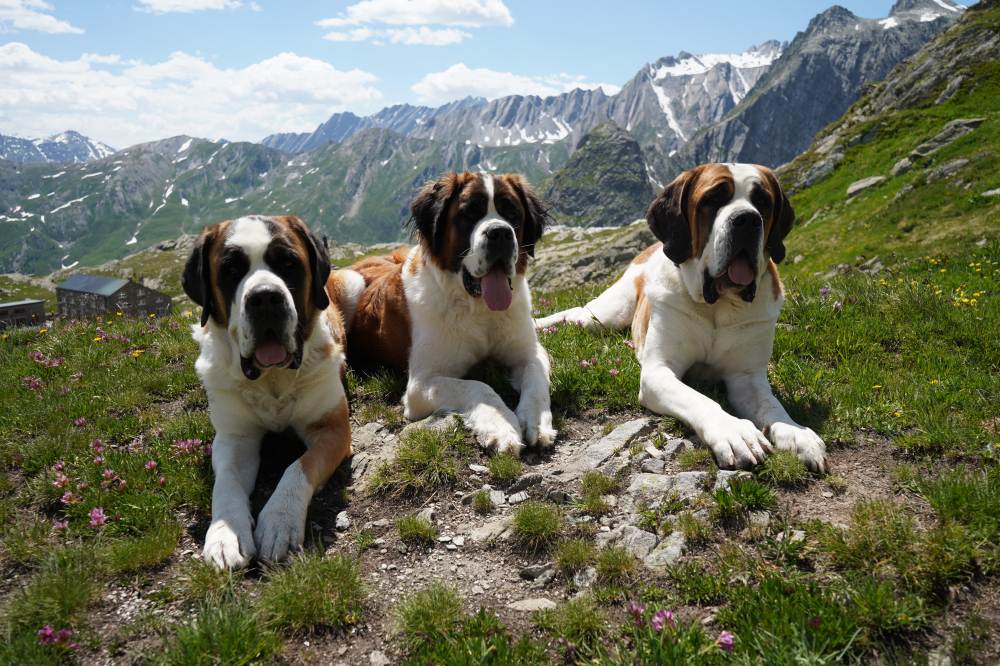
Since the mid-17th century, large mountain dogs have been kept on the pass. They arrived as guard dogs, became companions, and gradually evolved into something the Alpine world had never seen before: Animals with an extraordinary instinct for locating hikers lost in snow and fog.
The breed’s name stems from the Great St. Bernard Hospice, which was founded in 1050 by Bernard de Montjoux, the archdeacon of Aosta and future saint, to provide refuge for pilgrims and merchants crossing the dangerous pass. The dogs became central to that mission, and by the early 19th century they had a reputation that was carried across Europe by soldiers of Napoleon Bonaparte following his army’s own crossing of the route.
Barry the First, the most celebrated dog, is traditionally credited with saving more than 40 lives when he was at the hospice between 1800 and 1812. At the Barry Foundation, the steward for the breeding program, there is always a male dog called Barry.
Currently, the foundation’s 21 keepers care for 32 dogs. Roughly 20 pedigree puppies are born annually. These dogs, as well as other St. Bernards, no longer do mountain rescues because they’re too big to be transported by helicopter. Smaller breeds like Australian shepherds are used instead, though a number of St. Bernards are kept on the pass to keep the tradition alive.

The foundation’s dogs typically eat about 10 metric tons (22,046 pounds) of dry food each year and spend their summers gamboling in the remnants of snow in the mountains before heading 40 kilometers (25 miles) down winding roads back to the kennel in Barryland.
“We get to see them born, and we get to see them grow up, and then become mothers, and we get to accompany them through all those different challenges in life,” keeper Alexandra Piatti said. “We are their guide, so we can help them with socialization and educate them, and really be by their side for their whole lives.”
In 2025 alone, the foundation says its dogs completed 609 jobs by visiting hospitals, care homes, schools and prisons across Switzerland.
Keeper Déborah Dini balances the weight of the breed’s history with affection for the dogs in her charge.
“We perpetuate the tradition,” she said. “We take care of them. We love them.”