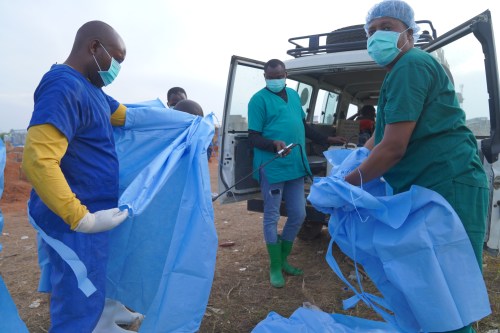
What to know about the outbreak of a rare kind of Ebola
Advertisement
Read this article for free:
or
Already have an account? Log in here »
To continue reading, please subscribe:

Digital Subscription
One year of digital access for only $205*
- Enjoy unlimited reading on winnipegfreepress.com
- Read the E-Edition, our digital replica newspaper
- Access News Break, our award-winning app
- Play interactive puzzles
*First annual payment billed as $205.00 + GST for one year. This annual subscription will automatically renew at $233.00 + GST every 52 weeks (10% off the regular annual price of $259.35). Offer available to new and qualified returning subscribers only. Cancel any time.
To continue reading, please subscribe:
Add Free Press access to your Brandon Sun subscription for only an additional
$1 for the first 4 weeks*
- Enjoy unlimited reading on winnipegfreepress.com
- Read the E-Edition, our digital replica newspaper
- Access News Break, our award-winning app
- Play interactive puzzles
*Your next Brandon Sun subscription payment will increase by $1.00 and you will be charged $17.95 plus GST for four weeks. After four weeks, your payment will increase to $24.95 plus GST every four weeks.
Read unlimited articles for free today:
or
Already have an account? Log in here »
ABUJA, Nigeria (AP) — An Ebola outbreak in Congo has surpassed 5,000 confirmed cases, making it one of the largest outbreaks of the deadly disease ever recorded.
The outbreak is caused by the Bundibugyo virus, a rare type of Ebola that has no approved vaccine or treatment. Congo’s Ministry of Health had recorded 5,021 cases, including 2,378 deaths, as of Sunday.
The outbreak is already the worst ever caused by the Bundibugyo virus and the deadliest Ebola outbreak in Congo’s history. The World Health Organization has warned that it could eventually surpass the devastating 2014-2016 outbreak in West Africa, which killed more than 11,000 people.
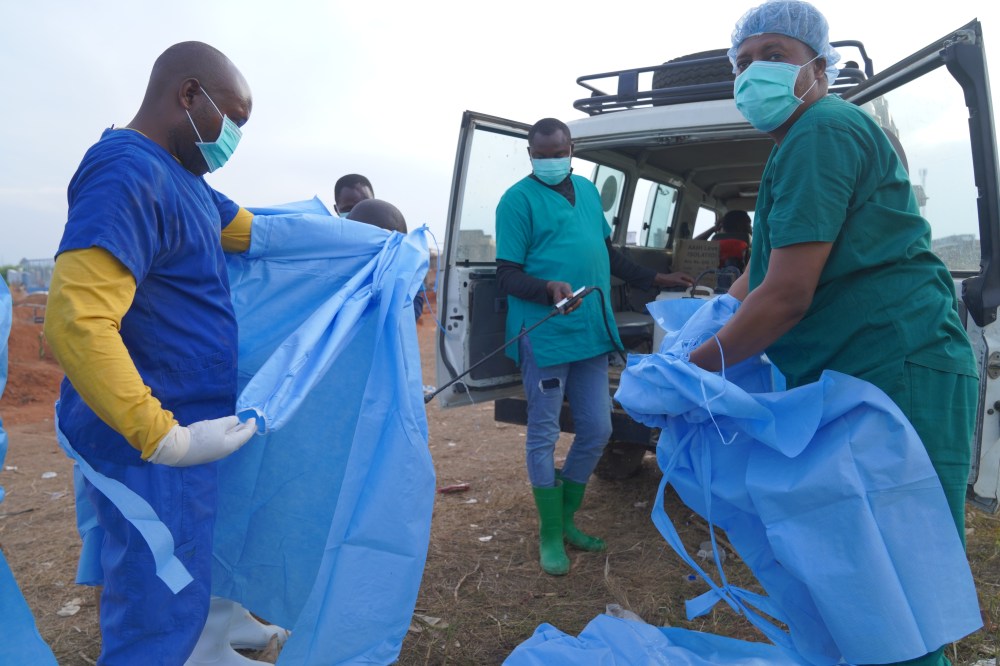
Here’s what to know about Ebola and the outbreak:
How Ebola spreads
Ebola is a rare but often deadly disease caused by a group of viruses that are believed to originate in animals.
People can become infected through contact with infected animals, and the virus can then spread between people through direct contact with the blood or other bodily fluids of someone who is sick with or has died from Ebola. It can also spread through objects contaminated with those fluids.
Unlike respiratory diseases such as COVID-19, Ebola isn’t generally spread through the air.
People infected with Ebola don’t spread the virus before developing symptoms, according to WHO. Symptoms can appear between two and 21 days after infection.
They often begin with fever, fatigue, headache, muscle pain and sore throat, followed by vomiting and diarrhea. Some patients develop internal or external bleeding.
Ebola can be difficult to distinguish from other infectious diseases without laboratory testing, because many of its early symptoms are similar to those of illnesses such as malaria and typhoid.
Outbreak linked to rare virus
The outbreak is caused by the Bundibugyo virus, one of several viruses that can cause Ebola disease.
It’s much rarer than the Zaire virus, which has caused many of Congo’s previous Ebola outbreaks and the 2014-2016 outbreak in West Africa.
Bundibugyo virus was first identified during an outbreak in western Uganda in 2007. That outbreak killed 37 people. The only other known outbreak occurred in Congo in 2012.
Both were far smaller than the current epidemic.
The vaccines and antibody treatments developed for the more common Ebola virus aren’t approved for the Bundibugyo virus. Clinical trials are underway, but patients currently rely largely on supportive care, such as fluids and treatment of symptoms and complications.
Where the outbreak started
The first detected patient developed symptoms in late April and died in Bunia, the capital of Congo’s northeastern Ituri province, an area plagued by insecurity, displacement and intense population movements.
Health officials were alerted in early May to a cluster of unexplained illnesses around Mongbwalu, a busy gold-mining area near Bunia. Laboratory tests later identified Bundibugyo virus, and Congo declared the outbreak on May 15.
But officials believe the virus may have been spreading months before the outbreak was declared.
Most cases have been reported in Ituri, but the virus has spread beyond the province as infected people have traveled to other areas.
The outbreak also crossed into neighboring Uganda, which has since stopped transmission, according to WHO. A confirmed case was also reported in France in June in a doctor returning from Congo, who later recovered and was discharged from the hospital.
Nearly half of confirmed patients have died
Ebola is one of the world’s deadliest infectious diseases, but the proportion of patients who die can vary widely between outbreaks and depending on how quickly people receive care.
WHO says fatality rates in previous Ebola outbreaks have ranged from about 25% to 90%.
Nearly half of the people confirmed to have Ebola in Congo’s current outbreak have died.
The situation also varies across the six affected provinces. While the case fatality rate is so far 47.4%, it’s far worse in some places where response efforts are more challenging, such as in North Kivu province where the fatality rate is 70%.
Second-largest Ebola outbreak on record
The current outbreak is already the largest known outbreak caused by Bundibugyo virus by a wide margin.
It also has surpassed Congo’s 2018-2020 Ebola outbreak, which infected nearly 3,500 people and killed more than 2,200.
But the largest Ebola epidemic on record remains the 2014-2016 outbreak in West Africa. More than 28,000 cases and 11,000 deaths were recorded, mainly in Guinea, Liberia and Sierra Leone.
That outbreak was caused by Ebola virus, not Bundibugyo virus.
The current outbreak has accumulated cases much more quickly from the time the first known patient became sick. WHO officials have warned that, if transmission continues, it could eventually surpass the West Africa outbreak.
Stopping Ebola depends on breaking transmission chains
Ebola outbreaks have repeatedly been brought under control, including in Congo, which has decades of experience responding to the disease.
The basic strategy is to find infected people quickly, isolate and treat them, identify and monitor people they have been in contact with, and prevent further infections in health facilities and during burials.
But contact tracing has been especially difficult, with 60% to 70% of new cases detected among people who weren’t already being monitored, meaning infected people can spread the virus before health workers know to follow them.
WHO has said the risk of further spread within Congo and internationally remains high.
The agency declared the outbreak a public health emergency of international concern in May, its highest level of global health alert under international health regulations.
That designation doesn’t mean Ebola is spreading globally like COVID-19 did. Instead, it signals that the outbreak poses a serious international health risk requiring a coordinated response.
WHO has advised against broad travel or trade restrictions, saying they can disrupt supply chains and make it harder to move health workers, medical supplies and other resources needed to fight the outbreak.
___
Mogomotsi Magome reported from Johannesburg, and Mark Banchereau from Dakar, Senegal. Saleh Mwanamilongo contributed to this report from Bonn, Germany.