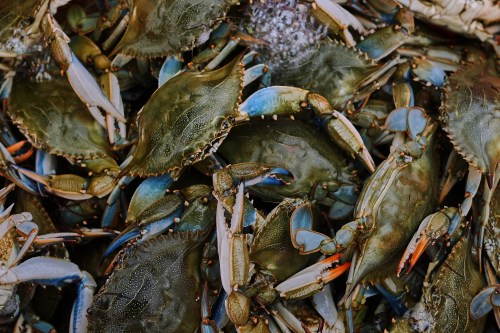
Italy has started exporting a delicacy prized abroad, reviled at home
Advertisement
Read this article for free:
or
Already have an account? Log in here »
To continue reading, please subscribe:

Digital Subscription
One year of digital access for only $205*
- Enjoy unlimited reading on winnipegfreepress.com
- Read the E-Edition, our digital replica newspaper
- Access News Break, our award-winning app
- Play interactive puzzles
*First annual payment billed as $205.00 + GST for one year. This annual subscription will automatically renew at $233.00 + GST every 52 weeks (10% off the regular annual price of $259.35). Offer available to new and qualified returning subscribers only. Cancel any time.
To continue reading, please subscribe:
Add Free Press access to your Brandon Sun subscription for only an additional
$1 for the first 4 weeks*
- Enjoy unlimited reading on winnipegfreepress.com
- Read the E-Edition, our digital replica newspaper
- Access News Break, our award-winning app
- Play interactive puzzles
*Your next Brandon Sun subscription payment will increase by $1.00 and you will be charged $17.95 plus GST for four weeks. After four weeks, your payment will increase to $24.95 plus GST every four weeks.
Read unlimited articles for free today:
or
Already have an account? Log in here »
SCARDOVARI, Italy (AP) — Italian fishermen for two years incinerated most of the invasive Atlantic blue crabs caught in the Po River Delta south of Venice. Few Italians had an appetite for the alien predator blamed for decimating their prized Manila clams.
While experiments in containment continue, including the release of tens of thousands of octopus predators, the industry’s response has been shifting to find new markets for the crustaceans. The strategy is already salvaging the livelihood of some fishermen and, some hope, may even rehabilitate the much-maligned crab’s image in Italy.
Fishermen pivot to salvage livelihoods
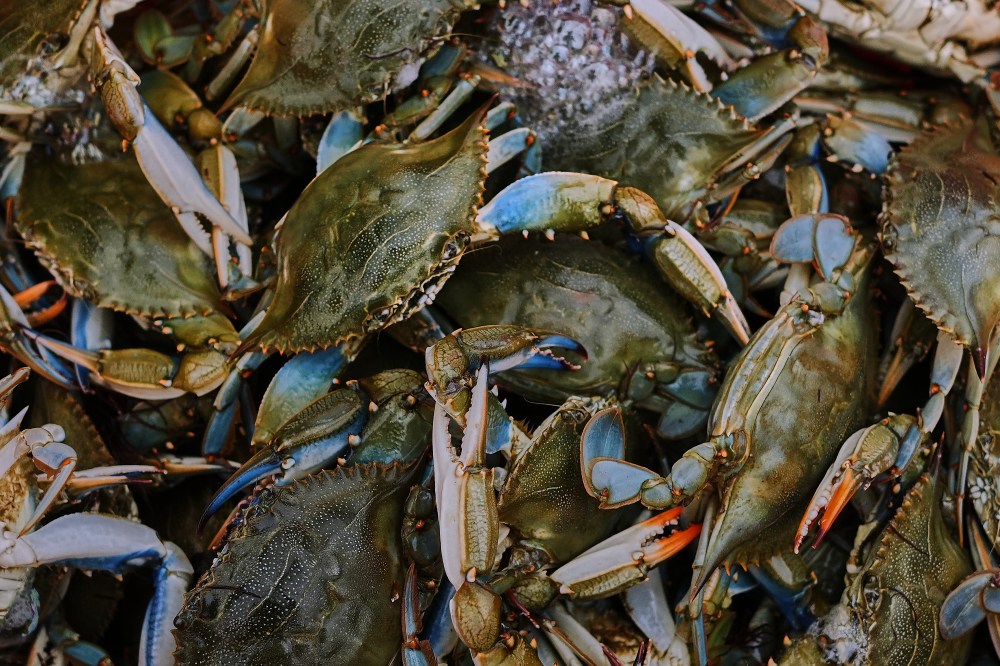
Like other members of his local cooperative, second-generation fisherman Federico Zago saw his income crash after the crab invasion. The Polesine Fishermen’s Cooperative Consortium’s revenues fell 75% to 15 million euros ($17 million) in 2024 and 2025; the cooperative’s active members also shrank from 1,500 to 850.
“We needed to change strategy, and create an opportunity from this disaster,” said Paolo Mancin, the cooperative’s president.
Desperate, they pivoted to exporting the unwanted crabs, with the aim of preserving the Manila clams — invasive themselves — and mussels that created decades of prosperity in the shallow lagoons of Veneto and Emilia Romagna.
Zago now pulls up cages full of crabs from his traditional fishing cabin built on stilts over the Scardovari lagoon in the Veneto region. And the consortium’s strategy is working; so far this year it has sold every crab it has caught, eliminating the need for incineration. It forecasts 20 million euros ($23 million) in revenue this year, most from sales of crab.
“Since we’re going to have to live with these crabs, I hope they become an opportunity,” said Zago. “I hope the market continues to grow.”
Climate change creates perfect conditions for invasive crab
The Atlantic blue crab has been present in the Adriatic Sea since at least the 1940s, arriving in ballast water from commercial vessels, according to Piero Genovesi, an invasive species expert at Italy’s environmental protection institute.
Their numbers remained contained until 2023, and local fishermen reported catching them only sporadically.
Then came the explosion. Crabs tore through fishing nets, devoured mollusks at an alarming rate and edged out the native green crab, a local soft-shell specialty.
Climate change played a key role. Higher water temperatures favor blue crabs’ reproduction, but the real trigger was likely drought-driven drops in the Po River’s levels. That allowed sea water to infiltrate freshwater tributaries across the peninsula, especially in lagoons and deltas where clam and mussel farms provided ample prey.
“Climate change may therefore have favored reproduction through both temperature and salinity, because it changed the salinity of the water,’’ Genovesi said.
Eradication program failed
Reeling from damage to the mollusk industry, the Italian government adopted a blue crab eradication program in 2024. Over two years, the government paid the Polesine to catch and incinerate nearly 2.3 million kilograms (5 million pounds) of crabs. Fishermen in the neighboring Sacca di Goro lagoon and the Orbetello lagoon in Tuscany did the same.
But with female crabs able to produce up to 8 million eggs every season, culling barely dented their numbers. The project has been shelved, said Enrico Caterino, the government’s extraordinary commissioner for the blue crab emergency.
University of Bologna scientists this summer released 150,000 baby octopuses into the Adriatic Sea on the Riviera Romagnola, some two hours south of the Po Delta, promoting their project with an impressive video showing an adult octopus grabbing and devouring a crab.
Most octopus babies aren’t expected to survive. And given their preference for rocky environments over sandy lagoons and the crabs’ reproductive prowess, fishermen and experts alike are skeptical.
“If an animal with such high reproductive potential finds suitable environmental conditions, predators may not be able to keep it under control,” Genovesi said.
Fishermen deliver crabs bound for Sri Lan
ka
Each morning, Italian fishermen unload crates of scuttling crabs from the backs of their cars and trucks, 100-150 kilograms (up to 330 pounds) at a time.
Crab sales may be keeping the fishermen afloat, but their earnings remain nowhere near those of the clam industry’s heyday. Crab fetches just 1.30 euros per kilogram, compared with 10 euros for clams, which once generated 90% of their income but now account for just 10%.
Their crabs are steamed, frozen and packed into boxes to be shipped to Sri Lanka, where workers remove the meat by hand. The joint venture between Sri Lankan company Taprobane Seafoods and the Scardovari consortium churns out a range of crab products, from claw meat to mixed meat and fillet. Most is exported to other markets, with just a small quantity returning to Italy. Taprobane is forecasting large-scale retail expansion in Italy and Europe.
Mancin says he hopes the meat that arrives packed from Sri Lanka will help win over Italians who have so far resisted the “If you can’t beat ‘em, eat ’em” campaign launched in 2023.
Working to change Italian tastes
Despite the efforts, blue crab is mostly absent from top restaurants around Venice that specialize in the native green crab, due both to the labor involved in processing the invader species and its bad rap, according to the FIPE Venice restaurant federation.
The Yogi restaurant and bar in Porto Tolle on the Po Delta is an exception, having fully embraced the blue crab out of passion and necessity — finding themselves empty-handed after the invasion.
Owner and chef Stefania Marchesini, who fished professionally herself for 11 years, pays a premium to local fishermen, especially for soft-shell crabs known in the local dialect as moeche.
She offers an all-crab menu in her family-run restaurant, featuring fried crab balls, creamed crab on polenta, soft-shell crab and sectioned crab in the shell — each recipe capturing the crab’s delicate flavors.

“At first, the customer is very skeptical. But then the reaction is completely positive, and they want to try the entire range of products,” she said.
Marchesini also has a separate workshop where she prepares crab to sell to other restaurants — but business has so far been disappointing. Her commercial fare includes moeche individually packed in plastic envelopes, and full crabs already broken apart, under vacuum, to make them easier to prepare and less messy to eat.
Even at restaurants where the products sell out, owners are reluctant to restock. Marchesini chalks it up to cultural resistance, but she is undeterred. Recently she brought her menu to Barcelona’s Alimentaria, one of the world’s largest food and beverage trade fairs.
“We are all angry because it invaded our seas,” Marchesini said. “But we also have to eat. Once people understand how it should be prepared, they will realize it is an excellent product.” ___
The Associated Press’ climate and environmental coverage receives financial support from multiple private foundations. AP is solely responsible for all content. Find AP’s standards for working with philanthropies, a list of supporters and funded coverage areas at AP.org.