These bulbs have evolved to avoid being eaten. You can take advantage of that

Advertisement

Advertise with us

There’s little worse in a gardener’s mind than watching their careful planning and hard work go up in a cloud of teeth, thanks to every four-legged freeloader within chewing distance.

Read this article for free:


or

Already have an account? Log in here »

To continue reading, please subscribe:

Subscribe and receive a limited-edition Free Press branded hat or tote.

Digital Subscription

One year of digital access for only $205*

  • Enjoy unlimited reading on winnipegfreepress.com
  • Read the E-Edition, our digital replica newspaper
  • Access News Break, our award-winning app
  • Play interactive puzzles

*First annual payment billed as $205.00 + GST for one year. This annual subscription will automatically renew at $233.00 + GST every 52 weeks (10% off the regular annual price of $259.35). Offer available to new and qualified returning subscribers only. Cancel any time.

To continue reading, please subscribe:

Add Free Press access to your Brandon Sun subscription for only an additional

$1 for the first 4 weeks*

  • Enjoy unlimited reading on winnipegfreepress.com
  • Read the E-Edition, our digital replica newspaper
  • Access News Break, our award-winning app
  • Play interactive puzzles
Start now

*Your next Brandon Sun subscription payment will increase by $1.00 and you will be charged $17.95 plus GST for four weeks. After four weeks, your payment will increase to $24.95 plus GST every four weeks.

There’s little worse in a gardener’s mind than watching their careful planning and hard work go up in a cloud of teeth, thanks to every four-legged freeloader within chewing distance.

So if you’re planting bulbs this fall, select the rights to avoid planting dinner.

Although no plant is 100% animal-proof, some spring-blooming bulbs have toxic or unpalatable self-defenses that deer, rabbits and rodents tend to avoid.
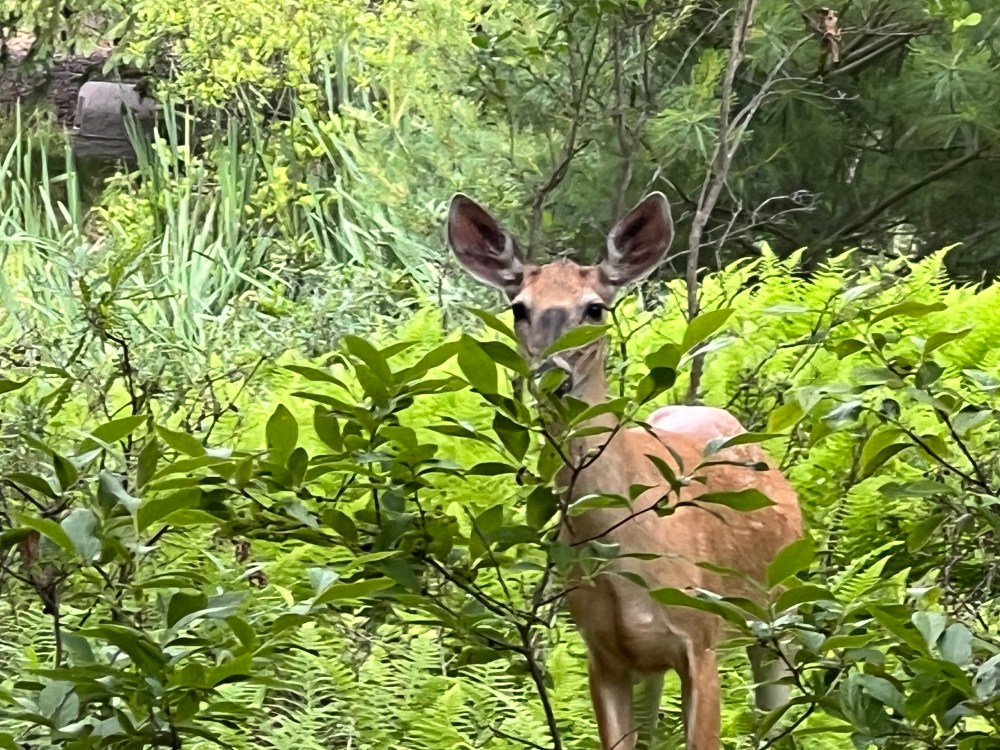
A deer appears in Hawley, Pa., on June 25, 2023. (Jessica Damiano via AP)

Pet owners and parents, however, should exercise caution when deciding to grow these within reach of children or furry family members.

Let’s start with the most offensive bulbs

Crown imperials aren’t referred to as “stink lilies” for nothing. One whiff of the malodorous, tufted, downward-facing, bell-shaped flowers will transport you to a skunk sanctuary — or a sweaty locker room. No self-respecting living thing would deliberately sniff, let alone eat, any part of the plant, which also contains highly toxic steroidal alkaloids.

But don’t let that dissuade you from planting them. The striking plants not only keep rodents away, but they attract pollinators and are exceptionally eye-catching in the spring garden. Just don’t plant them near the front walk.

Alliums are related to onions, and their bulbs’ scent makes no secret of it, so they’re typically left undisturbed. Their flowers have a similar, although milder, fragrance. If rabbits are particularly hungry, they might attempt a nibble, but the bitter sulfur compounds in the bulbs, leaves and stems will send them running. The plants are also toxic.

Similarly, all types of daffodils — from demure jonquils to giant trumpet types — contain bitter, toxic properties that most critters know to avoid.

These bulbs aren’t as offensive but they are off-putting

Although nicely scented to us humans, the strong, sweet perfume emanating from Dutch hyacinth flowers is off-putting to many animals, as is the fruity scent of the unrelated grape hyacinth, which deer and rabbits perceive as musky. Neither is as offensive as pungent alliums, but both hyacinths also contain toxic compounds that cause mouth irritation and stomach upset if bitten or ingested.

Spanish bluebells contain saponins, which smell and taste like soap, as well as poisonous cardiac glycosides.

Snowdrops, Siberian squill, anemone, glory of the snow, winter aconite and star of Bethlehem are smaller, so-called “minor” bulbs with flowers that bloom earlier than the larger bulbs above. But they pack a punch in deterring wildlife browsing, thanks to their unpalatable smell, bitter taste and/or toxic compounds.

Because they have strong defenses, multiply readily and are not kept under control by animals, some of these plants, particularly Siberian squill, Spanish bluebells and star of Bethlehem, can quickly become invasive, so plant with caution.

Mix the offensive bulbs with other bulbs that animals love

All of these plants have spent generations using their natural defenses to avoid being eaten, and you can take advantage of that, too.

If you’d like to plant bulbs that animals love to eat, such as tulips or crocuses, try surrounding them with unpalatable ones. As they exude odors and chemicals to protect themselves, some of those defenses will extend to their bedmates.

___

Jessica Damiano writes weekly gardening columns for The Associated Press. She publishes the Weekly Dirt Newsletter. Sign up here for weekly gardening tips and advice.

___

For more AP gardening stories, go to https://apnews.com/hub/gardening.

Report Error Submit a Tip

More Stories

See silver lining to your impossible crush

Maureen Scurfield 4 minute read 2:01 AM CDT

DEAR MISS LONELYHEARTS: I’m in love with my sister’s boyfriend, and neither one of them knows it. They’re both grad students and came back home from the province where they are studying to write and spend the summer in Manitoba.

Thankfully, they’ve gone back home because it was becoming too much for me to bear. My sister’s guy is perfect for me, but she already owns him and I’m too young to fight her for him.

Still, the two of them don’t realize the depth of my feelings. I don’t know how to behave when they get cosy around me and I feel so jealous I want to scream. I’m not sure what to do next.

This week I got an email from my artsy-fartsy sister with an invitation to come visit them in December and go to some fun plays and parties with them and their friends. They even promised my Christmas present from them will be my plane ticket.

Booze sales down, gaming and cannabis up in Manitoba

Carol Sanders 5 minute read Preview

Booze sales down, gaming and cannabis up in Manitoba

Carol Sanders 5 minute read 2:01 AM CDT

MANITOBA Liquor and Lotteries delivered $724.1 million in profits to the province in 2025-26, with the lion’s share coming from alcohol, even as booze sales continue to shrink.

The Crown corporation’s contribution to Manitoba’s general revenues decreased by $6 million or 0.8 per cent from last year’s allocation of $730.1 million, its annual report shows.

That indicates stable overall performance “despite a changing operating environment,” the recently-released report said.

Those changes include the order from Premier Wab Kinew last year to remove U.S. alcohol from Liquor Mart store shelves after President Donald Trump launched a trade war against Canada as well as Manitobans’ changing tastes.

Read
2:01 AM CDT

Province takes aim at ER wait times by adding community-care capacity to free up hospital beds

Chris Kitching 5 minute read Preview

Province takes aim at ER wait times by adding community-care capacity to free up hospital beds

Chris Kitching 5 minute read Tuesday, Oct. 6, 2026

The province is aiming to free up hospital beds and cut wait times by adding 103 community-based care spaces in Winnipeg for patients who need shelter or specialized supports in order to be discharged.

Read
Tuesday, Oct. 6, 2026

Puzzles Palace

1 minute read Monday, Jul. 27, 2026

To solve our puzzles, please subscribe with this special offer: |

Canadian author Anne Carson wins literature Nobel for ‘bold and inventive’ works that blend genres

Jill Lawless, Hillel Italie And Kostya Manenkov, The Associated Press 6 minute read Preview

Canadian author Anne Carson wins literature Nobel for ‘bold and inventive’ works that blend genres

Jill Lawless, Hillel Italie And Kostya Manenkov, The Associated Press 6 minute read Updated: 3:23 PM CDT

STOCKHOLM (AP) — Canadian poet, essayist and translator Anne Carson won the Nobel Prize in literature Thursday for “bold and inventive” works that fuse the classical and the modern and blur the boundaries of poetry and prose.

The Toronto-born Carson, 76, has drawn on themes from classical Greek and Roman literature, modern influences and personal experience for genre-blending titles that have ranged from translations of ancient Greek poets to collaborations with dancers and musicians, including Laurie Anderson and Lou Reed.

The Swedish Academy that awards the prize said she won “for her bold and inventive oeuvre that, in playful dialogue with the classical tradition, has created new forms for contemporary literature.”

The permanent secretary of the academy said the author was in Iceland “listening to the wind” when the panel reached her to notify her of the honor.

Read
Updated: 3:23 PM CDT

Bloodvein standing firm, won’t move blockade

Nicole Buffie 5 minute read Preview

Bloodvein standing firm, won’t move blockade

Nicole Buffie 5 minute read 4:22 PM CDT

Indigenous leaders are accusing the province of violating treaty rights for asking a First Nations community to move its checkstop that was set up to keep drugs and alcohol out.

Assembly of Manitoba Chiefs Grand Chief Kyra Wilson and Bloodvein River First Nation Chief Lisa Young say the province isn’t upholding its responsibilities under treaties signed between First Nations and the province, during a livestreamed press conference Wednesday.

“It’s really up to the discretion of the nations in which territory (hunters) are in, and the province needs to understand that as well,” Wilson said.

The province has said it sent a cease and desist letter to Bloodvein, located about 235 kilometres north of Winnipeg, about the checkstop, which has been in place since May 2025 to keep illicit substances out. The province is concerned it would restrict licensed hunters from legally hunting on the territory.

Read
4:22 PM CDT