The great American road trip, fueled by – and undercut by – the automobile that created it
Advertisement
Read this article for free:
or
Already have an account? Log in here »
To continue reading, please subscribe:

Digital Subscription
One year of digital access for only $205*
- Enjoy unlimited reading on winnipegfreepress.com
- Read the E-Edition, our digital replica newspaper
- Access News Break, our award-winning app
- Play interactive puzzles
*First annual payment billed as $205.00 + GST for one year. This annual subscription will automatically renew at $233.00 + GST every 52 weeks (10% off the regular annual price of $259.35). Offer available to new and qualified returning subscribers only. Cancel any time.
To continue reading, please subscribe:
Add Free Press access to your Brandon Sun subscription for only an additional
$1 for the first 4 weeks*
- Enjoy unlimited reading on winnipegfreepress.com
- Read the E-Edition, our digital replica newspaper
- Access News Break, our award-winning app
- Play interactive puzzles
*Your next Brandon Sun subscription payment will increase by $1.00 and you will be charged $17.95 plus GST for four weeks. After four weeks, your payment will increase to $24.95 plus GST every four weeks.
Read unlimited articles for free today:
or
Already have an account? Log in here »
NASHVILLE, Tenn. (AP) — There’s something about the American road trip.
It has been memorialized in books like Jack Kerouac’s “On the Road” and satirized in movies like “National Lampoon’s Vacation.”
It primarily consists of hours upon hours of driving that should be boring — but somehow isn’t? Maybe it’s the anticipation of getting to some mythical destination — the Grand Canyon, Yellowstone, Death Valley. Or maybe it’s the unexpected sights along the way. Tumbleweeds! They’re real!
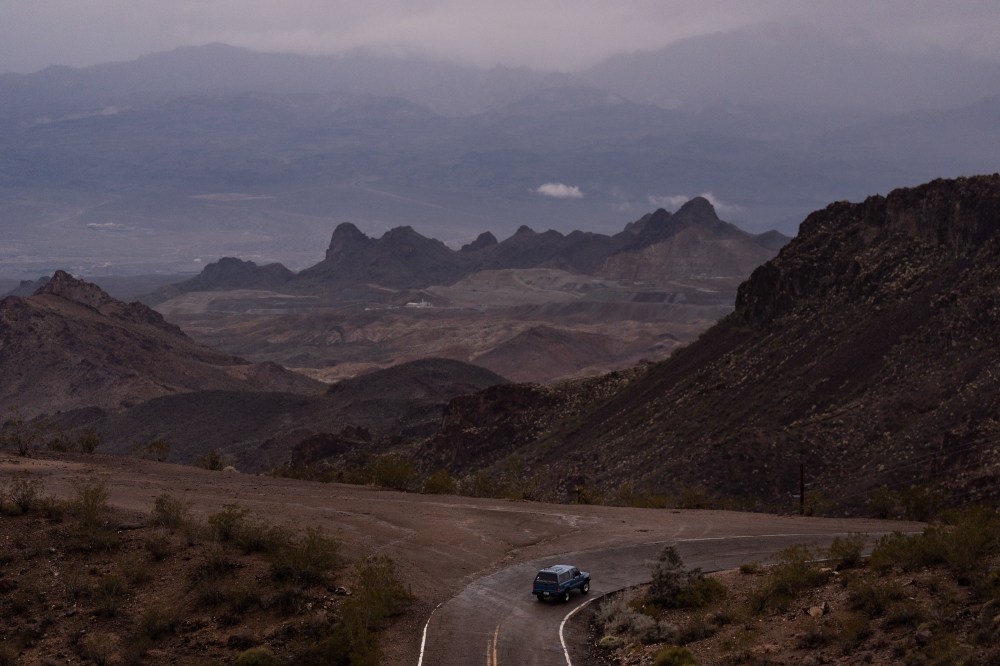
Americans love the idea of a road trip, but we often opt for reaching our destination as quickly as possible instead. The rise of cheap airfare has made it easy to travel without the hassle of driving. When we do drive, we’re likely to stick to the interstates, blasting past the small towns we idealize at 70-plus miles per hour.
In gaining convenience, what have we lost?
The decades after World War II were the golden age of the family road trip
In “Are We There Yet? The Golden Age of American Family Vacations,” historian Susan Rugh argues that the period after World War II was the apex of the family road trip. More Americans were rising into the middle class, many had paid vacation for the first time, car ownership was increasing rapidly, and the federal government was investing in highways that allowed for more comfortable long-distance travel.
Many veterans were eager to show their children what they had been fighting to preserve. One popular destination was Washington, D.C. Families also visited historic monuments, homes and battlefields. In the West, the nation’s majestic national parks were both a tourist destination and a symbol of American democracy.
Traveling together to see America both strengthened family bonds and “provided a way to educate children as citizens,” Rugh writes.
It wasn’t a golden age for everyone
The open road did not signal freedom for all Americans. Black families in particular often had to deal with segregated facilities, even outside of the South.
The problem was so systemic that there were guidebooks, like the well known Green Book, specifically made for Black travelers.
“The experience is totally different,” says Allen Pietrobon, a professor at Trinity University in Washington, D.C., who teaches a course on road trips. “It’s not carefree.”
The obstacles of the vacationing Black family even played a role in the passage of the 1964 Civil Rights Act, Rugh writes. The Senate Committee of Commerce heard stories like that of a Black business owner turned away from a motel in St. Petersburg, Florida, even after he offered to pay twice the normal rate. The exhausted family, including two children, had to try to sleep in the car as best they could.
“In the face of Jim Crow laws in the South and persistent racial discrimination in the rest of the nation, the cultural icon of the family vacation was offered as persuasive evidence of the need for a federal law to ensure the rights of all citizens,” Rugh writes.
The highways were magnets for American entrepreneurs of all stripes
It wasn’t just the national parks that needed more facilities as Americans took to the roads. Vacationers needed lodging, restaurants and service stations along the way.
Some entrepreneurs competed with one another to make their accommodations stand out from the crowd, like Wigwam Village, where the motel rooms are giant concrete teepees. Others saw the opportunity to develop roadside attractions like the world’s largest nutcracker.
“Americans are hucksters,” Rugh says. “And if somebody has an attraction, somebody else is gonna serve lemonade or hamburgers right by it.”
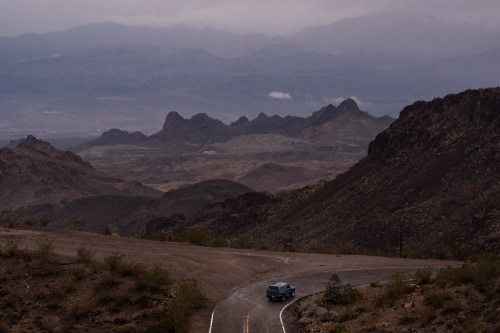
One highway that was filled with attractions was Route 66, which turned 100 this year.
Commissioned in 1926 and fully paved by the late 1930s, the highway between Chicago and Los Angeles catered to a mid-century craze for the Old West of the 1880s. A group of business owners promoted the road, dubbing it the “Main Street of America,” but Bobby Troupe’s 1946 hit song “(Get Your Kicks on) Route 66” first recorded by Nat King Cole has had more staying power than any advertisement.
Sometimes it’s the bad things that we remember most fondly
Richard Ratay calls himself the King of the Road Trip.
His book “Don’t Make Me Pull Over! An Informal History of the Family Road Trip” opens with a harrowing scene of waking up as a child with the family car spinning off an icy road. The family had to wait hours in the cold before being towed out.
“Years later,” he writes, “we’d all agree it was the best start to a family road trip ever.”
It’s counterintuitive, but sometimes it’s the hardships and unexpected bumps in the road that make a vacation memorable.
Pietrobon recalls a coworker who got into a car accident in a tiny town in Nevada and ended up stuck for days.
“They actually ended up having a really amazing experience,” he says. “The whole purpose now of higher end travel is to eliminate any friction whatsoever. And we do lose something in that, I think.”
Modern travel is all about the destination, not the journey
Before the interstates, the highway system was really just the main street of towns, connected by highways. Someone stopping for the night or even just a meal would participate in the life of that town.
″In meeting so many folks from different places, it gave families traveling by car the opportunity to realize that … when all is said and done, we aren’t that different after all,” Ratay said in an interview.
Today’s interstates mostly bypass these towns, providing chain-store gas, food and lodging right off the exit. Airplane travel elides even this minimal local interaction.
It’s still possible to take the slower road, stopping to talk to locals and soaking in the experience, along with its little inconveniences.
“Get on one of those old highways anywhere,” Rugh says. “Cross the Midwest on the Lincoln Highway. Go from Arizona to Canada on Highway 89, Highway 1 in California.”
In older travel narratives, Pietrobon says, the destination is almost irrelevant. “I think about who’s going to be the next Jack Kerouac where, you know, the journey is what he’s writing about, not just the snapshots of when you stop for the day.”
___
Part of a recurring series of stories marking the 250th anniversary of the United States. For more, click here. For a presentation of objects that have changed the nation, click here. For more stories on the anniversary, click here.