It’s all in the timing; change the chain
Fuel economy will suffer, engine could leave you stranded
Advertisement
Read this article for free:
or
Already have an account? Log in here »
To continue reading, please subscribe:

Digital Subscription
One year of digital access for only $205*
- Enjoy unlimited reading on winnipegfreepress.com
- Read the E-Edition, our digital replica newspaper
- Access News Break, our award-winning app
- Play interactive puzzles
*First annual payment billed as $205.00 + GST for one year. This annual subscription will automatically renew at $233.00 + GST every 52 weeks (10% off the regular annual price of $259.35). Offer available to new and qualified returning subscribers only. Cancel any time.
To continue reading, please subscribe:
Add Free Press access to your Brandon Sun subscription for only an additional
$1 for the first 4 weeks*
- Enjoy unlimited reading on winnipegfreepress.com
- Read the E-Edition, our digital replica newspaper
- Access News Break, our award-winning app
- Play interactive puzzles
*Your next Brandon Sun subscription payment will increase by $1.00 and you will be charged $17.95 plus GST for four weeks. After four weeks, your payment will increase to $24.95 plus GST every four weeks.
Read unlimited articles for free today:
or
Already have an account? Log in here »
Hey there, time traveller!
This article was published 19/06/2015 (4092 days ago), so information in it may no longer be current.
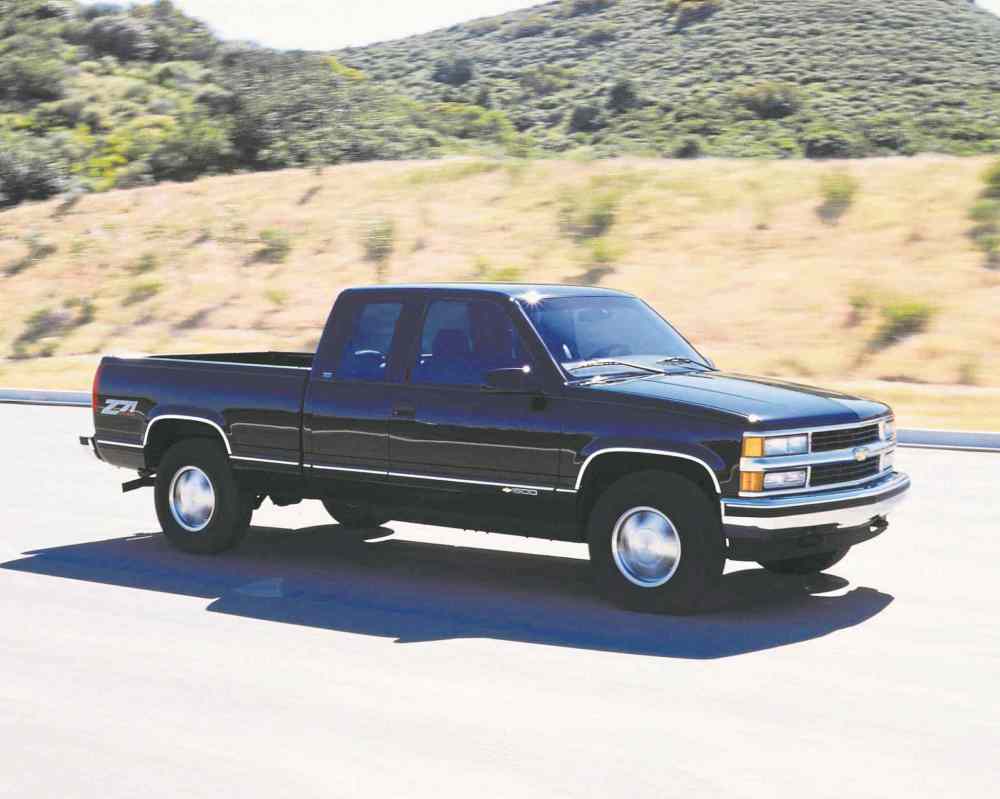
Q. I have a 1998 Chevrolet Silverado pickup with a V-8 engine and when I took it in to the local repair shop for a tune-up, the mechanic told me the timing chain is worn and should be replaced. My questions are: How does he determine that the chain is worn when it is hidden behind covers and inside the engine and what will happen if I decide not to go ahead with this work. The truck isn’t worth that much so I don’t know if I should spend the money.
A. To answer your first question, a bit of mechanical experience will enable the mechanic to determine wear in the timing chain without having to remove parts to visually and physically inspect it. The timing chain turns the camshaft and is driven by a gear on the crankshaft. Some vehicles use timing belts instead of chains to do the same thing.
On your truck, the camshaft also drives the distributor (called a high voltage switch by GM) through a gear connection. During the tune-up, the mechanic would have had the cap off the distributor and could see if the rotating parts inside the distributor were turning as soon as he turned the crankshaft. Normally there is a little delay and the crankshaft can be rotated about five degrees back and forth without having the distributor turn, but as the timing chain wears, the amount the crankshaft can turn before the distributor reacts will increase.
As the timing chain wears, it causes the camshaft timing to be retarded — the engine valves open and close later. This may be only by a few degrees of rotation, but as little as four degrees change can make a significant difference in engine operation. In general terms, as the chain wears, low-r.p.m. engine power decreases but high-r.p.m. engine power may increase slightly. Because you have less low-r.p.m. power, drivers tend to step on the throttle more and fuel economy decreases. Racing mechanics will change the camshaft timing so the engine will have either more low-end power or more top-end power to suit the track conditions but on the street, we generally drive at lower r.p.m. Variable camshaft timing, a feature of many newer engines, is capable of providing both.
If you don’t have the repair work done, performance and fuel economy will be less, and if the chain becomes extremely worn, it could jump a tooth on the gear and the engine would stop running. Usually (but not always) on these “small block Chevys”, there is no internal damage done to the engine when a timing chain jumps a tooth but on other makes and models of engines, it could cause the engine valves to contact the pistons, causing major engine damage. Ask your mechanic how much it is worn, and that will give you a better idea of whether to go ahead with the repairs.
Q. I am getting ready for a summer holiday and one of my headlights is burned out on my 2008 Honda Civic. It has a replaceable bulb and I see at my parts store there are many types of replaceable bulbs. How do I know what bulb to buy?
A. Your owner’s manual usually lists the bulbs for the different lights on a vehicle, but there are also application guides in the parts stores so you can look up the correct bulb part number by year and model of vehicle.
Your Honda Civic uses a 9006 or HB4 bulb for low beam and 9005 or HB3 bulb for high beam. You will find there are also “high-performance” bulbs that cost more but also provide much more light if you do a lot of nighttime driving. There are also LED (Light Emitting Diode) bulbs available from the aftermarket but most of these are for lights other than headlights. LED headlight bulbs are just starting to become available and are still very expensive but are bright and use very little power.
Anytime you install a new bulb, keep your hands off the glass part of the bulb. Oil from your skin will deposit on the glass and the bulb will burn out quicker. If you think there may be oil on the bulb surface, you can clean it with a little rubbing alcohol on a soft rag before installing the bulb.
james.kerr@sasktel.net