1942 Plymouth a true ‘survivor’ car
Discovery of a well-maintained vehicle is better than a barn find
Advertisement
Read this article for free:
or
Already have an account? Log in here »
To continue reading, please subscribe:

Digital Subscription
One year of digital access for only $205*
- Enjoy unlimited reading on winnipegfreepress.com
- Read the E-Edition, our digital replica newspaper
- Access News Break, our award-winning app
- Play interactive puzzles
*First annual payment billed as $205.00 + GST for one year. This annual subscription will automatically renew at $233.00 + GST every 52 weeks (10% off the regular annual price of $259.35). Offer available to new and qualified returning subscribers only. Cancel any time.
To continue reading, please subscribe:
Add Free Press access to your Brandon Sun subscription for only an additional
$1 for the first 4 weeks*
- Enjoy unlimited reading on winnipegfreepress.com
- Read the E-Edition, our digital replica newspaper
- Access News Break, our award-winning app
- Play interactive puzzles
*Your next Brandon Sun subscription payment will increase by $1.00 and you will be charged $17.95 plus GST for four weeks. After four weeks, your payment will increase to $24.95 plus GST every four weeks.
Read unlimited articles for free today:
or
Already have an account? Log in here »
Hey there, time traveller!
This article was published 08/12/2017 (3205 days ago), so information in it may no longer be current.
When we look at a barn-find vehicle, we’re really referring to something that has been in long-term storage. Neglected and not maintained in any way, they can often require considerable work to the fuel, electrical, braking and exhaust systems before they can be driven again.
What’s preferable to a barn find is locating a survivor car.
A survivor car is one that has been maintained in at least a semi-drivable condition and has been stored in a manner that didn’t contribute to the vehicle deteriorating. While finding a survivor car or light truck from the 1950s to ’80s isn’t uncommon, coming across one from the early 1940s can be a challenge. With the cancellation of civilian production due to the Second World War, most vehicles went to the government’s war effort. Scrap drives during the war saw old cars as an obvious resource and many were recycled for their steel.
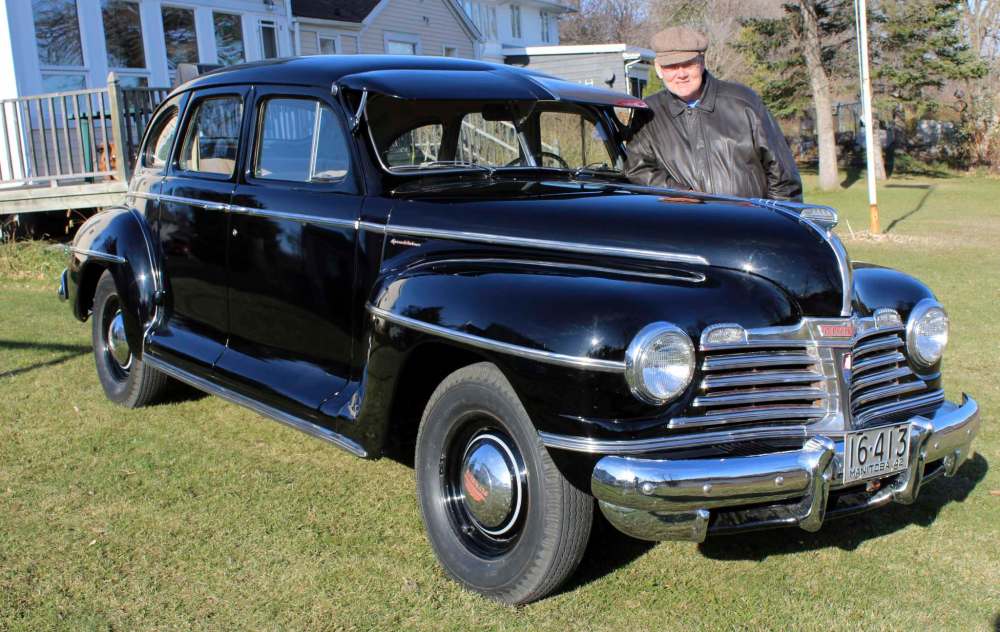
At Plymouth, civilian production ended January 31, 1942, in the United States. Yet, in Canada, it went on until the end of February. Models built prior to those dates carried the full chrome and stainless steel brightwork, while those built after have painted trim and bumpers.
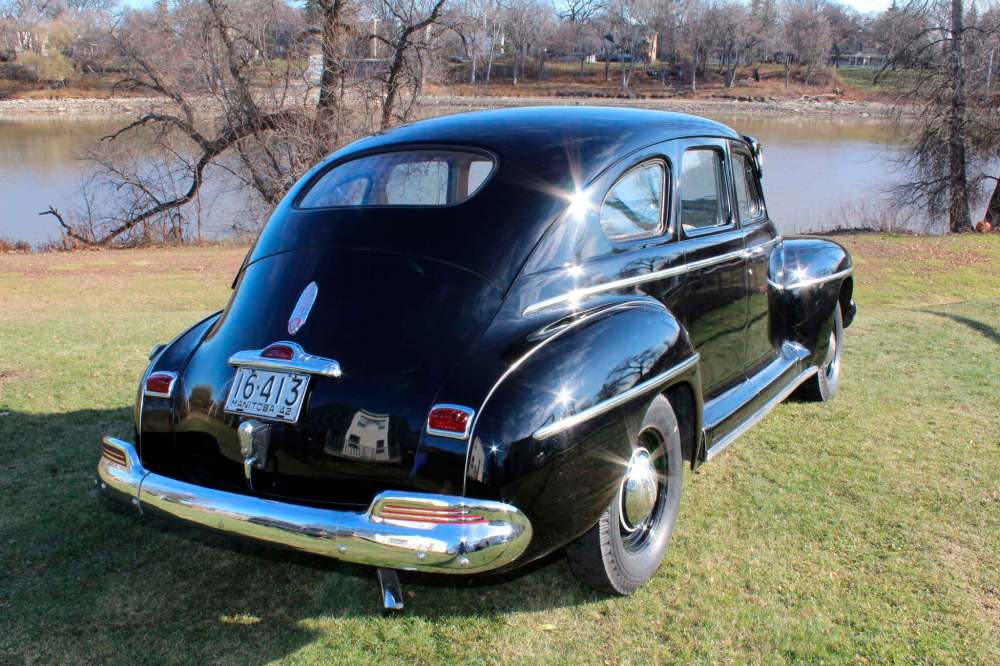
Winnipegger Paul Horch has been a car enthusiast his whole life. Evidenced by his more than 50-year membership in the Manitoba Classic & Antique Auto Club, Horch usually has his eye out for interesting vehicles. His current acquisition is a late, Canadian-produced 1942 Plymouth Special De Luxe sedan.
“I knew about the car for the past five years, and thought that if it ever came up for sale I’d buy it,” says Horch.
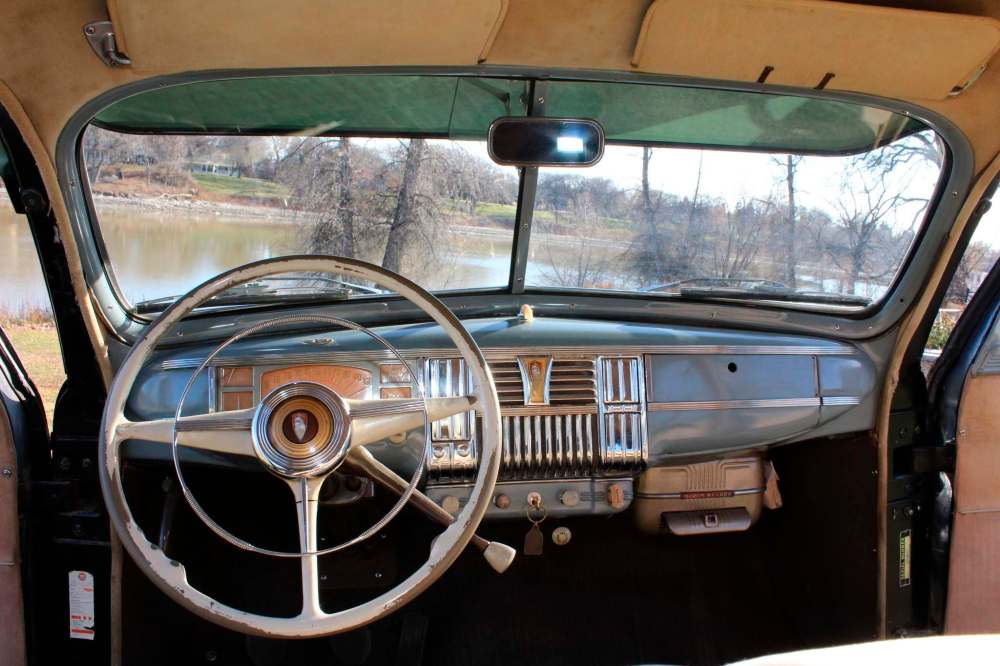
An original black car that has seen one repaint, it’s exceptionally clean and rust-free, and only required some minor brake work to make it roadworthy. The interior upholstery is a tri-tone brown fabric that is original to the car. While sun fading is evident, it’s in great condition for a 75-year-old car, and there is easily room for five adults.
Under the hood is a rebuilt 218.6-cubic-inch L-Head inline six-cylinder engine. Canadian-built vehicles used the larger 25-inch Chrysler engine block with a similar displacement to the American-produced 217.8 cubic-inch six. Producing 88 horsepower at 3,800 r.p.m., it was a respectable power output in its day, for a vehicle weighing 3,085 pounds. It’s backed by a three-speed manual-shift transmission, leading to a 3.73 geared, Hotchkiss drive rear axle. Tires are 6.50 16-inch Goodyear bias-ply, with inner tubes. Riding on a 117-inch wheelbase with an overall length just less than 196 inches, it was considered an average-size sedan for the 1940s.
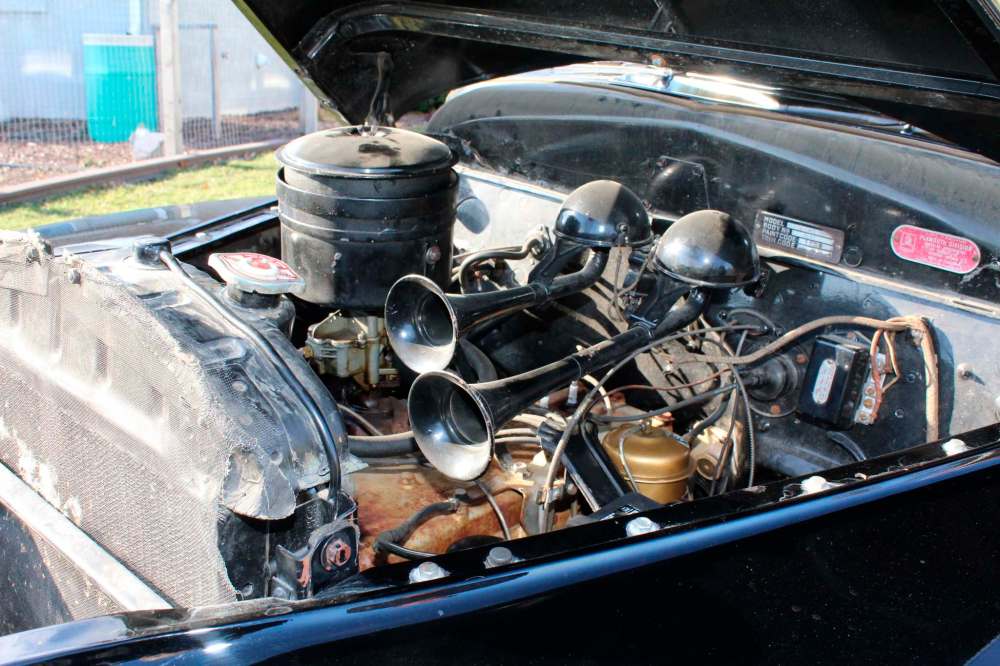
Options found on the car are few, but do include a Fulton sun visor, driver’s side-view mirror and a dealer-installed Mopar De Luxe heater.
An interesting note is that the windshield defrosters, often associated with an interior heater, were a further option on the Plymouth. Built at the Chrysler plant in Windsor, Ont., the P14C model four-door Plymouth was one out of 7,000 built before civilian production was halted.
The Special De Luxe sedan carried all the chrome and brightwork of the pre-war models, and had a base price of $1,385.
Originally delivered to owners in southwest Manitoba in the Napinka area, the car saw a move to Brandon for a few years before ending up in Winnipeg. With Horch now the fifth owner, and a 30-year member of the Plymouth Owners Club, his plans are to simply enjoy the car.
“The only change I would like to make is to return the dash and garnish mouldings to their original faux woodgrain finish,” says Horch. Notorious for fading, the dash and interior mouldings had been repainted at some time in a light grey/blue, that really doesn’t match well with the rest of the car.
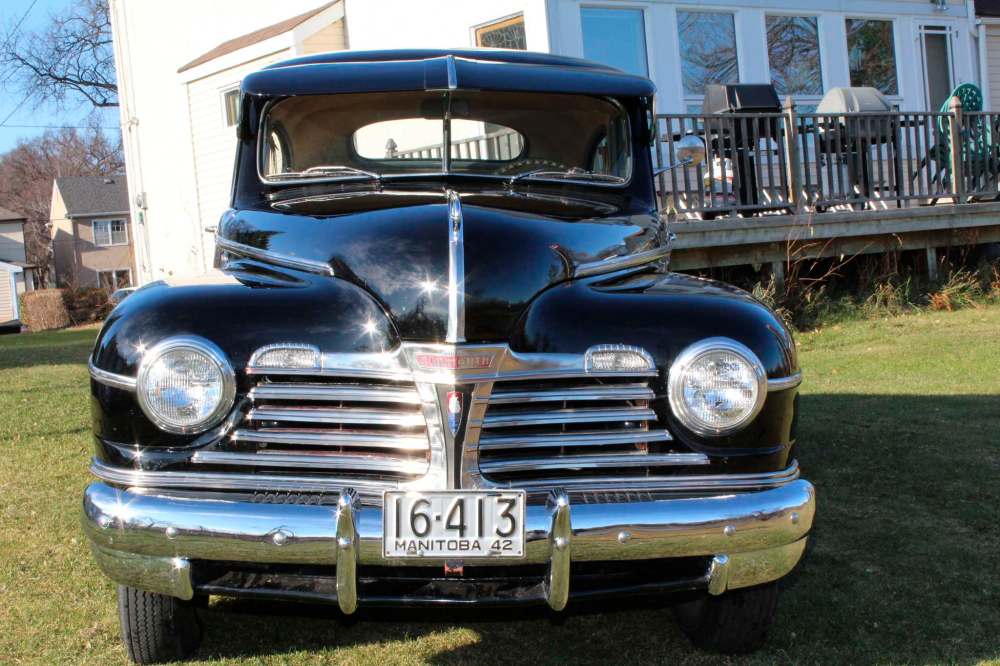
As well as being a survivor car, Horch’s Plymouth is now also an orphan brand as Canadian Plymouth production ceased at the end of the 1999 model year.
57ford@mymts.net