Canada’s COVID-19 pandemic response compares well with other countries, study finds

Advertisement

Advertise with us

MONTREAL - Canada handled the first two years of the COVID-19 pandemic and weathered the ensuing upheaval better than several other nations with comparable health-care and economic infrastructure, a new study suggests.

Read this article for free:

or

Already have an account? Log in here »

To continue reading, please subscribe:

Subscribe and receive a limited-edition Free Press branded hat or tote.

Digital Subscription

One year of digital access for only $205*

  • Enjoy unlimited reading on winnipegfreepress.com
  • Read the E-Edition, our digital replica newspaper
  • Access News Break, our award-winning app
  • Play interactive puzzles

*First annual payment billed as $205.00 + GST for one year. This annual subscription will automatically renew at $233.00 + GST every 52 weeks (10% off the regular annual price of $259.35). Offer available to new and qualified returning subscribers only. Cancel any time.

To continue reading, please subscribe:

Add Free Press access to your Brandon Sun subscription for only an additional

$1 for the first 4 weeks*

  • Enjoy unlimited reading on winnipegfreepress.com
  • Read the E-Edition, our digital replica newspaper
  • Access News Break, our award-winning app
  • Play interactive puzzles
Start now

*Your next Brandon Sun subscription payment will increase by $1.00 and you will be charged $17.95 plus GST for four weeks. After four weeks, your payment will increase to $24.95 plus GST every four weeks.

Hey there, time traveller!
This article was published 27/06/2022 (1498 days ago), so information in it may no longer be current.

MONTREAL – Canada handled the first two years of the COVID-19 pandemic and weathered the ensuing upheaval better than several other nations with comparable health-care and economic infrastructure, a new study suggests.

The research, published in the Canadian Medical Association Journal on Monday, credits Canada’s strong performance to restrictive and persistent public health measures as well as a successful vaccination campaign.

A team of Ontario researchers analyzed data from February 2020 to February 2022 in the group of industrialized countries known as the G10, which actually has 11 members. They compared Canada, Belgium, France, Germany, Italy, Japan, the Netherlands, Sweden, Switzerland, the United Kingdom and the United States — all countries with similar political, economic, and health-care systems.
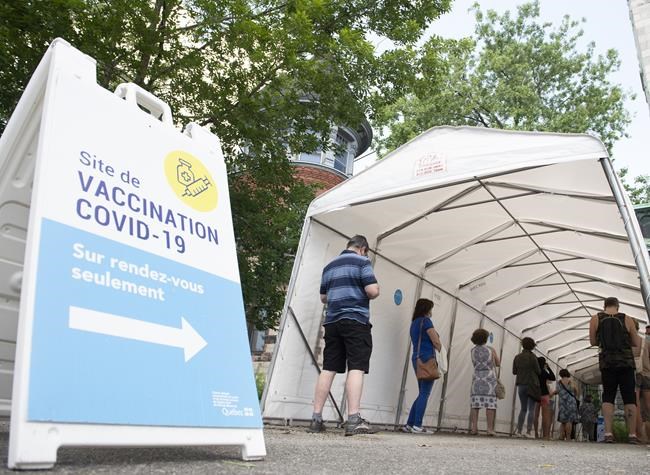
Canada handled the first two years of the COVID-19 pandemic and weathered the ensuing upheaval better than several other nations with comparable health-care and economic infrastructure, a new study suggests. People wait in line to receive a COVID-19 vaccine in Montreal, Saturday, June 19, 2021. THE CANADIAN PRESS/Graham Hughes

“If you look at Canada compared to the G10, the differences are enormous,” study co-author Dr. Fahad Razak said in a recent interview. “If you look at our vaccination rate, we had the highest in the entire G10.”

After Japan, Canada had the second lowest rate of people infected and the second lowest rate of people dying, he added. The study says Japan is considered an outlier within the G10, for reasons that aren’t clear.

The research suggests Canada’s cumulative per-capita rate of COVID-19 cases was 82,700 per million, while all other countries — with the exception of Japan — were above 100,000 per million.

Canada’s rate of COVID-19-related deaths was 919 per million, once again second lowest behind Japan. All other countries were over 1,000 per million.

Razak said at least 70,000 more Canadians would have died during the first two years of the pandemic if Canada had the same death rates as the United States, the country with the highest cumulative number of COVID-19-related deaths.

“That means most of us would probably personally know a grandparent, or a friend or family member … who’s living today in Canada who would have died if we had the same trajectory as the United States,” Razak said.

He said Canada’s comparatively positive outcomes came about despite gaining access to vaccination later than most countries, noting there were also other health-care system structural disadvantages to overcome across the country at the outset of the pandemic.

“Some hospitals were so overwhelmed that we had to ambulance or airlift patients to other hospitals,” he said.

But Canada, he said, differed from other developed countries when it opted to implement public health measures that were both strict and persistent. Though such measures drew vehement opposition in some circles, Razak said they helped mitigate the pandemic’s overall impact.

“Compared to many other countries … they would have periods with tight restrictions but quickly pull back,” he said. “For Canada, it was really this high and persistent level almost entirely for the first two years.”

But Razak said the success of Canada’s immunization drive emerged as the strongest takeaway from the research, praising officials for engaging with the population and ensuring vaccines were readily available across the country.

More than 80 per cent of eligible Canadians have been fully vaccinated with two doses as of June. The percentage of the vaccinated populations in other G10 countries is between 64 and 77 per cent, according to the study.

“There was a magic in Canada around these vaccine roll-outs during dose one and dose two,” Razak said.

“When we speak to our colleagues across the world, Canada was the envy of the world in terms of our population rallying around this. It is a lesson to the world, that very high engagement can occur with the right strategy.”

The study also showed the countries’ response to the pandemic left an economic burden, with government debt rising for all countries and Canada registering one of the highest relative increases.

“We had these very significant economic impacts, we had very tight restrictions on our individual freedom which led to things like isolation … but we also had really among the best results in terms of controlling the impact of the virus,” Razak said.

“Was it worth it? That’s not a scientific question, that’s a values and morals and policies question.”

This report by The Canadian Press was first published June 27, 2022.

This story was produced with the financial assistance of the Meta and Canadian Press News Fellowship

Report Error Submit a Tip

More Stories

Puzzles Palace

1 minute read Monday, Jul. 27, 2026

To solve our puzzles, please subscribe with this special offer: |

Trump says Mideast allies have reached outlines of deal to end Iran war, says US to stop new strikes

Aamer Madhani, The Associated Press 6 minute read Preview

Trump says Mideast allies have reached outlines of deal to end Iran war, says US to stop new strikes

Aamer Madhani, The Associated Press 6 minute read Saturday, Aug. 1, 2026

WASHINGTON (AP) — President Donald Trump in a Saturday evening social media post claimed that Mideast allies have reached the parameters of a deal to end the Iran war and said that he would hold off on ordering new strikes in the five-month old conflict for now.

Trump added that the emerging deal “would include the Immediate, Complete, and Total OPENING OF THE HORMUZ STRAIT, and an end to Iran’s nuclear threat.”

“Based on this request, I have agreed, for the future benefit of the WORLD and, likewise, the survival of a successful and prosperous Iran, to cancel the attack, subject to being able to rapidly make a DEAL,” Trump said.

He said that Israel has agreed to join the U.S. in the commitment to try to complete the agreement with Iran that would bring about an end to the war.

Read
Saturday, Aug. 1, 2026

Excited Goldeyes fans buzz over Manitoba Mosquitoes’ name change

Grace Penner 4 minute read Preview

Excited Goldeyes fans buzz over Manitoba Mosquitoes’ name change

Grace Penner 4 minute read Friday, Jul. 31, 2026

BITE club has entered the ball park for a single game, filling the stands with mosquitoes — just not in the way you may think.

The Fish are participating an alternate identity takeover, one that many other teams in the minor baseball leagues have been having some fun with. The Winnipeg Goldeyes re-branded to pay homage to the province’s beloved summer creatures, the Manitoba Mosquitoes.

The Fargo-Moorhead RedHawks had some fun with its alternative identity, doing a five-game name change to the Woodchippers, a fun reference to the 1996 film Fargo.

Other honourable mentions are the Chicago Dogs, who switched over to the Chicago Wieners, the Sioux Fall Canaries transformed into the Minnehaha Martians, Milwaukee Milkmen became the Franklin Benjamins, and the Lake Country Dockhounds swapped to the Wisconsin Dive Bars.

Read
Friday, Jul. 31, 2026

Downtown Keg closes… to reopen nearby

Free Press staff 2 minute read Preview

Downtown Keg closes… to reopen nearby

Free Press staff 2 minute read Friday, Jul. 31, 2026

Downtown Winnipeg is without a Keg restaurant — for a couple of months, anyways.

The Keg Steakhouse and Bar vacated 115 Garry St. on Wednesday, after more than five decades at the location. It will open in a new Donald Street apartment tower this fall.

Its move comes after years of waiting. The DSM, at 185 Donald St., sat as a partially started apartment block after its developer stopped operating and sought creditor protection in April 2023. The developer began the project in 2019.

Carrington Real Estate took over in 2024. Part of the 14-storey site’s initial plans — pre-Carrington — was for the Keg to occupy the main floor.

Read
Friday, Jul. 31, 2026

Manitoba Hydro expects storm-related power outages to be repaired Saturday

Zoe Pierce 6 minute read Preview

Manitoba Hydro expects storm-related power outages to be repaired Saturday

Zoe Pierce 6 minute read Saturday, Aug. 1, 2026

As Manitoba Hydro crews work to restore the last pockets of power following this week’s severe storms, some Winnipeg residents say the prolonged outages left them effectively stranded, unable to safely leave their apartments or charge essential mobility devices.

More than 30,000 Manitoba Hydro customers lost power after powerful storms swept across southern Manitoba Wednesday and Thursday, bringing down trees and power lines. Environment and Climate Change Canada recorded wind gusts of 133 km/h in Brandon, 113 km/h in Souris and 91 km/h in Winnipeg, along with more than 2,900 lightning strikes within 50 kilometres of the city.

In an update posted to social media Saturday morning, Manitoba Hydro said about 500 customers remained without power. The utility said it hoped to restore all remaining storm-related outages later in the day.

“Right now, we’re prioritizing customers that have been out the longest,” the post reads. “The final restoration work will still take time, in part because we’re dealing with small, localized outages and need to travel across a widespread area.”

Read
Saturday, Aug. 1, 2026

Brighter days ahead after Camp Arnes

Joshua Frey-Sam 5 minute read Preview

Brighter days ahead after Camp Arnes

Joshua Frey-Sam 5 minute read Saturday, Aug. 1, 2026

Keishna Abenstein remembers what it was like to be a teenager who was stuck in her shell.

She also recalls how much going to summer camp at Camp Arnes helped her spread her wings.

Abenstein has watched her middle child, Teagen, go through a similar roller-coaster as a teenager. Teagen, described as a social butterfly in his childhood, has become a bit more reserved in his adolescence after many of his closest elementary school friends went to a different middle school, forcing him to make new friends as he began the next chapter of his education.

Abenstein saw an opportunity for a similar experience at Camp Arnes that could impact her son the same way it did for her.

Read
Saturday, Aug. 1, 2026