Understanding the Haggadah
'The telling' one of most important items on Seder table
Advertisement
Read this article for free:
or
Already have an account? Log in here »
To continue reading, please subscribe:

Digital Subscription
One year of digital access for only $205*
- Enjoy unlimited reading on winnipegfreepress.com
- Read the E-Edition, our digital replica newspaper
- Access News Break, our award-winning app
- Play interactive puzzles
*First annual payment billed as $205.00 + GST for one year. This annual subscription will automatically renew at $233.00 + GST every 52 weeks (10% off the regular annual price of $259.35). Offer available to new and qualified returning subscribers only. Cancel any time.
To continue reading, please subscribe:
Add Free Press access to your Brandon Sun subscription for only an additional
$1 for the first 4 weeks*
- Enjoy unlimited reading on winnipegfreepress.com
- Read the E-Edition, our digital replica newspaper
- Access News Break, our award-winning app
- Play interactive puzzles
*Your next Brandon Sun subscription payment will increase by $1.00 and you will be charged $17.95 plus GST for four weeks. After four weeks, your payment will increase to $24.95 plus GST every four weeks.
Read unlimited articles for free today:
or
Already have an account? Log in here »
Hey there, time traveller!
This article was published 04/04/2015 (4133 days ago), so information in it may no longer be current.
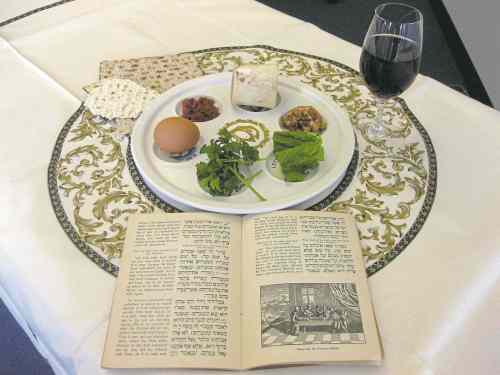
During the Jewish holiday of Passover, the typical Seder table is set with a variety of ritual objects and symbolic foods. With the exception of the matza, or unleavened bread, the Haggadah is the most important item on any Seder table.
Haggadah, which literally translates as “the telling,” is the user manual for the Seder, the festive meal that takes place at the start of the eight-day holiday. This year, Passover, began at sunset on Friday, April 3.
“The Haggadah is arguably the most popular Jewish book read by Jews,” writes American religious studies scholar Katja Vehlow, in Understanding the Roots of the Haggadah.
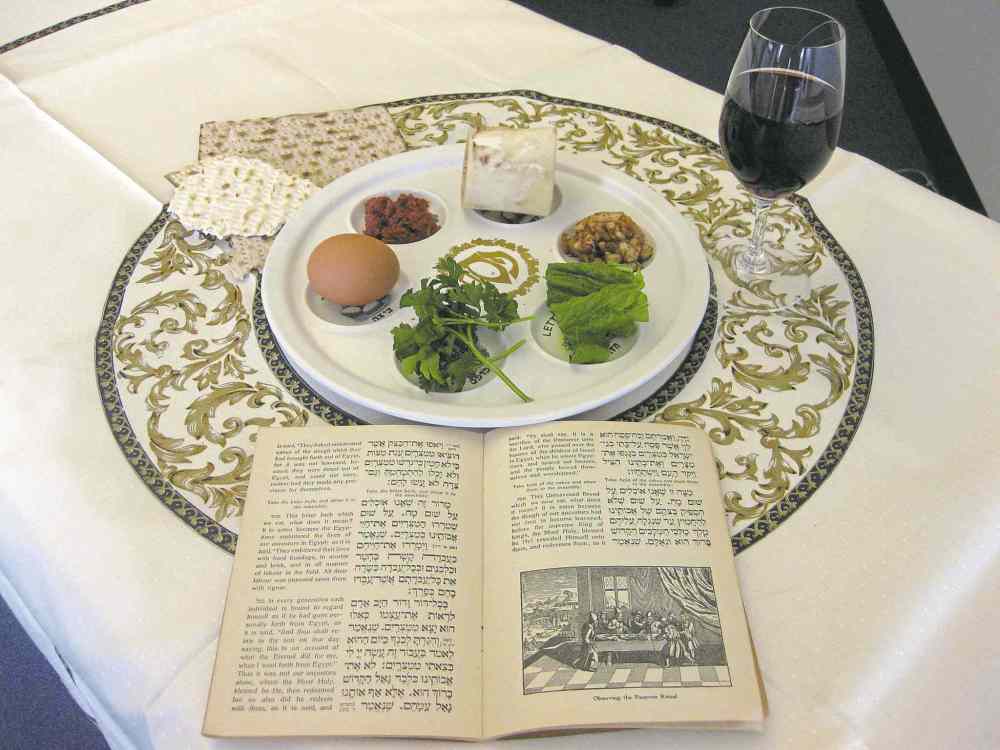
The Haggadah, originally written in Hebrew with a spattering of Aramaic, sets out the 15 steps for the Seder to follow. These steps, which include such rituals as asking the Four Questions and eating a green vegetable dipped in salt water, were compiled by rabbinical scholars during the Talmudic era, roughly in the fourth century CE.
The original intent of the Haggadah, and of the Seder itself, was to ensure every Jewish child had the opportunity to hear the story of the Hebrew exodus from slavery in Egypt and God’s promise of return to the Holy Land.
This obligation derives from the biblical commandment, “You shall tell your son on that day: it is because of what the Lord did for me when I came forth out of Egypt,” found in Exodus 13:8. It is reinforced in the Haggadah itself, with the passage, “Even if we were all wise, all understanding, all experience and all versed in the Torah, we would nevertheless be obligated to recount the story of the departure from Egypt.”
In addition to laying out the steps of the Seder, the Haggadah contains rabbinical commentaries, stories, songs, biblical passages, blessings and psalms. These are usually accompanied by translations and transliterations.
While every Haggadah contains these essential components, not every Haggadah is exactly the same. In fact, there exist hundreds of varieties of Haggadot (the plural of Haggadah) and new versions of Haggadot are created every year for Passover.
This wide variety of Haggadot is a reflection of the different denominations of Judaism and the range of political, educational and cultural philosophies, as well as alternative lifestyles, that co-exist within the Jewish religion. Social justice Haggadot, feminist Haggadot, LGBT Haggadot, Sephardic Haggadot, archaeological Haggadot and digital Haggadot are among the array of Haggadot currently in use. As well, the first all-Canadian Haggadah in English, French and Hebrew has just been published.
“Literally thousands of editions have been published, catering to every imaginable taste,” Velhow writes, “and it has appeared in every language ever spoken by Jews.”

It is not uncommon for synagogues, Jewish day schools and families to create personalized Haggadot that speak to their private histories and narratives.
The Internet, unsurprisingly, has made the creation of tailored Haggadot particularly easy and accessible.
The website haggadot.com, for example, is a user-friendly resource for those interested in creating specialized Haggadot. The site invites users to download content from a huge and diverse cache of traditional, contemporary and multi-denominational writings, commentaries, meditations, poetry and art work created by ancient rabbis, contemporary scholars, social activists, novelists, poets and artists. At the same time, it encourages users to upload their own interesting and innovative content for others to incorporate into their Haggadot.
This uploading and downloading of new content via 21st-century technology helps to ensure that an ancient how-to manual remains meaningful in a modern age.
swchisvin@gmail.com
The Free Press is committed to covering faith in Manitoba through our Religion in the News project. This reporting continues because readers like you step forward to fund it.
Donate now to support our reporting on religion.
Your donation is eligible for a charitable tax receipt.
BECOME A FAITH JOURNALISM SUPPORTER
The Free Press acknowledges the financial support it receives from members of the city’s faith community, which makes our coverage of religion possible.