Hopeful about hunger
Work of Foodgrains Bank more vital than ever, says departing executive director

Advertisement
Read this article for free:
or
Already have an account? Log in here »
To continue reading, please subscribe:

Digital Subscription
One year of digital access for only $205*
- Enjoy unlimited reading on winnipegfreepress.com
- Read the E-Edition, our digital replica newspaper
- Access News Break, our award-winning app
- Play interactive puzzles
*First annual payment billed as $205.00 + GST for one year. This annual subscription will automatically renew at $233.00 + GST every 52 weeks (10% off the regular annual price of $259.35). Offer available to new and qualified returning subscribers only. Cancel any time.
To continue reading, please subscribe:
Add Free Press access to your Brandon Sun subscription for only an additional
$1 for the first 4 weeks*
- Enjoy unlimited reading on winnipegfreepress.com
- Read the E-Edition, our digital replica newspaper
- Access News Break, our award-winning app
- Play interactive puzzles
*Your next Brandon Sun subscription payment will increase by $1.00 and you will be charged $17.95 plus GST for four weeks. After four weeks, your payment will increase to $24.95 plus GST every four weeks.
Read unlimited articles for free today:
or
Already have an account? Log in here »
Hey there, time traveller!
This article was published 08/09/2020 (2173 days ago), so information in it may no longer be current.
During his 23 years as executive director of Canadian Foodgrains Bank, Jim Cornelius witnessed a lot of suffering due to hunger in the developing world, but he never lost hope.
“I don’t live with a sense of pessimism,” said Cornelius, 65, whose last day on the job of the Winnipeg-based international relief and development organization was Aug. 31.
While things are not positive when it comes to world hunger now, “in the long view I have seen things get better, conflicts resolved, people go home. I remain hopeful and optimistic,” he said.
Cornelius was born in Saskatchewan and grew up in Kenya as the child of missionary parents. He went to the Foodgrains Bank in 1997 from Eritrea, where he was managing a Canadian government food project.
During his early years at the organization, which is a partnership of 15 churches and church agencies working together to end global hunger, he saw a “definite decline in hunger.”
In the last five or so years, however, it is on the rise again.
“For 15 years I was able to say things are getting better, but now that progress has been halted. There are more people in need of food. It makes the work of the Foodgrains Bank more vital than ever.”
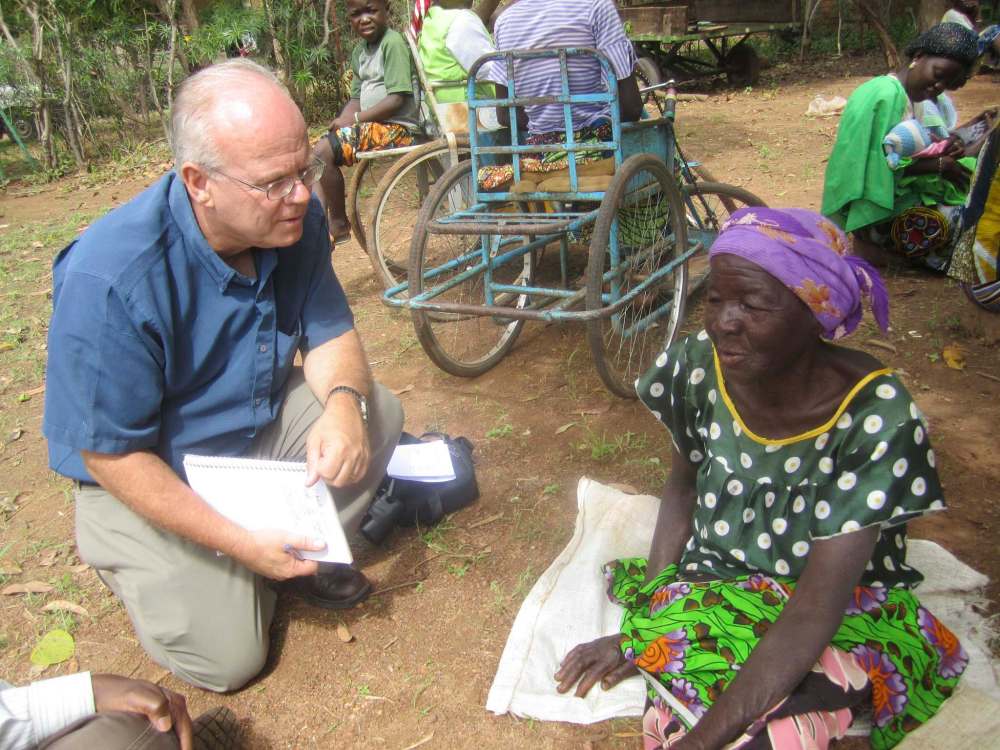
This rise is mostly due to conflict, he said, along with a changing climate that is causing more frequent droughts and storms.
Along with this is the COVID-19 pandemic; poor countries don’t have the capacity or resources to respond to the losses in jobs and other economic setbacks, he said.
Yet he remains hopeful.
When Cornelius started in 1997, Angola was a main recipient of food aid due to a civil war that began in 1975.
“That conflict seemed intractable,” he said. But the war ended in 2002, and now it receives no food aid.
The other thing that sustains him is knowing the Foodgrains Bank is making a difference.
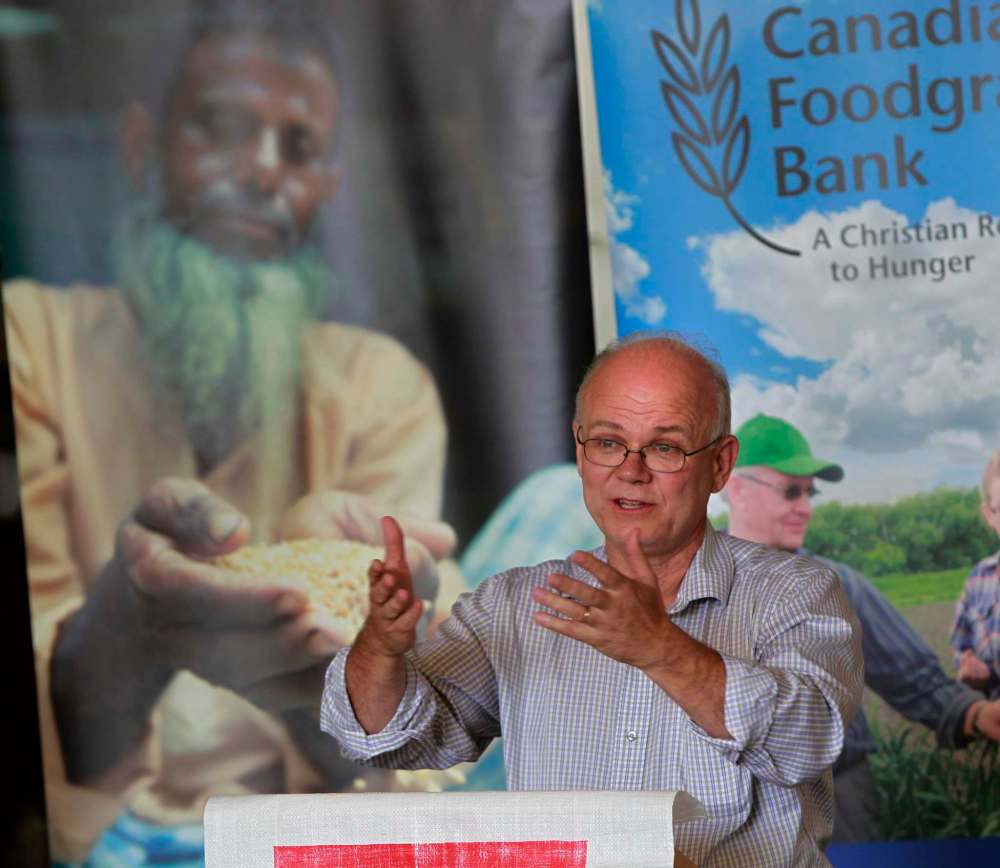
“Without us, the situation would be worse,” he said, noting the organization provided $42.1 million of food assistance to 865,731 people in 34 countries last year.
“That sustains me in my work. Even though things are difficult, Canadians are there through the Foodgrains Bank. We are a vehicle to reach out and be there for families in need.”
Looking back, there are a number of things he feels good about from his time as executive director. This includes how Canadian churches are working together to address hunger.
“They may differ theologically, but all agree that nobody should be left out, that all should be invited to the banquet and have enough to eat,” said the member of Winnipeg’s St. Benedict’s Table Anglican church.
“We all have a deep sense that God does not intend for anyone to go hungry.”
He also finds satisfaction from a range of factors:
• how the Foodgrains Bank has maintained a positive partnership with the Canadian government, which annually provides a matching grant of $25 million, along with other grants for work in the developing world;
• the leadership role the Foodgrains Bank played in untying food aid — persuading the government to let Canadian NGOs use taxpayers’ money to buy food locally, closer to areas of need in the developing world;
• seeing the Foodgrains Bank expand its mandate beyond humanitarian aid to help poor farmers grow more and better crops;
• and seeing the organization surpass $1 billion in aid delivered since it was founded in 1983.
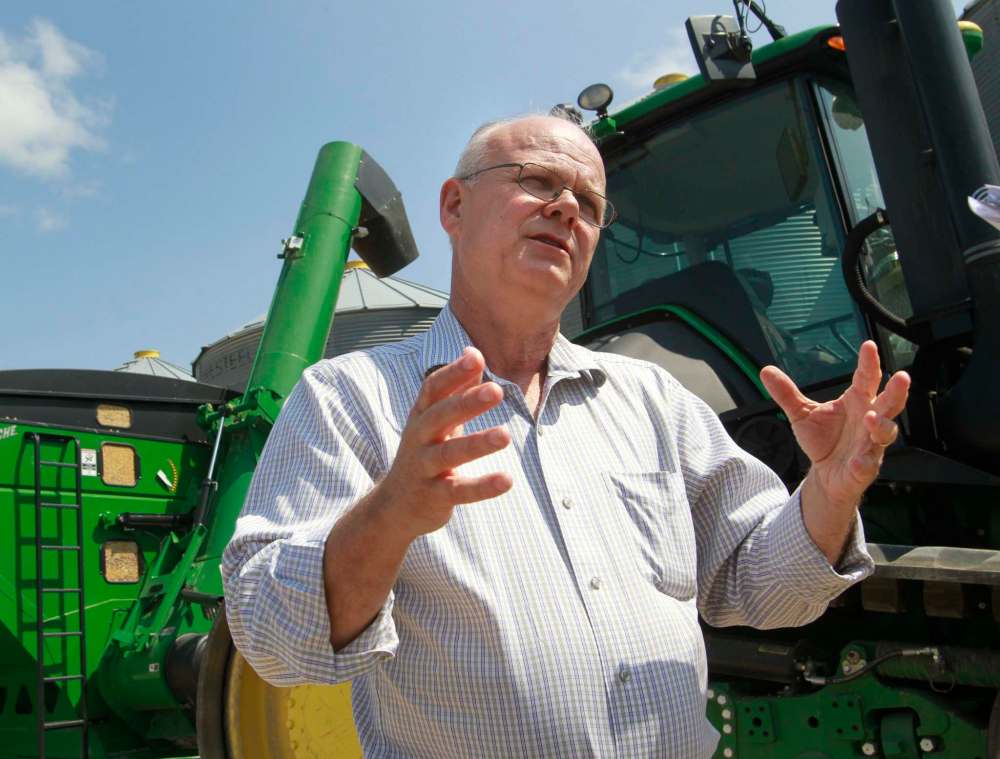
Another source of satisfaction was meeting supporters, including many farmers, across Canada.
“They have a longstanding commitment to this work,” he said. “There was no better pick-me-up than to visit with farmers who support the Foodgrains Bank. I always returned from those encounters re-invigorated. It reminded me why I am doing what I’m doing.”
“Hunger is not inevitable. It can be ended. It won’t happen tomorrow, it will take time. We have to stay engaged and work at it.”– Jim Cornelius
Of Cornelius’ work at the organization, Mennonite Central Committee executive director Rick Cober Bauman said “Jim has brought a range of qualities to (the job). Significant among them I believe were a steady hand of leadership, deep experience with the Canadian churches as well as in in the international development community in Ottawa, and of course a commitment to the health of the farming community in Canada and internationally. We owe him a deep debt of gratitude.”
Added Nicholas Moyer, CEO of the Canadian Council for International Cooperation, an umbrella group for Canadian non-governmental organizations: “Jim has played a critical role in the sector. He was really good at bringing people and groups from diverse perspectives together to discuss complicated topics. Crucially, he had a vision beyond the foodgrains bank for the health of entire NGO sector and our overall goal of reducing poverty and eliminating hunger.”
Times may be even tougher for the world’s poorest citizens these days because of the pandemic, but as he leaves his role Cornelius is still hopeful.
“Hunger is not inevitable,” he said. “It can be ended. It won’t happen tomorrow, it will take time. We have to stay engaged and work at it.”
Cornelius, who has been succeeded as executive director by Andy Harrington, will remain as an adviser to the foodgrains bank.
faith@freepress.mb.ca
The Free Press is committed to covering faith in Manitoba through our Religion in the News project. This reporting continues because readers like you step forward to fund it.
Donate now to support our reporting on religion.
Your donation is eligible for a charitable tax receipt.
BECOME A FAITH JOURNALISM SUPPORTER
Our newsroom depends on a growing audience of readers to power our journalism. If you are not a paid reader, please consider becoming a subscriber.
Our newsroom depends on its audience of readers to power our journalism. Thank you for your support.
The Free Press is committed to covering faith in Manitoba through our Religion in the News project. This reporting continues because readers like you step forward to fund it.
Donate now to support our reporting on religion.
Your donation is eligible for a charitable tax receipt.
BECOME A FAITH JOURNALISM SUPPORTER
Our newsroom depends on a growing audience of readers to power our journalism. If you are not a paid reader, please consider becoming a subscriber.
Our newsroom depends on its audience of readers to power our journalism. Thank you for your support.
Advertisement Advertise With Us
Advertisement Advertise With Us
The Free Press acknowledges the financial support it receives from members of the city’s faith community, which makes our coverage of religion possible.