Back to the future in Myanmar
Ethnic minorities in civil war-torn Asian nation are no strangers to life under military rule, but decades of instability and strife have people pushing back this time
Advertisement
Read this article for free:
or
Already have an account? Log in here »
To continue reading, please subscribe:

Digital Subscription
One year of digital access for only $205*
- Enjoy unlimited reading on winnipegfreepress.com
- Read the E-Edition, our digital replica newspaper
- Access News Break, our award-winning app
- Play interactive puzzles
*First annual payment billed as $205.00 + GST for one year. This annual subscription will automatically renew at $233.00 + GST every 52 weeks (10% off the regular annual price of $259.35). Offer available to new and qualified returning subscribers only. Cancel any time.
To continue reading, please subscribe:
Add Free Press access to your Brandon Sun subscription for only an additional
$1 for the first 4 weeks*
- Enjoy unlimited reading on winnipegfreepress.com
- Read the E-Edition, our digital replica newspaper
- Access News Break, our award-winning app
- Play interactive puzzles
*Your next Brandon Sun subscription payment will increase by $1.00 and you will be charged $17.95 plus GST for four weeks. After four weeks, your payment will increase to $24.95 plus GST every four weeks.
Read unlimited articles for free today:
or
Already have an account? Log in here »
Hey there, time traveller!
This article was published 13/02/2021 (2060 days ago), so information in it may no longer be current.
Jerrad Peters travelled to Myanmar in late 2017 as part of a group representing Providence University College & Theological Seminary. He visited Yangon, Myitkyina and Internal Displacement Camps in rural areas and has remained in touch with contacts made during that time.
“There were tens of thousands of people in the streets. The demonstration was from 9 a.m. to 2 p.m.”
I can hardly fathom it. Then again, I can hear his downplayed, matter-of-fact way of speaking as I read his email. It’s the same voice that, slightly more than three years ago, calmly warned me that “there will be soldiers on the other side of the river; don’t look at them.”
La Wom Gumling is a spiritual leader among Myanmar’s Kachin people, a pastor. I have heard him pray, and I have heard him condemn authoritarianism. Now, following the Feb. 1 coup d’etat that deposed an elected parliament, imprisoned politicians and reimposed military rule, he has another plain-spoken message:
“For the Kachin people, our No. 1 concern is fighting against the military and any form of dictatorship.”
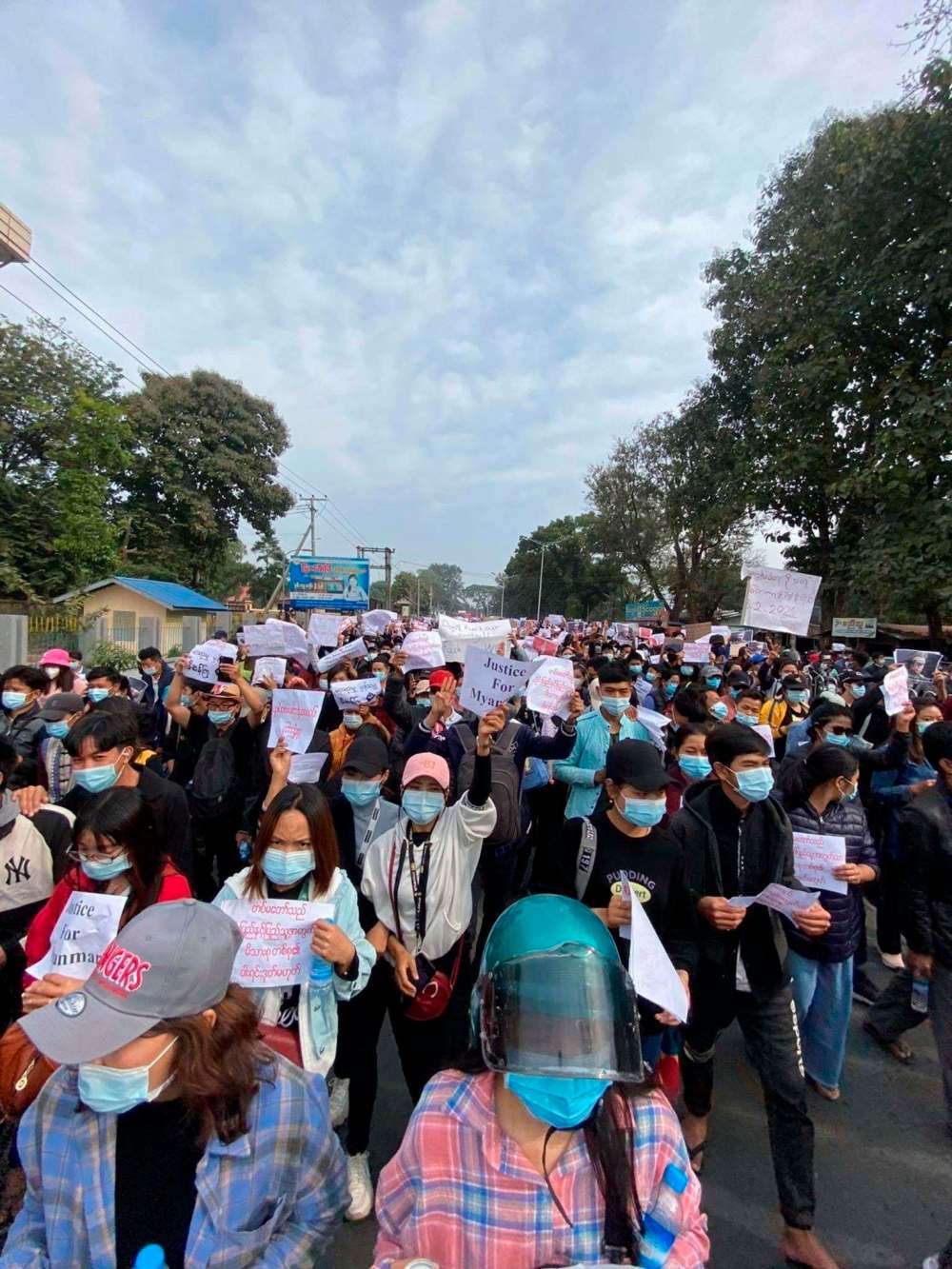
A multitude of his neighbours would seem to concur. On Monday, they disrupted the persistent hum of the economically energetic city of Myitkyina, the Kachin State capital, by banging pots and pans, displaying signs and placards and raising three fingers in a Hunger Games-style salute. Civil servants left their posts in acts of public disobedience.
They did the same Tuesday, gathering at the Manau Shadung monument park before a three-hour march. In the southern cities, overwhelmed police detachments released water cannons and fired rubber bullets into crowds. In the capital, Naypyitaw, at least one woman was in critical condition as of this writing — the first victim, it would seem, of live ammunition.
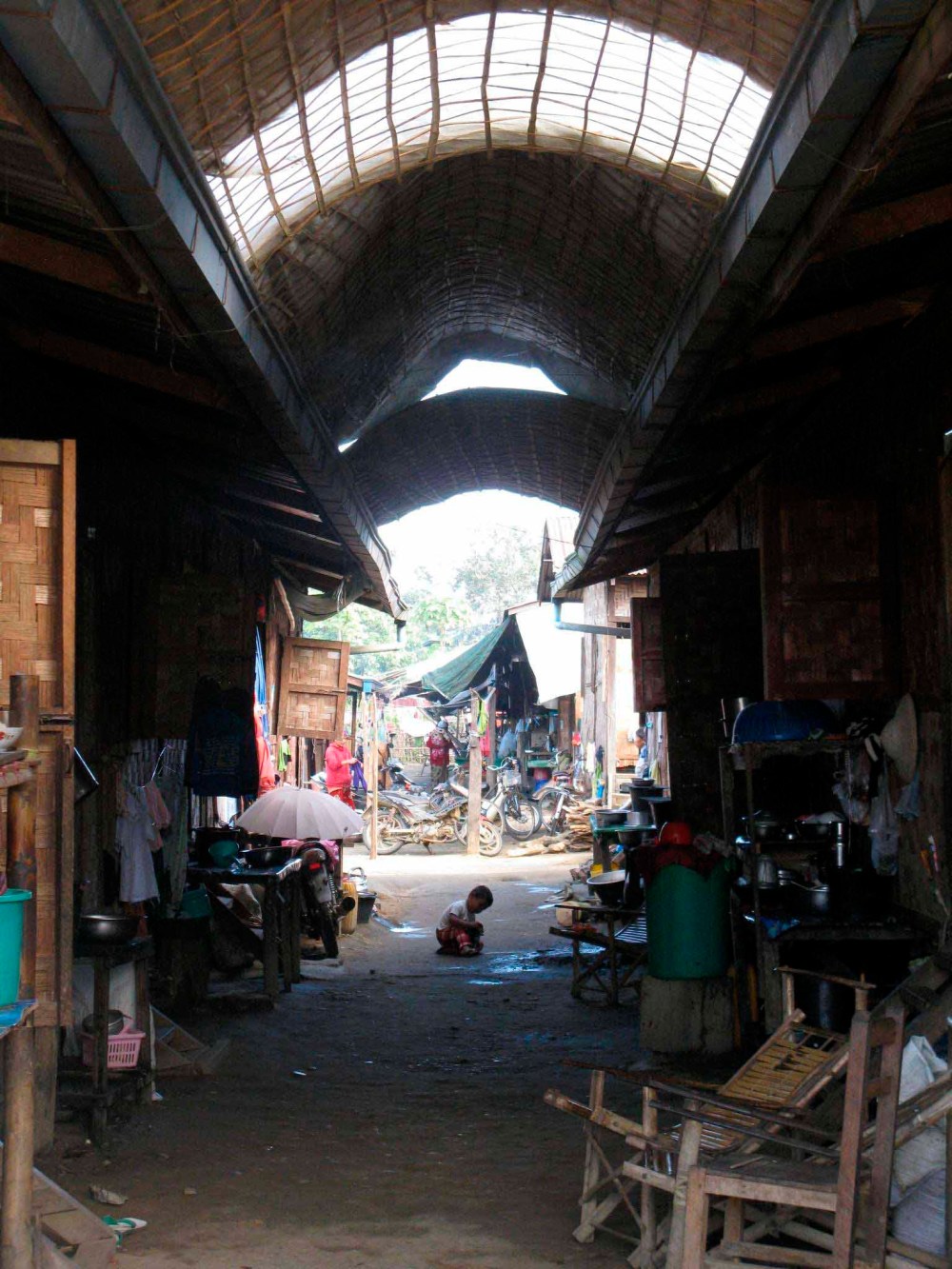
As of this writing, the Myitkyina protests have not been met with similar heavy-handedness, although the city’s remoteness will make the reporting of police violence difficult if they are. The junta has already shut down — and subsequently restarted — Myanmar’s digital infrastructure, periodically banning some social media, as well.
Meanwhile, the Kachin Liberation Army stands at the ready, occasional ceasefires having never formally ended a civil war that has continued for more than 70 years.
Ethnic minority
Kachin State, in Myanmar’s north, is one of the country’s seven ethnic-minority regions, with a population of just under two million. Bordering China’s Yunnan Province in the east and Tibet at its northernmost tip, its Himalayan foothills are rich in jade and gold and its forests in teak. China’s belt-and-road initiative is well-laid here, and culturally, as its excellent food reveals, the area is more Chinese than Burmese.
China, it goes without saying, is keeping a close eye on the post-coup developments. It is heavily invested in Myanmar and had a productive understanding with the former National League for Democracy government, led by Aung San Suu Kyi. Nevertheless, on Feb. 3 it blocked a United Nations Security Council resolution condemning the coup, effectively stating it would remain Myanmar’s guarantor against UN sanctions.
But its patience will be short. China prefers predictability in its sphere of influence, and Gen. Min Aung Hlaing’s military council is anything but that. There’s also a growing consensus that Min may have overplayed his hand. He is promising fresh elections — the military claims the NLD’s overwhelming victory in last year’s poll was fraudulent — but cannot be expected to abide a result unfavourable to his junta.
Minority-Christian Kachin State and the other ethnic regions, including Rakhine, where the Burmese military and its subcontractors launched a systematic displacement and extermination campaign against the Muslim-minority Rohingya in 2017, have seen such federal instability before. In fact, it’s all they’ve ever known, and they’ve had enough.
La Wom tells me Kachin State is interested neither in military occupation, which is the status quo, nor in another NLD government headed by Suu Kyi, still known with nostalgic affection here as “The Lady.”
“Kachin people did have high expectations and hopes in The Lady in the past,” he says. “But not anymore. We wish she had done something for the Kachin and other minority groups in Myanmar while in office.”
He adds: “This is why many minority people, including the Kachin, have only one purpose when it comes to our demonstrations: to fight against the military dictatorship rather than calling for The Lady to be released. For us, the coup and The Lady are the same.”
Such sentiments would have barely been whispered even a few months ago, but in the volatility of the situation Kachin State sees an opening. It wants autonomy, and with the military perhaps weaker than previously thought, its moment may have come.
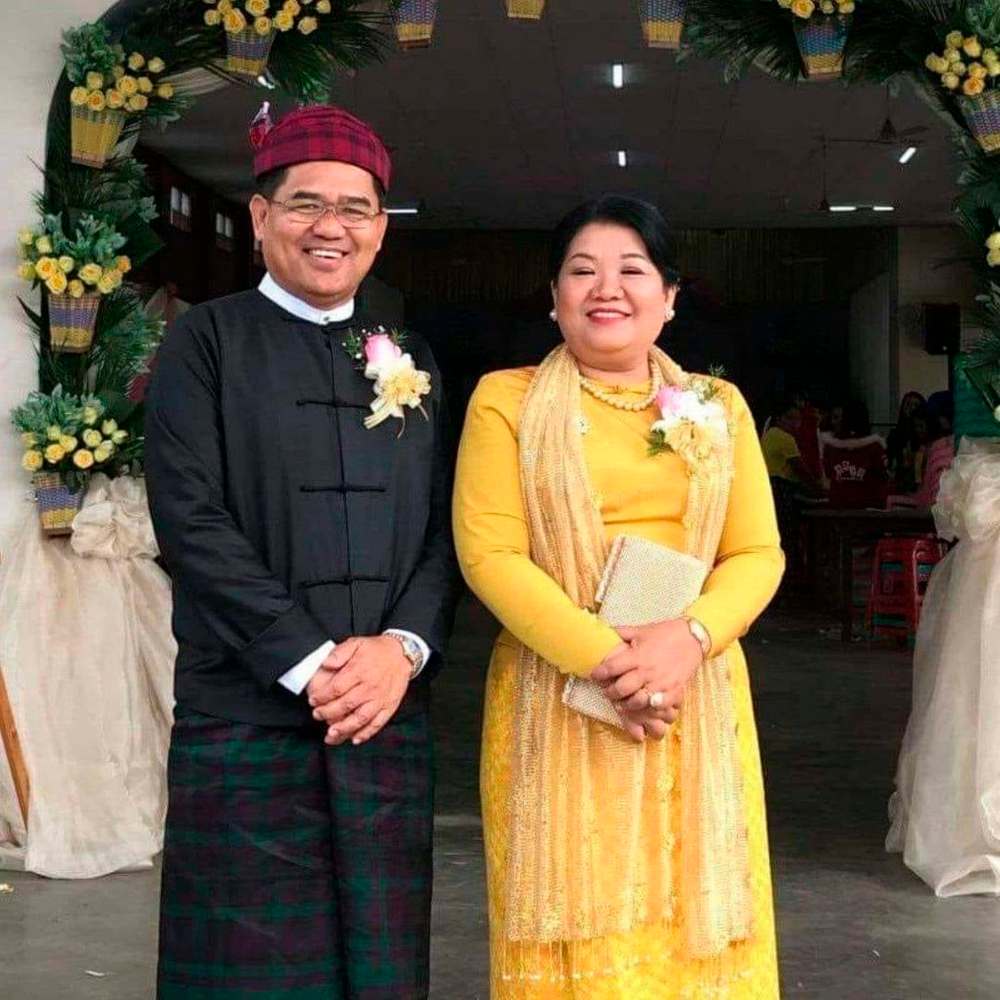
It may also have an ally in U Hkyet Thing Nan. A former state politician and chair of the Kachin Entrepreneurs Association, he was appointed governor of Kachin State by the military in the wake of the coup. He also helped negotiate the 2011 ceasefire and is respected by both the junta and the Kachin.
What’s unknown is how much pressure the military applied for Thing Nan to assume his new post. I visited him in his home while in Myitkyina and reached out to him through an intermediary, but never heard back. His social media accounts have also been taken offline.
Hparat Hkawn Hkalam is a vocal advocate of Kachin independence. Reached via email, she says the central, Bamar-majority government, whether military or elected, has never taken seriously its responsibilities under the 1947 Panlong agreement.
“The agreement was to move towards the autonomy of the ethnic states,” she says. “This is what we want. This time we want to see a result.”
This is a complicated place, and the more I think I know about the situation — both in Kachin State, specifically, and post-coup Myanmar as a whole — the more I realize I can hardly pin it down. My own sympathies are for Kachin autonomy, if not full independence, but I also worry about Chinese influence in such a scenario.
Aspiring to control your own resources, never mind your political destiny, is admirable in theory, but being fully consumed by Chinese expansionism is a consequence impossible to ignore.
Peace
I first met Lagwi Ying Kyang at a leadership training centre outside Myitkyina where he served as director. He’s now in Manitoba, doing graduate studies at Providence, and we spoke on the phone a week after the coup. He told me he keeps in touch with friends in Yangon, Myanmar’s biggest city, and that they’ve been participating in street demonstrations alongside approximately a million others.
When I ask him what he and his friends hope emerges from the popular uprisings, his answer is simple: peace.
“The Burmese want to be peaceful,” he says. “They’re the same as Canadians. Canadians and Burmese people both want peace.”
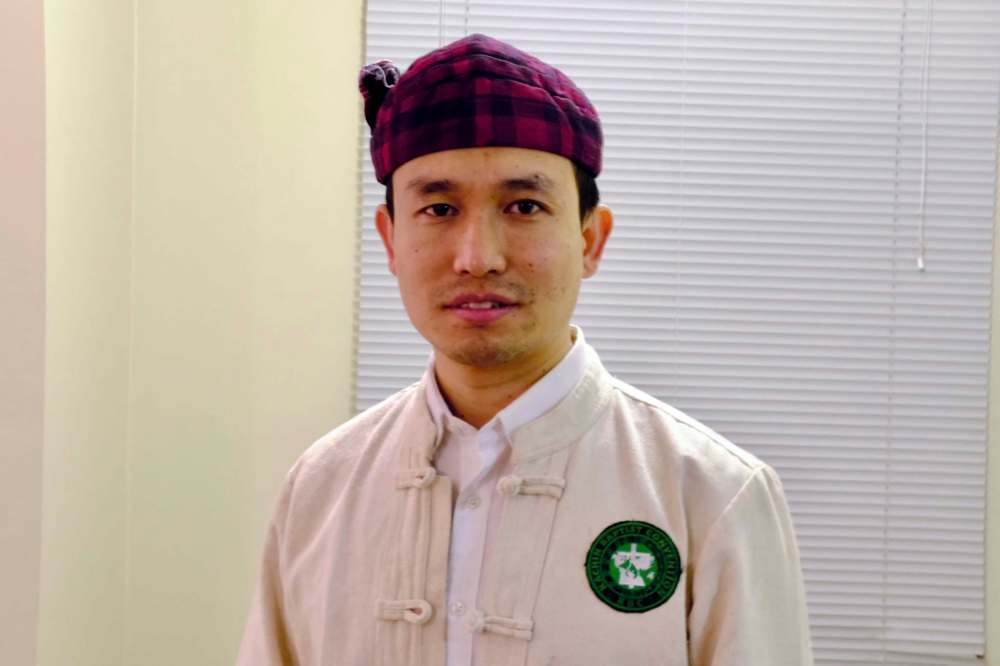
As for what Canada can do to help facilitate a lasting peace in Myanmar, he points to investments in health care, financial aid in the ethnic regions and human-rights advocacy.
Ying, too, hails from Kachin State, which, according to La Wom, has received little targeted assistance from Canada since 2019. To its credit, in May 2018 the Canadian government pledged $300 million in response to the Rohingya crisis in Rakhine — a commitment that expires this year. An additional $60 million is to be spent in areas of “dialogue, inclusion and diversity, protection and promotion of human rights, justice and accountability, democratic freedoms, and support to Myanmar’s peace process” by 2023.
It’s not a robust investment, and however well-meaning, it does little for the more than 90,000 Kachin who have been living in Internally Displaced Persons camps since 2010. Back when I visited, I saw a Canadian flag painted on a mural in one of these temporary settlements. The situation was urgent then, and the elimination of targeted relief will have only exacerbated the deprivation.
New generation
After graduating, Ying will go back to Myanmar — one of the many Western-educated millennials to return over the last decade. It’s a worldly generation, empowered by education and connected by social media, and one the generals hadn’t expected to encounter following the coup.
From his computer in Otterburne, Ying keeps in regular contact with his friends in Yangon through a Facebook group. “We talk a lot about what’s going on,” he says. “This is a unique time.”
In Yangon and throughout the Bamar-majority south, demonstrators have been calling for the release of Aung San Suu Kyi and the immediate restoration and recognition of the elected government. Ying says his friends aren’t scared. By the time they take to the streets in the morning they’ve already been connecting with fellow protesters, talking about issues and making plans for the following day.
“Groups meet on the streets and already have connections with other groups,” he says. “For example, if someone is arrested while protesting, other people will organize to rescue them.”
Then, Ying makes a point I think might end up being the ultimate catalyst for change in Myanmar: unwittingly, the generals have managed to unite the entire country and its disparate groups for the first time in its post-colonial history—but against themselves.
“Now the Burmese people know how the ethnic people feel,” he says. “They realize how we’ve been treated. The ethnic people and the Burmese people have a common purpose: they’re against the dictatorship.”
jerradpeters@gmail.com
Twitter @JerradPeters
The Free Press is committed to covering faith in Manitoba through our Religion in the News project. This reporting continues because readers like you step forward to fund it.
Donate now to support our reporting on religion.
Your donation is eligible for a charitable tax receipt.
BECOME A FAITH JOURNALISM SUPPORTER
Our newsroom depends on a growing audience of readers to power our journalism. If you are not a paid reader, please consider becoming a subscriber.
Our newsroom depends on its audience of readers to power our journalism. Thank you for your support.
The Free Press acknowledges the financial support it receives from members of the city’s faith community, which makes our coverage of religion possible.