Special human moment made everyone smile

Advertisement

Advertise with us

My time in Rome last week was filled with many more stories than I could write, an ocean of information and emotion from having a front row seat to history in the making as Métis, First Nations and Inuit delegates shared their stories with Pope Francis — and received a personal apology in return.

Read this article for free:


or

Already have an account? Log in here »

To continue reading, please subscribe:

Subscribe and receive a limited-edition Free Press branded hat or tote.

Digital Subscription

One year of digital access for only $205*

  • Enjoy unlimited reading on winnipegfreepress.com
  • Read the E-Edition, our digital replica newspaper
  • Access News Break, our award-winning app
  • Play interactive puzzles

*First annual payment billed as $205.00 + GST for one year. This annual subscription will automatically renew at $233.00 + GST every 52 weeks (10% off the regular annual price of $259.35). Offer available to new and qualified returning subscribers only. Cancel any time.

To continue reading, please subscribe:

Add Free Press access to your Brandon Sun subscription for only an additional

$1 for the first 4 weeks*

  • Enjoy unlimited reading on winnipegfreepress.com
  • Read the E-Edition, our digital replica newspaper
  • Access News Break, our award-winning app
  • Play interactive puzzles
Start now

*Your next Brandon Sun subscription payment will increase by $1.00 and you will be charged $17.95 plus GST for four weeks. After four weeks, your payment will increase to $24.95 plus GST every four weeks.

Hey there, time traveller!
This article was published 04/04/2022 (1629 days ago), so information in it may no longer be current.

My time in Rome last week was filled with many more stories than I could write, an ocean of information and emotion from having a front row seat to history in the making as Métis, First Nations and Inuit delegates shared their stories with Pope Francis — and received a personal apology in return.

It was a profoundly religious experience. Each day began at 6:30 a.m. with a mass conducted by one of the five bishops on the trip and was followed by a traditional Indigenous sunrise ceremony.

Each meeting with the Pope began with prayer, often conducted in the language of the Indigenous person doing the praying. Press briefings were infused with references to the divine, God or Creator. Sometimes they included songs, prayers and sacred ceremonies.

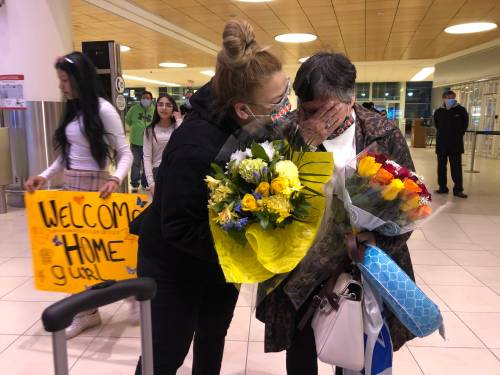
Linda Daniels, a residential school survivor from Long Plains First Nation, is overcome with emotion as she is greeted at the Winnipeg airport by drummers and family after returning from her week-long trip to Rome as part of the First Nations delegation to meet with Pope Francis. (John Longhurst / Winnipeg Free Press)

Delegates recognized there was something beyond humankind at work during the week. As Regional Chief Gerald Antoine put it: “There are powers greater than us out there, working their ways to line things up the ways they need to be.”

When asked by a reporter if she thought the visit had taken too long to happen, Pixie Wells, a Métis from Abbotsford, B.C., said “Creator does things in Creator’s time. Creator made the timing right for us to be here now.”

On Thursday, four women sang and drummed in St. Peter’s Square before the First Nations delegates emerged from their meeting with the Pope. When asked why, one said: “Our artifacts are nearby (in the Vatican Museum). They contain our ancestors’ spirits. We are singing so they won’t be lonely.”

Added Archbishop William McGrattan of Calgary of the time in Rome: “This work is divinely inspired, beyond our human ability to understand and recognize. I think we all sensed the presence of God, of Creator.”

While there were many heavy times, filled with emotional stories of horror and trauma, there were also many lighthearted moments. The delegates loved to laugh. They clearly enjoyed being together, and many new friendships were formed.

Meeting the Pope was a huge highlight for many, especially for Catholics on the trip — and there were many among the delegates.

Women sang and drummed in St. Peter’s Square on Thursday before the First Nations delegates emerged from their meeting with the Pope. When asked why, one said: “Our artifacts are nearby (in the Vatican Museum). They contain our ancestors’ spirits. We are singing so they won’t be lonely.”(John Longhurst / Winnipeg Free Press)

This isn’t surprising. More than 500,000 Indigenous people in Canada identify as Catholics, something that some Canadians might find surprising given their terrible history at the hands of that church.

The meetings with the Pope generated some memorable experiences from some delegates.

When one delegate shook the Pope’s hand, she clasped her other hand over his and held it there for a moment. Her takeaway? “He has soft hands, like bread,” she said with a smile.

When another shook his hand, she said to him: “I’m not going to wash my hand for a week!” They both laughed when she said that, she said.

There were lots of media present from Canada, the U.S. and Europe. About 75 reporters were in Rome for the visit; the media scrums in St. Peter’s Square were tight and packed.

Reporters could be an overbearing group at times, pushing cameras and microphones into the faces of delegates. But the delegates were patient in taking time to answer questions, even when it was hard.

Meeting Pope Francis was a huge highlight for many, especially for Catholics on the trip — and there were many among the delegates. (John Longhurst / Winnipeg Free Press)

Not only that, they thanked us for telling their stories to the world. More than one remarked it was the worldwide coverage of Kamloops that helped them get the attention they needed to begin the healing journey.

For journalists who are accustomed to mostly receiving criticism and hate mail, that was an unexpected and gratifying experience.

While the delegates agreed the visit was worthwhile, they were aware not everyone back home did. Their Facebook pages were filled with angry and vitriolic criticisms of the trip. At one dinner, a delegate implored the others to turn off social media; it wasn’t good for their souls or for the goals of the trip, he said.

That anger is real, and it needs to be taken into account — by the delegates, and also by the church. It will take a long time to heal the wounds of the past. Some will never find healing.

The story isn’t over. Everyone agreed the visit, and the papal apology, was just the beginning of a long road ahead. Indigenous people and the church will need to continue to be in conversation in the months leading up to the Pope’s visit to Canada — perhaps as early as this summer — and beyond.

The final audience with the Pope was filled with all the solemnity one would expect from such an occasion. But when it ended, the Pope stood up, waved at the delegates and said “Thanks for the visit. Bye-bye.” It was a special human moment, one that made everyone smile.

Indigenous representatives of the delegation fielded questions outside St. Peter’s Basilica after meeting with the Pope. (John Longhurst / Winnipeg Free Press)

John Longhurst was in Rome last week to cover the papal visit by Indigenous people for the Free Press. See coverage of the visit at www.winnipegfreepress.com/papalvisit

faith@freepress.mb.ca

The Free Press is committed to covering faith in Manitoba through our Religion in the News project. This reporting continues because readers like you step forward to fund it.

Donate now to support our reporting on religion.

Your donation is eligible for a charitable tax receipt. BECOME A FAITH JOURNALISM SUPPORTER

John Longhurst

John Longhurst
Faith columnist & reporter

John Longhurst has been writing for Winnipeg's faith pages since 2003. He also writes for Religion News Service in the U.S., and blogs about the media, marketing and communications at Making the News.

Our newsroom depends on a growing audience of readers to power our journalism. If you are not a paid reader, please consider becoming a subscriber.

Our newsroom depends on its audience of readers to power our journalism. Thank you for your support.

Report Error Submit a Tip

The Free Press acknowledges the financial support it receives from members of the city’s faith community, which makes our coverage of religion possible.

More Stories

Desperate Poilievre wants Canadians to believe the sky is falling when it’s just cloudy outside

Tom Brodbeck 5 minute read Preview

Desperate Poilievre wants Canadians to believe the sky is falling when it’s just cloudy outside

Tom Brodbeck 5 minute read Yesterday at 12:47 PM CDT

Pierre Poilievre has a problem.

Canadians just don’t seem to be paying much attention to him anymore.

So, naturally, the Conservative Opposition leader has decided to turn up the volume.

At a recent party caucus retreat in Penticton, B.C., Poilievre delivered the familiar message: Canada is in trouble, Canadians are hurting and the Liberal government is making everything worse.

Read
Yesterday at 12:47 PM CDT

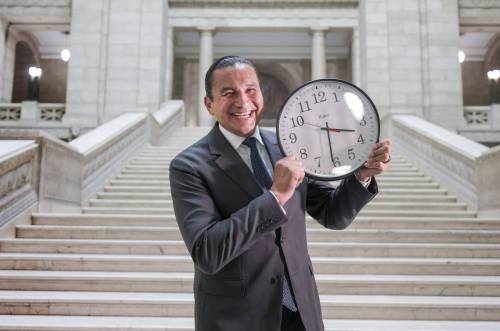
Manitoba abandoning spring, fall clock changes

Carol Sanders 8 minute read Preview

Manitoba abandoning spring, fall clock changes

Carol Sanders 8 minute read Updated: Yesterday at 8:48 AM CDT

Time’s up for the time change in Manitoba.

Manitobans won’t be setting their clocks back an hour in November. The province has decided to permanently stay on daylight time after surveying residents on the twice annual clock adjustment.

“We heard from Manitobans loud and clear — no more changing the clocks in Manitoba,” Premier Wab Kinew said in a news release Thursday.

Most of the 72,000 votes submitted in an online EngageMB survey — 92 per cent — said they would like to see the practice end. The survey asked if they preferred earlier sunrises in winter with standard time or the later sunsets in summer with daylight time. More than half of survey participants (58 per cent) indicated a preference to stay on permanent daylight time; 34 per cent voted to eliminate the time change but stay on standard time.

Read
Updated: Yesterday at 8:48 AM CDT

Special human moment made everyone smile

John Longhurst 6 minute read Preview

Special human moment made everyone smile

John Longhurst 6 minute read Monday, Apr. 4, 2022

My time in Rome last week was filled with many more stories than I could write, an ocean of information and emotion from having a front row seat to history in the making as Métis, First Nations and Inuit delegates shared their stories with Pope Francis — and received a personal apology in return.

It was a profoundly religious experience. Each day began at 6:30 a.m. with a mass conducted by one of the five bishops on the trip and was followed by a traditional Indigenous sunrise ceremony.

Each meeting with the Pope began with prayer, often conducted in the language of the Indigenous person doing the praying. Press briefings were infused with references to the divine, God or Creator. Sometimes they included songs, prayers and sacred ceremonies.

Delegates recognized there was something beyond humankind at work during the week. As Regional Chief Gerald Antoine put it: “There are powers greater than us out there, working their ways to line things up the ways they need to be.”

Read
Monday, Apr. 4, 2022

Steinbach Credit Union member warns others after scammer steals $10K

Scott Billeck 5 minute read Preview

Steinbach Credit Union member warns others after scammer steals $10K

Scott Billeck 5 minute read Yesterday at 5:19 PM CDT

A Winnipeg single mother whose bank account was drained of nearly $10,000 says Steinbach Credit Union needs to warn its members about what she believes is a broader security problem.

The woman, who is not being named to protect her identity, said a scammer gained access to her account earlier this week after calling SCU’s contact centre, claiming to be her and successfully completing the credit union’s authentication process.

She said she knows of at least six others who have experienced similar incidents in which callers impersonate SCU account holders and pass the authentication checks.

The woman discovered something was wrong when her minor son asked why money had been transferred out of an account they jointly hold.

Read
Yesterday at 5:19 PM CDT

Canada must not accept another Iranian autocracy

David Matas 5 minute read 2:01 AM CDT

Iran is a state run by a radical government victimizing its citizens and its neighbours. How do we change that? Any regime change that repeats the mistakes of the past is not a solution.

What went wrong in the past which led to the current regime? One answer is the U.K. and American aided coup which led to the ouster in 1953 of a democratically elected government headed at the time by Mohammad Mossadegh and its replacement with an American friendly autocrat, the Shah of Iran, Mohammad Reza Pahlavi.

The Shah imposed his rule through the Iranian National Intelligence and Security Organization — SAVAK, the acronym of its Persian name. SAVAK systematically inflicted torture, arbitrary killings and extra-judicial killings on perceived opponents of the regime. It was only a matter of time before repression of a regime directed to serving foreign interests would be overthrown.

What replaced the regime of the Shah, in 1979, the current regime of the mullahs, is a regime as intolerant and violent as the regime of the Shah and then some. That was not inevitable. But neither was it surprising. The vicious nature of the current regime, following the example set by the Shah, and its hatred for the United States, reacting to the U.S. aided imposition of the Shah, both echoes and reacts to the past. In 1979, the U.S. reaped what it sowed in 1953.

Canada-U.S. trade relationship is broken, but the damage can — and will — be repaired

Tom Brodbeck 5 minute read Preview

Canada-U.S. trade relationship is broken, but the damage can — and will — be repaired

Tom Brodbeck 5 minute read Thursday, Sep. 17, 2026

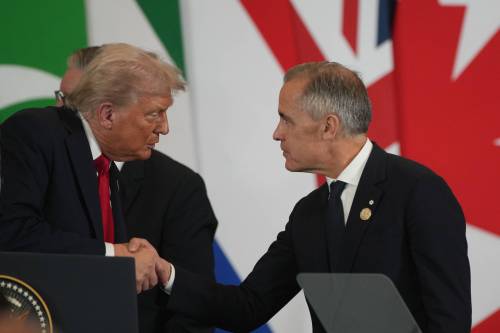
Canada needs to get serious about diversifying its trade beyond the United States. But at the same time, Canadians should expect relations with the U.S. to normalize after Donald Trump is no longer in the White House.

For generations, Canada-U.S. trade was considered almost a fact of geography. The two countries share the world’s longest undefended border, deeply integrated supply chains and a century of commercial relationships.

Canadian manufacturers depend on American customers. American manufacturers depend on Canadian suppliers. Energy, agriculture, automotive production and countless other industries operate across the border as though it barely exists.

That isn’t going to change dramatically, even in the midst of a bitter trade war unleashed by the U.S. president.

Read
Thursday, Sep. 17, 2026