Auschwitz march held ahead of 80th Warsaw ghetto anniversary
Advertisement
Read this article for free:
or
Already have an account? Log in here »
To continue reading, please subscribe:

Digital Subscription
One year of digital access for only $205*
- Enjoy unlimited reading on winnipegfreepress.com
- Read the E-Edition, our digital replica newspaper
- Access News Break, our award-winning app
- Play interactive puzzles
*First annual payment billed as $205.00 + GST for one year. This annual subscription will automatically renew at $233.00 + GST every 52 weeks (10% off the regular annual price of $259.35). Offer available to new and qualified returning subscribers only. Cancel any time.
To continue reading, please subscribe:
Add Free Press access to your Brandon Sun subscription for only an additional
$1 for the first 4 weeks*
- Enjoy unlimited reading on winnipegfreepress.com
- Read the E-Edition, our digital replica newspaper
- Access News Break, our award-winning app
- Play interactive puzzles
*Your next Brandon Sun subscription payment will increase by $1.00 and you will be charged $17.95 plus GST for four weeks. After four weeks, your payment will increase to $24.95 plus GST every four weeks.
Read unlimited articles for free today:
or
Already have an account? Log in here »
Hey there, time traveller!
This article was published 18/04/2023 (1261 days ago), so information in it may no longer be current.
WARSAW, Poland (AP) — Thousands of people gathered Tuesday at the former site of Auschwitz for the March of the Living, a yearly Holocaust remembrance march that falls this year on the eve of the 80th anniversary of the outbreak of the Warsaw Ghetto Uprising.
Italian President Sergio Mattarella spoke at the event, warning that the ideas of the 1930s were reappearing “at a time when Russia’s inhuman aggression against Ukraine is still raging.” He callled the memory of the Holocaust “an eternal warning that cannot be ignored.”
“Hate, prejudice, racism, extremism, anti-Semitism, indifference, delusion and hunger for power lurk, constantly challenging the consciences of individuals and nations,” said Mattarella, whose nation under dictator Benito Mussolini was allied with Adolf Hitler’s Germany during the war.
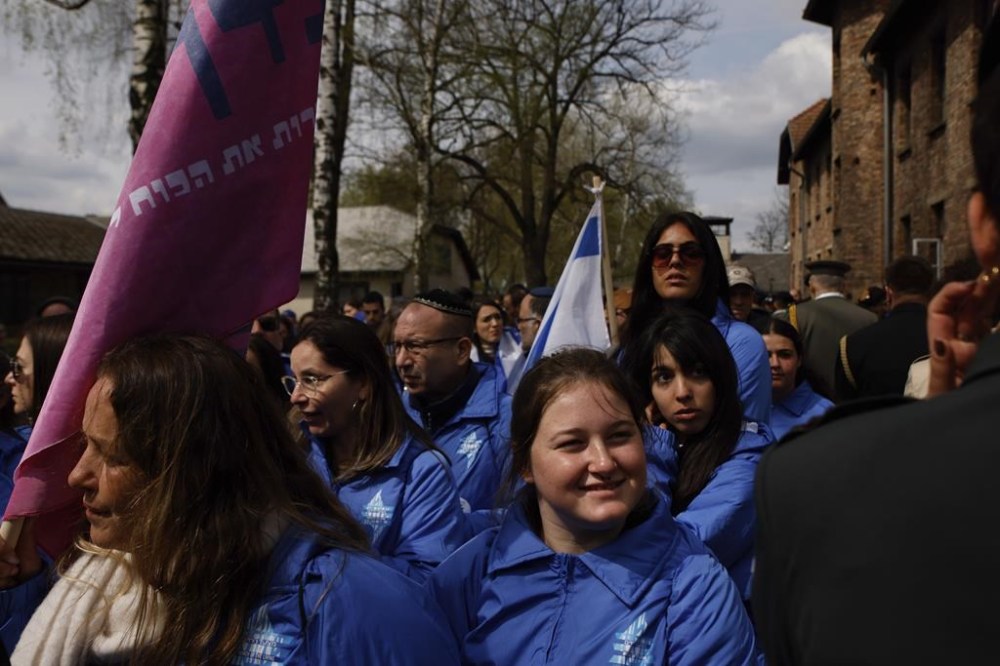
Participants in the event included Holocaust survivors who lived through the agony of Auschwitz or one of the other death camps where Nazi Germany sought to exterminate the Jewish population of Europe, and came close to doing so.
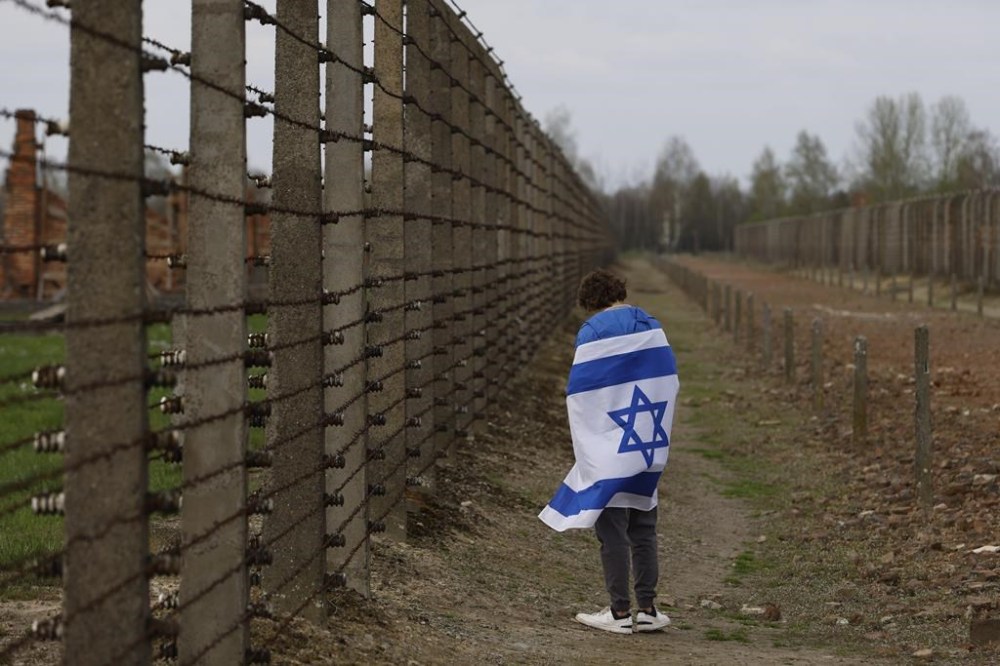
Some attendees, including people from Israel and the United States, came face to face for the first time with something which has long been a part of their psyche: the watchtowers, remains of gas chambers and the huge piles of shoes, suitcases and other objects that the victims brought with them on their final journey.
German forces established Auschwitz after they invaded and occupied Poland during World War II, and killed more than 1.1 million people there, most of them Jews but also Poles, Roma, Soviet prisoners of war, and others. In all, about 6 million European Jews died during the Holocaust.
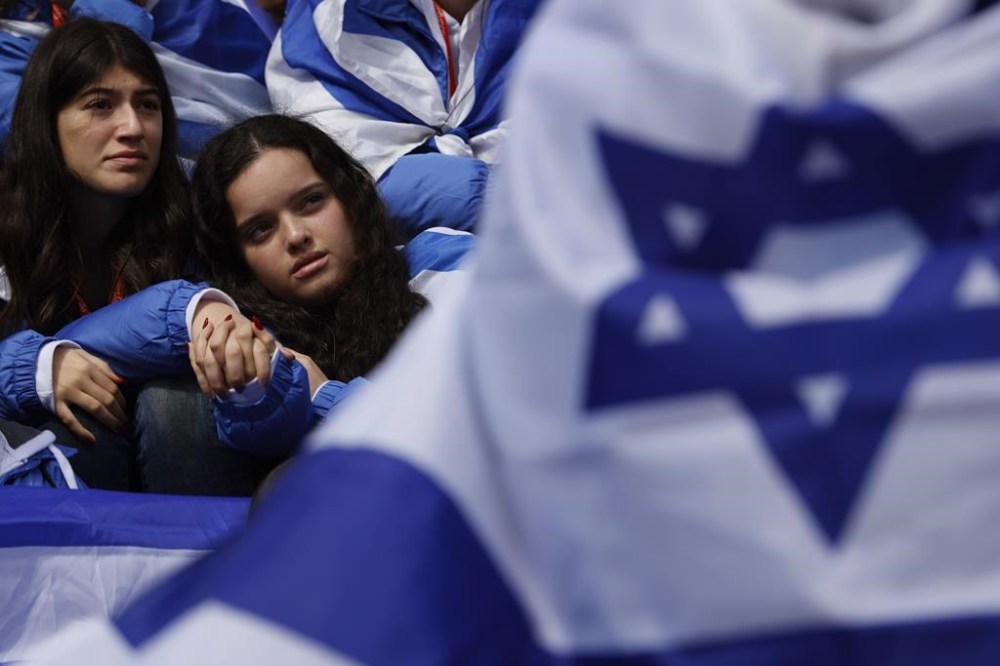
Elderly survivors, some draped in Israel’s blue and white flag, assembled under the gate with the cynical words “Arbeit Macht Frei” (Work Sets One Free) ahead of the march.
The event, while somber, is also a celebration of survival and the state of Israel, and some participants clapped and sang as they prepared to march near the gate.
The March of the Living, which takes place each year on Israel’s Holocaust Remembrance Day, began at that gate and led to Birkenau, the large camp 3 kilometers (2 miles) away where Jews from across Europe were transported by train and murdered in gas chambers.
Phyllis Greenberg Heideman, the march president, said the young participants would bear the responsibility for carrying forward the memory of the witnesses.
“They will be the voice of those who no longer have voice once they see and understand what happened in the past,” she said.
Some of the participants planned to travel the next day to Warsaw for observances marking the uprising in the Warsaw ghetto in 1943 which will be attended by the presidents of Poland, Germany and Israel.

The revolt was the largest single act of Jewish resistance during the Holocaust, and remains a potent national symbol for Israel.
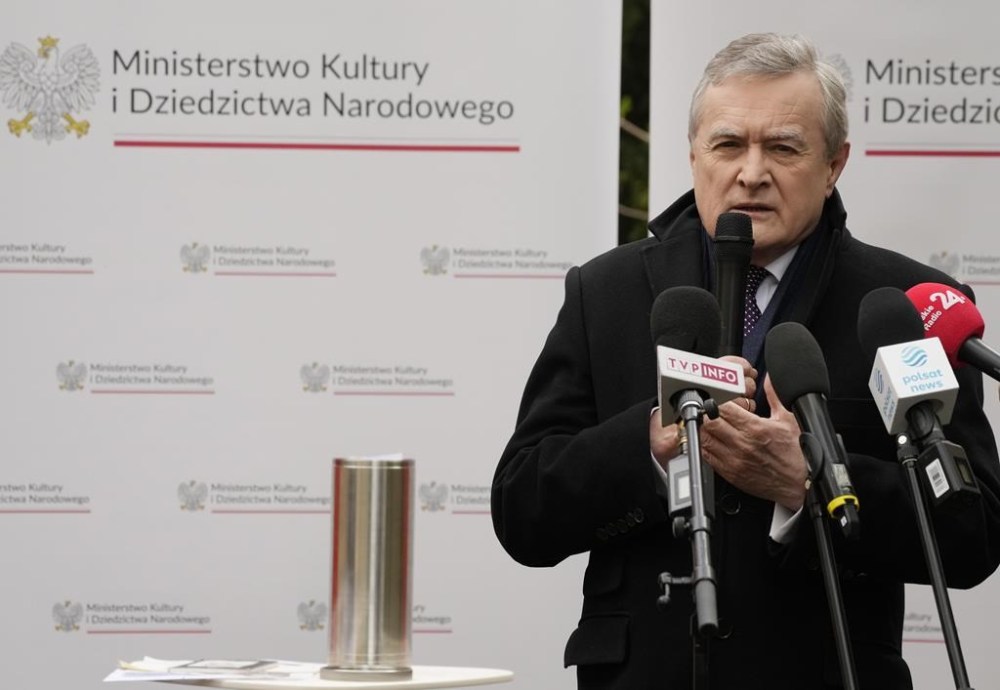
On Tuesday, Polish Culture Minister Piotr Glinski attended a ceremony symbolically marking a new stage in the development of a museum scheduled to open in three years, the Warsaw Ghetto Museum.
Officials buried a “time capsule” containing memorabilia and a message to future generations on the grounds of a former children’s hospital which will house the museum.
___
Rafal Niedzielski contributed from Oswiecim, Poland.
The Free Press acknowledges the financial support it receives from members of the city’s faith community, which makes our coverage of religion possible.