Hajj pilgrims perform final rituals in Mecca before heading to Mina
Advertisement
Read this article for free:
or
Already have an account? Log in here »
To continue reading, please subscribe:

Digital Subscription
One year of digital access for only $205*
- Enjoy unlimited reading on winnipegfreepress.com
- Read the E-Edition, our digital replica newspaper
- Access News Break, our award-winning app
- Play interactive puzzles
*First annual payment billed as $205.00 + GST for one year. This annual subscription will automatically renew at $233.00 + GST every 52 weeks (10% off the regular annual price of $259.35). Offer available to new and qualified returning subscribers only. Cancel any time.
To continue reading, please subscribe:
Add Free Press access to your Brandon Sun subscription for only an additional
$1 for the first 4 weeks*
- Enjoy unlimited reading on winnipegfreepress.com
- Read the E-Edition, our digital replica newspaper
- Access News Break, our award-winning app
- Play interactive puzzles
*Your next Brandon Sun subscription payment will increase by $1.00 and you will be charged $17.95 plus GST for four weeks. After four weeks, your payment will increase to $24.95 plus GST every four weeks.
Read unlimited articles for free today:
or
Already have an account? Log in here »
Hey there, time traveller!
This article was published 24/06/2023 (1184 days ago), so information in it may no longer be current.
MECCA, Saudi Arabia (AP) — Pilgrims streamed into Mecca’s Grand Mosque on Saturday to perform their final rituals before heading to Mina in preparation for the Hajj, the fifth pillar of Islam and one of the largest religious gatherings in the world.
They moved through the white marble courtyards of Islam’s holiest site to perform the tawaf, the walking circuit around the Kaaba, the cube-shaped structure covered in a black, gold-embroidered cloth, their fervent recitations ringing through the air.
People on the ground floor closest to the Kaaba shuffled due to the sheer number of participants. Those on the upper floors were able to walk more briskly, even run. Pilgrims raised their hands in supplication, took selfies or video, and phoned their relatives as they performed the tawaf.
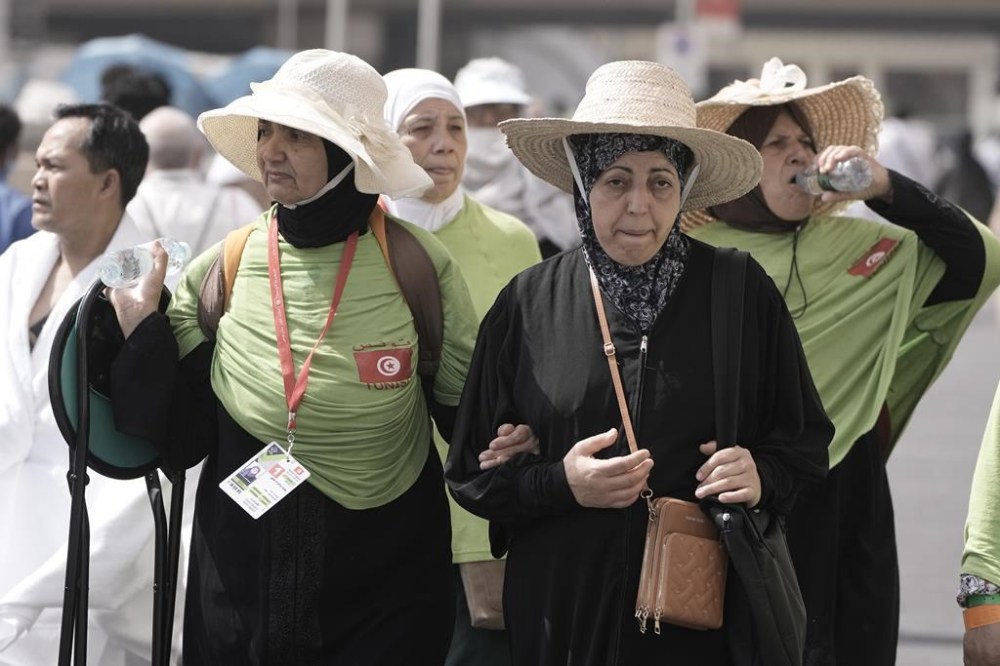
They then walked or ran between two hills in a re-enactment of Hagar’s search for water for her son, Ismail, a story that occurs in different forms in Muslim, Christian and Jewish traditions.
Pilgrims must enter a state of spiritual purity, known as ihram, for the Hajj.
Men wear seamless white robes, a rule intended to promote unity among rich and poor. Women cover their body and hair.
In between rituals and the five daily prayers, which bring the area to a solemn standstill, pilgrims sought out shade, snacked and flocked to the many shops and air-conditioned malls encircling the Grand Mosque to relax before the arduous days ahead.

Saudi Arabia has restored full pilgrim capacity for this year’s Hajj, following three years of dramatically reduced numbers due to the pandemic, with more than 2 million Muslims expected to take part.
“I think this year (the) crowd is too much” said Mahboub Morshed, a 42-year-old software engineer from Bangladesh, referring to the thinner attendance of previous years. “But the government and this management (Ministry of Hajj and Umrah) is trying to manage this very smoothly.”
The Free Press acknowledges the financial support it receives from members of the city’s faith community, which makes our coverage of religion possible.