What are maternity homes? Their legacy is checkered
Advertisement
Read this article for free:
or
Already have an account? Log in here »
To continue reading, please subscribe:

Digital Subscription
One year of digital access for only $205*
- Enjoy unlimited reading on winnipegfreepress.com
- Read the E-Edition, our digital replica newspaper
- Access News Break, our award-winning app
- Play interactive puzzles
*First annual payment billed as $205.00 + GST for one year. This annual subscription will automatically renew at $233.00 + GST every 52 weeks (10% off the regular annual price of $259.35). Offer available to new and qualified returning subscribers only. Cancel any time.
To continue reading, please subscribe:
Add Free Press access to your Brandon Sun subscription for only an additional
$1 for the first 4 weeks*
- Enjoy unlimited reading on winnipegfreepress.com
- Read the E-Edition, our digital replica newspaper
- Access News Break, our award-winning app
- Play interactive puzzles
*Your next Brandon Sun subscription payment will increase by $1.00 and you will be charged $17.95 plus GST for four weeks. After four weeks, your payment will increase to $24.95 plus GST every four weeks.
Read unlimited articles for free today:
or
Already have an account? Log in here »
Hey there, time traveller!
This article was published 02/08/2024 (796 days ago), so information in it may no longer be current.
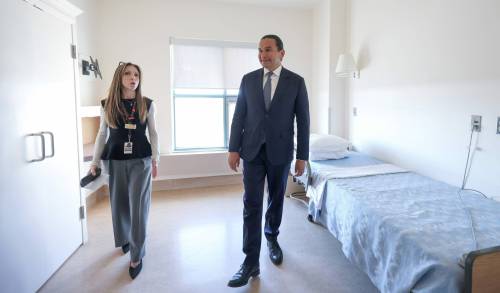
Maternity homes have seen a resurgence in the two years since the Supreme Court overturned Roe v. Wade. Across the country, homes are sprouting up or expanding. Christian anti-abortion advocates want to open more of these transitional housing facilities, believing they are the next step in helping women who carry pregnancies to term.
Maternity homes differ from emergency shelters: They typically provide longer-term housing and wraparound services for pregnant women, sometimes for months or even years after birth. Many of them are faith-based, with founders who are Catholic or evangelical.
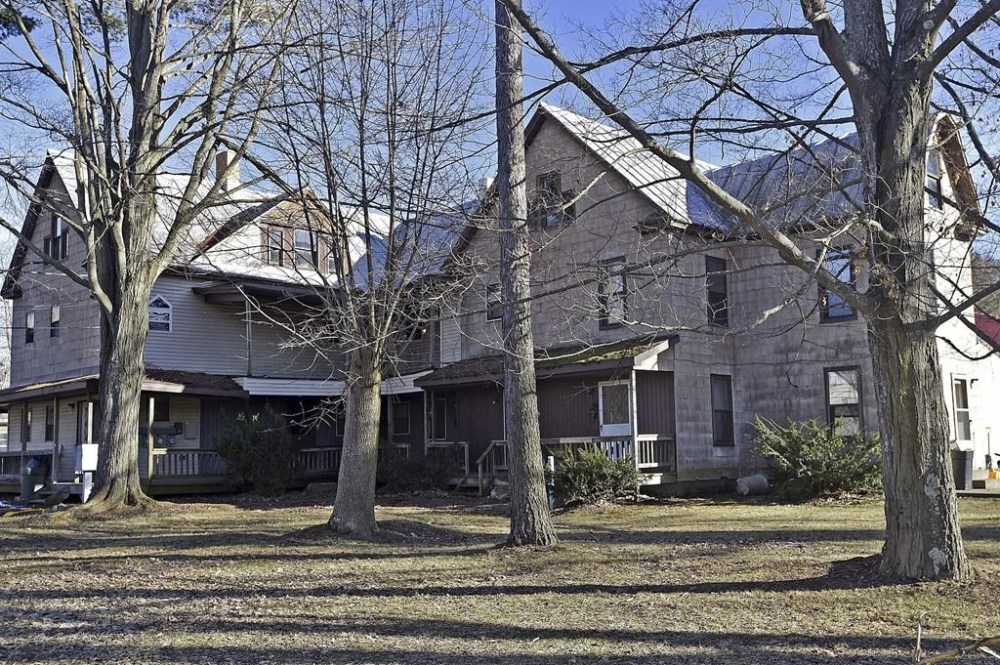
Maternity homes also have a fraught history of trauma, secrecy and shame. In the three decades before Roe v. Wade legalized abortion nationwide, many unwed pregnant women and girls were sent to maternity homes, where they were often coerced into surrendering their babies for adoption.
What is the history of American maternity homes?
In 1883, the first Florence Crittenton home opened in New York as a place to reform unmarried “fallen women,” who were encouraged to keep their children.
That goal changed by the middle of the 20th century, when maternity homes began placing most babies with adoptive families.
The so-called “baby boom” was happening not only among married couples. A rise in premarital sex coupled with a lack of sex education and little access to contraception led to more unplanned pregnancies for unmarried women and girls. Abortion was not yet legal nationwide, and single motherhood bore a heavy social stigma.
Between the end of World War II and 1973, in what became known as the “Baby Scoop Era,” more than 1.5 million American infants were surrendered for adoption. An untold number of their mothers were sent away to maternity homes before giving birth.
What was it like to live at a maternity home during this time?
The homes became places to hide unintended pregnancies. Experiences varied, but many residents were isolated from friends and family, given little information about childbirth or their legal rights. They often used aliases during their stays.
Most residents were middle-class and white. Far fewer Black unmarried women placed children for adoption in the Baby Scoop Era, and many maternity homes at the time were segregated.
Some maternity home residents never held their infants. Others were allowed visits for a period of time.
Karen Wilson-Buterbaugh got pregnant at 17 by her boyfriend, and in 1966 her parents sent her to a Crittenton home in Washington, D.C. After birth, she spent 10 days with her daughter. Then she was given one hour to say goodbye.
“I told her all about her dad and what a great guy he was and … that I had no way to take her home,” she recalled. “It was all very traumatizing.”
Were the homes religious?
Many of them were. Catholic Charities and the Salvation Army both operated maternity homes. Florence Crittenton’s founders had Episcopal roots. Louise Wise Services operated a home in New York for Jewish women.
For some women, the religious element of maternity homes compounded the shame they were made to feel. They describe mistreatment at the hands of nuns, priests, ministers and staff. “We had sinned and broken the rules of society,” Wilson-Buterbaugh said.
What happened to former residents?
“What happened to me was the defining element in my life,” said Francine Gurtler of her maternity home experience.
Pregnant after a date rape, Gurtler was 14 in 1971 when she went to St Faith’s Home for Unwed Mothers, an Episcopal facility in New York. She begged to keep her son, but said, “I was ostracized by the church-run facility that said you are not worthy of this child.”
For Gurtler and many others, the emotional scars were lifelong.
“They had tremendous guilt and tremendous trauma,” said Ann Fessler, who collected oral histories from Baby Scoop Era mothers for her book, “The Girls Who Went Away.”
Many women struggled later with relationships as well their physical and mental health. Some, Fessler said, found it very painful to hear a baby cry.
DNA testing has allowed more adoptees and biological parents to find each other, though reunions can still be emotionally fraught. Some former maternity home residents have become activists for reforming the adoption industry. They have fought to unseal adoption records, which remain closed in some states.
Wilson-Buterbaugh has watched in dismay but not surprise as maternity homes multiply again. At 75, she continues to speak and write about her unintended pregnancy in the years before Roe.
“They’re hoping that all of us Baby Scoop Era mothers die,” she said, “and the truth of what really happened dies with us.”
What happened in other countries?
The social forces behind the Baby Scoop Era were evident in other Anglophone countries, including Canada, the U.K., Ireland, New Zealand and Australia.
Ireland’s mother-and-baby homes were particularly grim. There has been a national reckoning over the past decade after a mass grave was uncovered at a former Catholic home in Tuam. The Irish government now estimates 9,000 infants died in 18 homes during the 20th century.
Some Canadian churches have begun to examine their role in maternity homes and forced adoptions, including those of Indigenous children. In 2018, a Canadian Senate committee investigated the country’s treatment of post-war unmarried mothers in a report titled, “ The Shame Is Ours.”
In 2013, Australia’s then-prime minister, Julia Gillard, delivered a landmark national apology for the country’s history of forced adoptions.
“To you, the mothers – who were betrayed by a system that gave you no choice and subjected you to manipulation, mistreatment and malpractice – we apologize,” she said. “To each of you who were adopted or removed … we say sorry.”
Further reading
Ann Fessler, “The Girls Who Went Away: The Hidden History of Women Who Surrendered Children for Adoption in the Decades Before Roe v. Wade”
Gabrielle Glaser, “American Baby: A Mother, A Child, and the Secret History of Adoption”

Kathryn Joyce, “The Child Catchers: Rescue, Trafficking, and the New Gospel of Adoption”
Gretchen Sisson, “Relinquished: The Politics of Adoption and the Privilege of American Motherhood”
Karen Wilson-Buterbaugh, “The Baby Scoop Era: Unwed Mothers, Infant Adoption and Forced Surrender”
___
Associated Press religion coverage receives support through the AP’s collaboration with The Conversation US, with funding from Lilly Endowment Inc. The AP is solely responsible for this content.
The Free Press acknowledges the financial support it receives from members of the city’s faith community, which makes our coverage of religion possible.