Who are the Mennonites in a Texas community where measles is spreading?
Advertisement
Read this article for free:
or
Already have an account? Log in here »
To continue reading, please subscribe:

Digital Subscription
One year of digital access for only $205*
- Enjoy unlimited reading on winnipegfreepress.com
- Read the E-Edition, our digital replica newspaper
- Access News Break, our award-winning app
- Play interactive puzzles
*First annual payment billed as $205.00 + GST for one year. This annual subscription will automatically renew at $233.00 + GST every 52 weeks (10% off the regular annual price of $259.35). Offer available to new and qualified returning subscribers only. Cancel any time.
To continue reading, please subscribe:
Add Free Press access to your Brandon Sun subscription for only an additional
$1 for the first 4 weeks*
- Enjoy unlimited reading on winnipegfreepress.com
- Read the E-Edition, our digital replica newspaper
- Access News Break, our award-winning app
- Play interactive puzzles
*Your next Brandon Sun subscription payment will increase by $1.00 and you will be charged $17.95 plus GST for four weeks. After four weeks, your payment will increase to $24.95 plus GST every four weeks.
Read unlimited articles for free today:
or
Already have an account? Log in here »
Hey there, time traveller!
This article was published 26/02/2025 (585 days ago), so information in it may no longer be current.
The Mennonite population being affected by a measles outbreak in West Texas is part of a larger, loosely affiliated group of churches worldwide with varied beliefs and leadership structures — and with sometimes strained or distant relations with health officials and other public authorities.
Who are the Mennonites?
Mennonites are part of the wider Anabaptist family of churches, which emerged in 1525 as the radical wing of the Protestant Reformation in Central Europe. Other Anabaptist branches today include the Amish, Brethren and Hutterites. Anabaptists believed that a true biblical church had to follow such principles as non-violence, unconditional forgiveness, adult baptism, church discipline, and a refusal to bear arms or swear oaths.
Early Anabaptists suffered persecution and martyrdom under Catholic and Protestant rulers in Europe, a history that still influences some groups today in their suspicion of governmental authorities, including public health officials.
Mennonites, named for an early leader, Menno Simons, vary widely in practice today.
Some Mennonites have largely assimilated into mainstream culture and dress, with a focus on working for peace and social justice in the larger society. Other Mennonites maintain traditions similar to the Amish, with tight-knit, separatist communities marked by such things as limited technology, nonviolence, male leadership and traditional dress, including women’s head coverings. Still others are somewhere on a continuum between such practices.
There are more than 2 million baptized believers in 86 countries in Anabaptist-related churches, according to the Mennonite World Conference
What are Old Colony Mennonites in Texas?
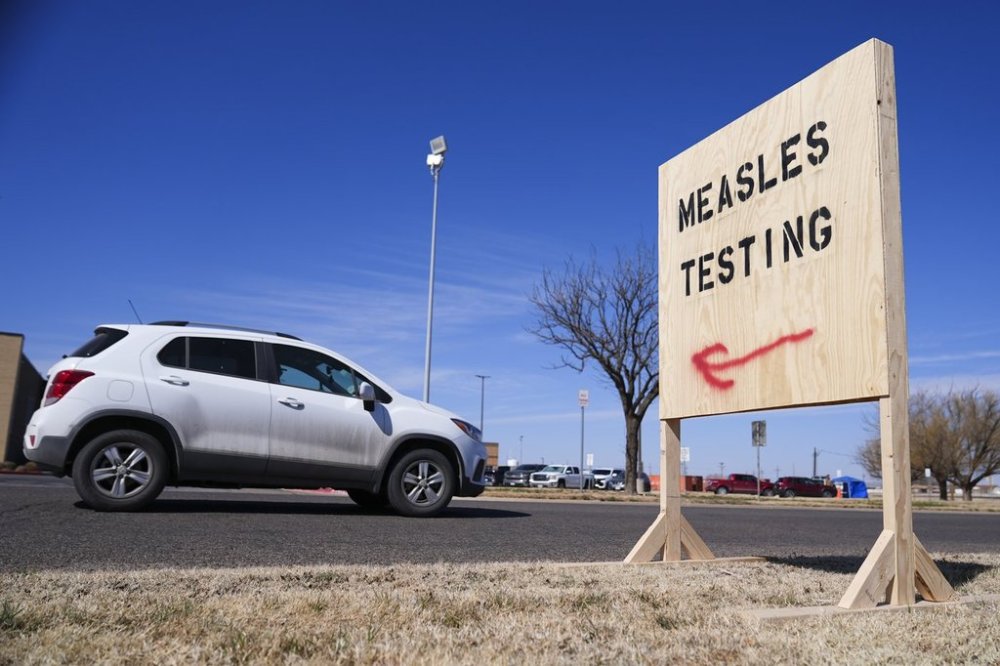
The outbreak has particularly affected Gaines county and some adjacent areas.
While it’s not immediately clear which Mennonite community has been affected, the Gaines County area includes a community with a distinctive history.
Many other North American Amish and Mennonites trace their roots to immigration directly from Western Europe in the 18th and 19th centuries, said Steven Nolt, professor of history and Anabaptist Studies at Elizabethtown College in Pennsylvania.
In contrast, the Seminole area includes a community of Old Colony Mennonites, which has a much more circuitous history of migration, Nolt said.
Old Colony Mennonites migrated first to the Russian Empire, then to Canada, then to Mexico, fleeing government pressures to assimilate, according to Nolt. As economic conditions deteriorated in Mexico, some moved to such areas as Gaines County and other communities in Texas and nearby states in the 1980s and 1990s. All along, they have preserved their Low German dialect and other cultural distinctions.
Gaines County is also home to one of the highest rates of school-aged children in Texas who have opted out of at least one required vaccine, with nearly 14% skipping a required dose last school year.
What are Mennonite views on vaccines?
“Historically and theologically, there has not been any religious teaching against immunization in Mennonite circles,” Nolt said via email. “There’s no religious prohibition, no body of religious writing on it at all. That said, more culturally conservative Mennonite (and Amish) groups have tended to be under-immunized or partially-immunized.”
Partly, he said, that’s because they don’t engage as regularly with health care systems as more assimilated groups do. Many traditional Anabaptist groups did accept vaccinations that were promoted in the mid-20th century, such as for tetanus and smallpox, but they have been more skeptical in recent years of newly introduced vaccines, Nolt said.
But Old Colony groups who arrived in the late 20th century also “missed the whole mid-century immunization push, as they weren’t in the U.S. at that time.”
What are state laws on student exemptions from vaccines?
All 50 states and the District of Columbia require vaccines for students to attend school, according to the National Conference of State Legislatures. Many states align their mandates with recommendations from the Centers for Disease Control and Prevention.

All states allow exemptions for medical reasons, while most allow exemptions for religious or personal reasons, or both. Only five states — California, Connecticut, Maine, New York and West Virginia — have allowed no non-medical exemptions, according to the conference, but West Virginia is taking steps this year to allow religious or philosophical exemptions.
Texas law allows exemptions for “reasons of conscience, including a religious belief.”
U.S. kindergarten vaccination rates dipped in 2023, and the proportion of children with exemptions rose to an all-time high, according to federal data posted in 2024.
___
Associated Press religion coverage receives support through the AP’s collaboration with The Conversation US, with funding from Lilly Endowment Inc. The AP is solely responsible for this content.
Related Articles
Ontario measles cases nearly double count marking largest increase in almost 30 years
Advertisement Advertise With Us
Advertisement Advertise With Us
The Free Press acknowledges the financial support it receives from members of the city’s faith community, which makes our coverage of religion possible.