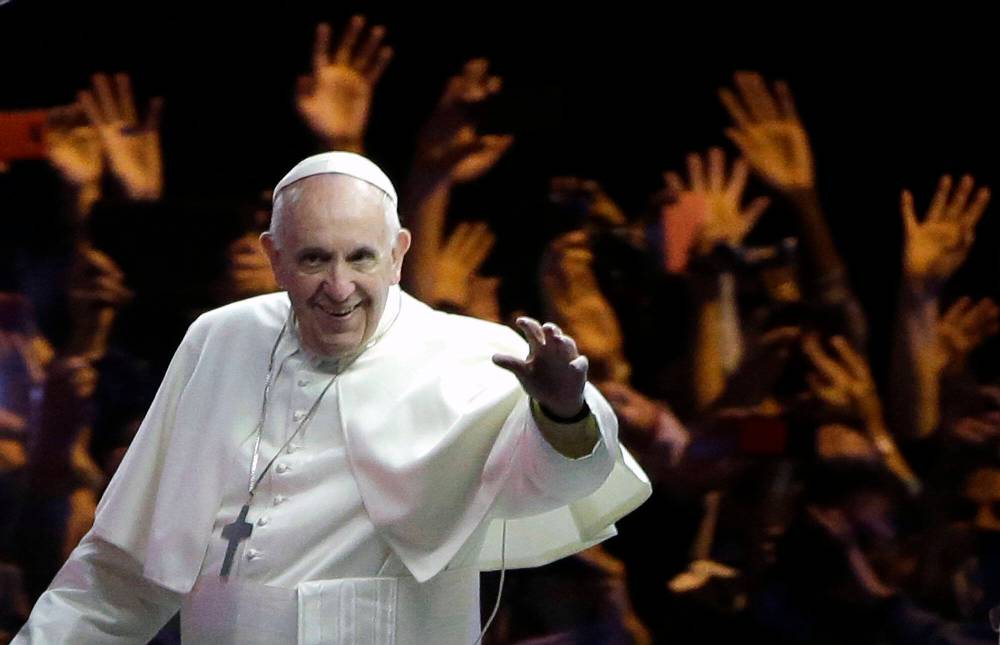
Pope Francis opened doors that others may not be able to close

Advertisement
Read this article for free:
or
Already have an account? Log in here »
To continue reading, please subscribe:

Digital Subscription
One year of digital access for only $205*
- Enjoy unlimited reading on winnipegfreepress.com
- Read the E-Edition, our digital replica newspaper
- Access News Break, our award-winning app
- Play interactive puzzles
*First annual payment billed as $205.00 + GST for one year. This annual subscription will automatically renew at $233.00 + GST every 52 weeks (10% off the regular annual price of $259.35). Offer available to new and qualified returning subscribers only. Cancel any time.
To continue reading, please subscribe:
Add Free Press access to your Brandon Sun subscription for only an additional
$1 for the first 4 weeks*
- Enjoy unlimited reading on winnipegfreepress.com
- Read the E-Edition, our digital replica newspaper
- Access News Break, our award-winning app
- Play interactive puzzles
*Your next Brandon Sun subscription payment will increase by $1.00 and you will be charged $17.95 plus GST for four weeks. After four weeks, your payment will increase to $24.95 plus GST every four weeks.
Read unlimited articles for free today:
or
Already have an account? Log in here »
Hey there, time traveller!
This article was published 21/04/2025 (527 days ago), so information in it may no longer be current.
It was my last day in Rome in April 2022. I was there with the Free Press to report about the Indigenous delegations that went to see Pope Francis to ask him to come to Canada to apologize for the Roman Catholic Church’s involvement in residential schools.
To mark the end of that successful week of meetings, the Canadian delegation planned a mass at Santa Maria Maggiore (St. Mary Major).
I was a bit late. When I tried to get in, I was stopped at the door to the church by security, who barred my entrance. When I asked why, I was told Pope Francis was in there, praying — it was his favourite church in Rome, and he went there regularly to pray.
I pleaded my case. They eventually relented and let me in. As I walked with a guard to where the Canadian mass was being held, he pointed with his thumb at a chapel about 10 metres across the way: “The pope is in there.”
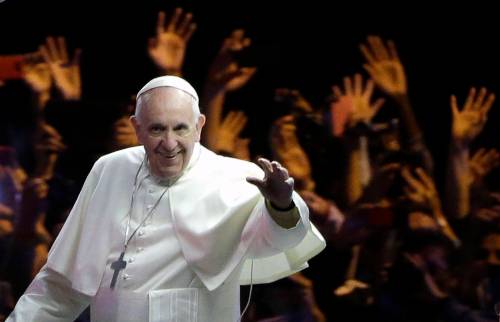
And that’s as close as I came to Pope Francis, who died Monday at the age of 88.
Although I never met him, it seems like he has been ever present in my life and work as a religion reporter and columnist at the Free Press. I was frequently contacting local archbishops to ask what they thought of what some saw as his radical pronouncements about not judging LGBTTQ+ people, blessing members of same-sex couples, about the need for reconciliation with Indigenous people, the role of women in the Church. What would it mean for Catholics in Manitoba? How would it change the Church in the province?
In that regard, Francis was what Canadian academic and writer Michael Higgins called a “consummate disruptor” in the Roman Catholic Church.
He disrupted traditional modes of church governance by emphasizing the role of the pope as pastor — not as head of the church, but as someone who served it.
That was illustrated during the month-long Synod on Synodality in Rome last fall, the last week of which I attended as a reporter. Unlike at other synods, where popes sat on a dais above the cardinals and other church leaders arrayed before them, Francis sat at round tables with the other lay and clerical delegates from around the world, a believer among believers, listening as much as sharing.
Francis passed this vision on to clergy, saying cardinals and bishops and priests should have “the smell of the sheep” on them — that’s how close they should be to the people they served, not living high and mighty above them. They should listen, take time to understand their lives and the challenges they face.
Related Articles
Pope Francis's memory looms large for Canadians attending Easter Monday mass





Pope Francis disrupted ideas about who the church was for. It was not a place for those who are perfect and do everything right, but a “field hospital” for those in need of healing. This, especially, included the poor and vulnerable, refugees and migrants.
At a time when many countries are closing their doors to people fleeing conflict or economic deprivation, he emphasized their humanity and dignity. Like his namesake — St. Francis — he sought to include and serve the marginalized.
He disrupted thinking about the environment, putting the fate of the church and the fate of the planet in the same conversation. This dovetailed with his concern for those who are poor, whose future he saw as being tied to care for the environment.
Francis disrupted conventional ideas about theology. Where some might see the purpose of interpreting the Bible as a way to determine who is in and who is out, his was a theology of inclusion and welcome. “Todos, todos, todos!” (Everyone, everyone, everyone!) he said at the 2023 World Youth Day in Portugal, emphasizing what he believed was the Catholic Church’s inclusive nature. This included LGBTTQ+ people and women, for whom he saw an expanded role in the Church.

At the same time, there was a limit to his disruption. Pope Francis never changed traditional Church doctrine on homosexuality and same-sex marriage or satisfied the demands of women for even greater roles — including as priests. But he opened doors for discussion about those topics; doors that some say can’t ever be closed again.
During his disruptive papacy, Francis was a promoter of change — but not right away. To use a hockey analogy, he “ragged the puck”; stalling, biding his time, looking for an opening, perhaps waiting for a future pope to pass it to, so he could score.
Whether that will happen soon, later or ever remains to be seen.
But one thing for sure: Even though he has died, the play is still in motion.
faith@freepress.mb.ca
The Free Press is committed to covering faith in Manitoba through our Religion in the News project. This reporting continues because readers like you step forward to fund it.
Donate now to support our reporting on religion.
Your donation is eligible for a charitable tax receipt.
BECOME A FAITH JOURNALISM SUPPORTER
Our newsroom depends on a growing audience of readers to power our journalism. If you are not a paid reader, please consider becoming a subscriber.
Our newsroom depends on its audience of readers to power our journalism. Thank you for your support.
The Free Press is committed to covering faith in Manitoba through our Religion in the News project. This reporting continues because readers like you step forward to fund it.
Donate now to support our reporting on religion.
Your donation is eligible for a charitable tax receipt.
BECOME A FAITH JOURNALISM SUPPORTER
Our newsroom depends on a growing audience of readers to power our journalism. If you are not a paid reader, please consider becoming a subscriber.
Our newsroom depends on its audience of readers to power our journalism. Thank you for your support.
Advertisement Advertise With Us
Advertisement Advertise With Us
The Free Press acknowledges the financial support it receives from members of the city’s faith community, which makes our coverage of religion possible.