Clothing etiquette for Hindu temples
Attendees should be aware of acceptable, and non-acceptable, attire
Advertisement
Read this article for free:
or
Already have an account? Log in here »
To continue reading, please subscribe:

Digital Subscription
One year of digital access for only $205*
- Enjoy unlimited reading on winnipegfreepress.com
- Read the E-Edition, our digital replica newspaper
- Access News Break, our award-winning app
- Play interactive puzzles
*First annual payment billed as $205.00 + GST for one year. This annual subscription will automatically renew at $233.00 + GST every 52 weeks (10% off the regular annual price of $259.35). Offer available to new and qualified returning subscribers only. Cancel any time.
To continue reading, please subscribe:
Add Free Press access to your Brandon Sun subscription for only an additional
$1 for the first 4 weeks*
- Enjoy unlimited reading on winnipegfreepress.com
- Read the E-Edition, our digital replica newspaper
- Access News Break, our award-winning app
- Play interactive puzzles
*Your next Brandon Sun subscription payment will increase by $1.00 and you will be charged $17.95 plus GST for four weeks. After four weeks, your payment will increase to $24.95 plus GST every four weeks.
Read unlimited articles for free today:
or
Already have an account? Log in here »
Hey there, time traveller!
This article was published 23/08/2025 (412 days ago), so information in it may no longer be current.
Places of worship are sacred spaces upheld by revered rituals and rules. Whether you are a member of a congregation or a visitor, following the proper dress code in a religious facility validates the sanctity of the space.
Clothing etiquette for Hindu temples extends to several expectations. Attendees should understand what is acceptable and non-acceptable attire. While the manner in which temples enforce dress codes will vary, there are key guidelines that apply across most Hindu places of worship.
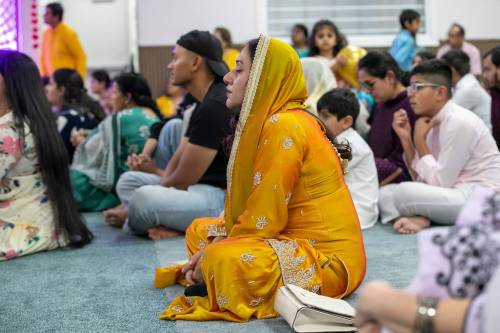
Being aware of the temple milieu forms a good starting point to understand the expected dress code. Upon entering a Hindu temple, attendees must remove their shoes, which are not permitted in the prayer hall where regular Sunday services as well as religious festivals and wedding ceremonies take place. Removing shoes symbolize respect for the deities. It also signals the cleanliness and purity of the temple by leaving behind negativities of the outside world.
BROOK JONES / FREE PRESS
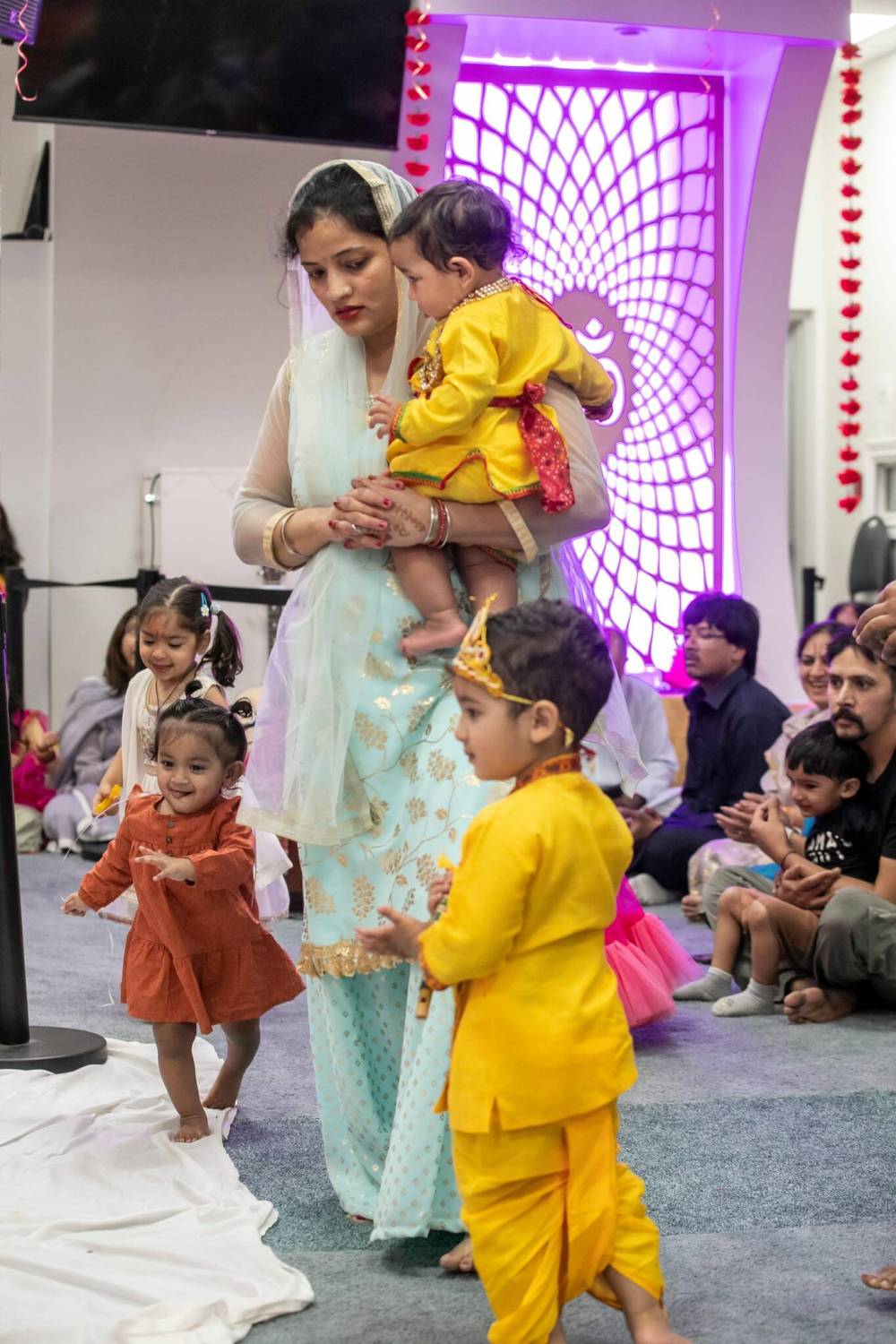
Before visiting any place of worship, check dress etiquette to show respect and deepen your own experience.
In many Hindu temples abroad, shoes are left outside the religious facility. Typically, attendees sit on the temple floor in the prayer hall during gatherings. Locally, the Hindu temples have carpeted floors, along with floor cushions that can be used for greater comfort. For seniors and people with mobility issues, chairs and other seating options are available in the prayer hall. Whether you are wearing Indian or Western attire, clothing worn in Hindu temples should be conservative and modest.
Hindu temples are open to the public. An appreciation for the space that you are visiting should be the impetus to adhere to its designated dress code. Attending a service or event in the Hindu temple creates an opportunity to engage in wearing Indian attire. This effort can build awareness of the spiritual space as well as diminish biases and misconceptions about cultural dress, customs and practices.
Here are key guidelines for proper clothing etiquette in Hindu temples:
No clothing exposing your legs
Males and females must cover their legs. They both should not wear short pants. Females should not wear short dresses or short skirts.
BROOK JONES / FREE PRESS
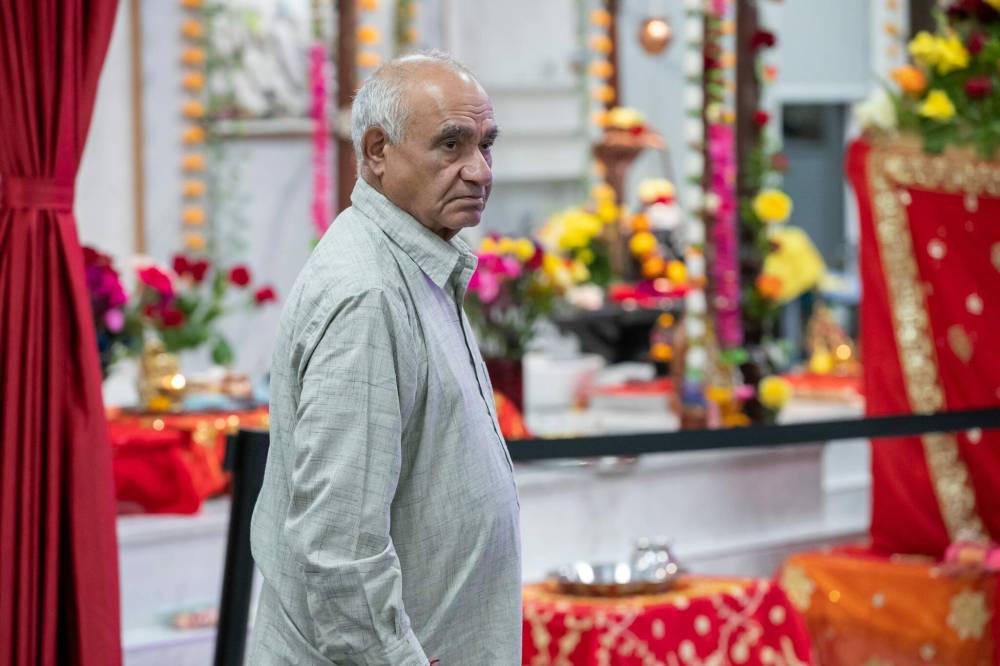
Clothing worn in a Hindu temple is expected to be conservative and modest.
Loose-fitting clothing
This type of clothing will be most comfortable for sitting on the floor of the prayer hall. Revealing, short and tight-fitting attire are not considered appropriate in Hindu temples. Many pieces of Indian attire are loose-fitting and long in length, making them comfortable to wear and well-suited for the temple. For males, kurta pajama (tunic with pants) is often worn. For females, either a saree (traditional Indian dress comprised of six yards of fabric), salwar kameez (tunic with pants) or lehenga choli (long skirt and blouse) are typically worn. Many modern pieces of Indian attire have accents of Western clothing, creating appealing attire, which anyone can wear.
Use of shawls or scarves
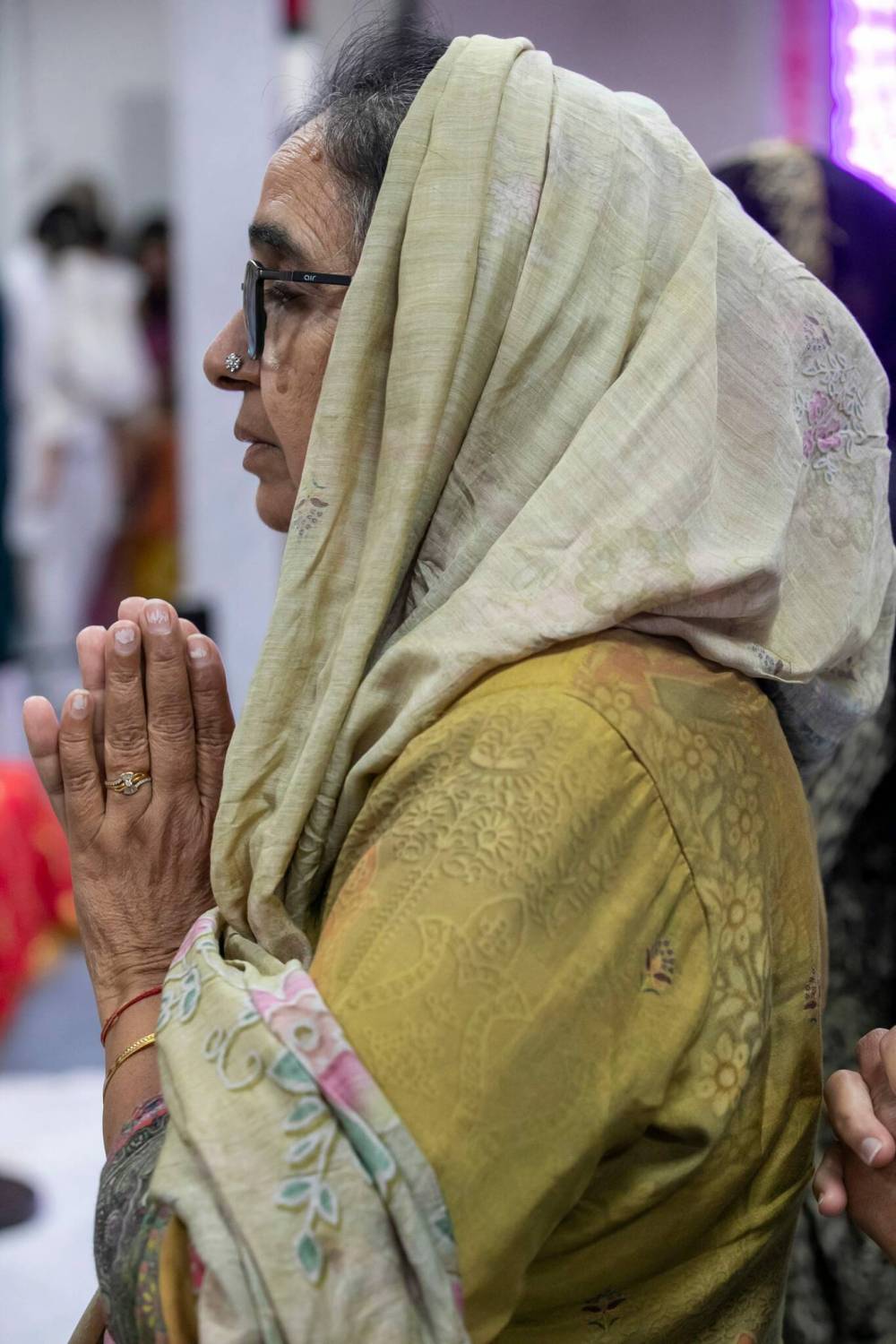
Covering up the shoulders and back are expected for both males and females. Women should have some type of shawl or scarf, referred to as a dupatta or chunni, to cover their cleavage, shoulders and back. To show piety and humility in a holy space, some women opt to cover their heads with a shawl or scarf, especially when they approach the temple altar and during religious ceremonies. Similarly, to be respectful, men may cover their heads with a cloth or handkerchief. Even if you opt to wear Western clothing, it is a good idea for women to have a shawl or scarf accompanying your attire.
Colours
BROOK JONES / FREE PRESS
While men and women should cover back and shoulders, women often opt to also cover their hair in temple.
Bright colours, such as yellow and red, are associated with Hindu deities and religious festivals. These hues represent qualities that deities embody. During the celebration of Krishna Janmashtami, the celebration of the birth of Lord Krishna, many devotees in the temple wear attire in yellow. This colour symbolizes wisdom, spirituality, joy, enlightenment and energy. During the nine-night Navratri festival, Hindus worship Goddess Durga who is associated with the colour red, which represents protection and strength. The Festival of Lights, or Diwali, is synonymous with the colour red which signifies the victory of good over evil and captures the grand festive spirit. Yellow and red, being auspicious colours, are chosen for clothing and decorations for Hindu wedding ceremonies.
Light colours are meaningful. Devotees wear these colours in the Hindu temple during praying and fasting as a sign of devotion, spiritual significance and purity.
For Hindu funerals, which do not take place in temples, the colour white is worn by the mourning family and funeral attendees. White symbolises peace, purity and liberation of the soul from the body to the journey of afterlife.
Black is not considered an auspicious colour. One would avoid wearing this colour in Hindu temples and during religious festivals.
Remove hats and caps
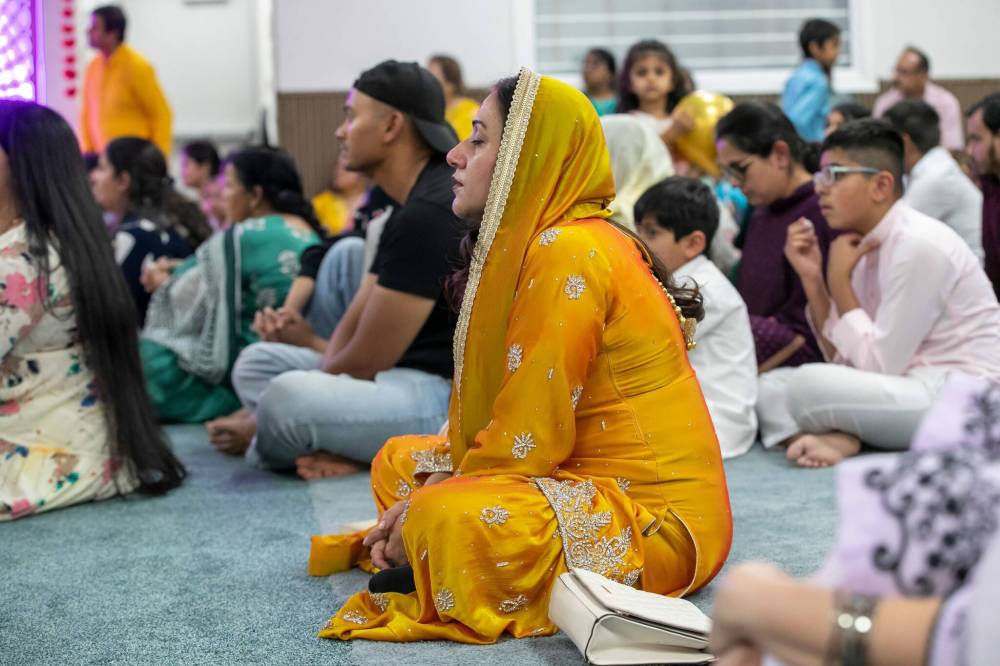
BROOK JONES / FREE PRESS
It is customary for people to wear traditional colourful attire and sit on the floor while in a prayer hall inside a Hindu temple.

As in many other spaces, it is considered a courtesy to remove hats and caps, in the prayer hall of Hindu temples. Their removal is considered a sign of respect for the deities, the religious service and sacred space.
If you are visiting a place of worship, whether local or aboard, it makes sense to take time beforehand and find out what is the proper clothing etiquette. This knowledge will play a vital role in having a positive experience and prevent drawing unnecessary attention to yourself. By applying common sense to what you wear, you will be responsible, respectful and rule-abiding.
Visit wfp.to/il0 and wfp.to/ilN for info about proper attire at the Hindu Society of Manitoba temples in Winnipeg.
While clothing is a personal choice, one should not disregard dress codes in religious spaces. We must remember that places of worship are incredibly special spaces steeped in history, traditions and customs to be rightfully respected by all.
Romona Goomansingh, PhD is an educator, freelance writer and author in Winnipeg.

BROOK JONES / FREE PRESS
Bright colours, such as yellow and red, are associated with Hindu deities and religious festivals.

BROOK JONES / FREE PRESS
Upon entering a Hindu temple, attendees remove their shoes as a sign of respect for the deities.
The Free Press is committed to covering faith in Manitoba through our Religion in the News project. This reporting continues because readers like you step forward to fund it.
Donate now to support our reporting on religion.
Your donation is eligible for a charitable tax receipt.
BECOME A FAITH JOURNALISM SUPPORTER
The Free Press acknowledges the financial support it receives from members of the city’s faith community, which makes our coverage of religion possible.