Five things to know about the Quebec government’s new secularism bill

Advertisement

Advertise with us

MONTREAL - The Quebec government has tabled new legislation that would introduce broad new restrictions on religious practices in public and private spaces. 

Read this article for free:


or

Already have an account? Log in here »

To continue reading, please subscribe:

Subscribe and receive a limited-edition Free Press branded hat or tote.

Digital Subscription

One year of digital access for only $205*

  • Enjoy unlimited reading on winnipegfreepress.com
  • Read the E-Edition, our digital replica newspaper
  • Access News Break, our award-winning app
  • Play interactive puzzles

*First annual payment billed as $205.00 + GST for one year. This annual subscription will automatically renew at $233.00 + GST every 52 weeks (10% off the regular annual price of $259.35). Offer available to new and qualified returning subscribers only. Cancel any time.

To continue reading, please subscribe:

Add Free Press access to your Brandon Sun subscription for only an additional

$1 for the first 4 weeks*

  • Enjoy unlimited reading on winnipegfreepress.com
  • Read the E-Edition, our digital replica newspaper
  • Access News Break, our award-winning app
  • Play interactive puzzles
Start now

*Your next Brandon Sun subscription payment will increase by $1.00 and you will be charged $17.95 plus GST for four weeks. After four weeks, your payment will increase to $24.95 plus GST every four weeks.

Hey there, time traveller!
This article was published 27/11/2025 (308 days ago), so information in it may no longer be current.

MONTREAL – The Quebec government has tabled new legislation that would introduce broad new restrictions on religious practices in public and private spaces. 

On Thursday, Secularism Minister Jean-François Roberge said the bill is part of Quebec’s decades-long process of secularization. “This is how we live in Quebec, and this is how we’re going to continue to live,” he said. 

Here are five things to know about Quebec’s new secularism bill. 
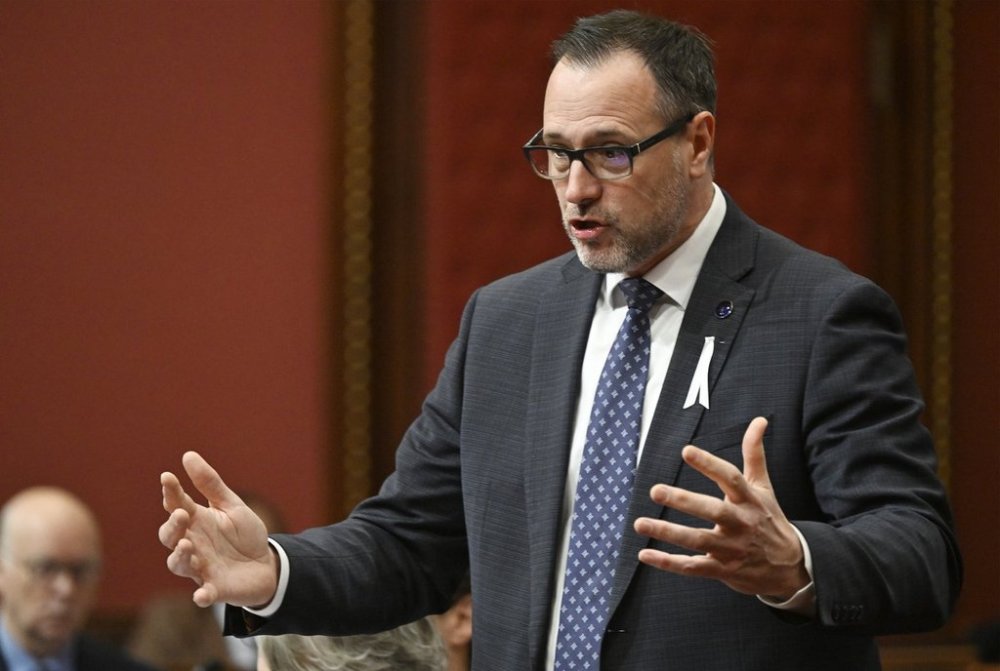
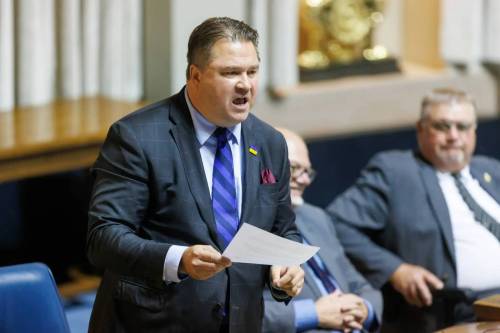
Quebec Secularism Minister Jean-François Roberge responds to the Opposition during question period at the legislature in Quebec City, Thursday, Nov. 27, 2025. THE CANADIAN PRESS/Jacques Boissinot

No more public prayer

The new legislation would ban “collective religious practice” on public roads and in parks, except for events that are authorized on a case-by-case basis by municipalities. The move comes in response to Muslim prayers taking place during pro-Palestinian demonstrations, which Roberge called a “provocation.” People could be fined for violating the ban. 

No more kosher-only meals

Public institutions would no longer be allowed to offer menus based exclusively on a religious tradition – for example, halal or kosher meals. On Thursday, Roberge said this would apply to facilities including Montreal’s Jewish General Hospital, which offers a kosher menu. The hospital could continue to offer kosher food, he said, but must offer other options as well. The rule would also apply to subsidized daycares. 

Limits on funding for private religious schools  

If the bill is passed, the government would no longer fund private schools that teach religion during classroom hours or that select students or staff based on religious criteria. Roberge was unable to say how many schools would be affected by the change, but said they will have three years to adapt. 

No more prayer rooms

Religious activities will no longer be allowed in public institutions, which means prayer rooms in colleges and universities will be closed by September 2026, Roberge said. Institutions where people live, including prisons and long-term care homes, will be exempt from the prohibition. 

Expanded ban on religious symbols

The bill would ban religious symbols, including hijabs and turbans, for people working in daycares, colleges and universities. It would also ban full face coverings, including the niqab, for anyone in those institutions, including students. The same rules have already been applied to elementary and high schools in a separate bill passed this fall. 

This report by The Canadian Press was first published Nov. 27, 2025. 

Report Error Submit a Tip

The Free Press acknowledges the financial support it receives from members of the city’s faith community, which makes our coverage of religion possible.
More Stories

Winnipeg Rifles can still secure post-season berth despite starting season 0-4

Joshua Frey-Sam 5 minute read Preview

Winnipeg Rifles can still secure post-season berth despite starting season 0-4

Joshua Frey-Sam 5 minute read 12:47 PM CDT

The Winnipeg Rifles have a seat at the table, something they would’ve certainly taken a few weeks ago.

A solid three-phase performance in a 25-13 win over the Edmonton Huskies on Sunday kept the junior football club’s playoff hopes alive as the team heads into the final week of the regular season in the Prairie Football Conference.

The path to punching their ticket isn’t easy, however. The Rifles must travel to a perennially difficult environment in Saskatoon to face the Hilltops (4-3) on Sunday (1 p.m.), a contest that only matters if the Huskies beat the Edmonton Wildcats on Saturday.

But after starting the season 0-4, it’s a deal that the Rifles will happily take.

Read
12:47 PM CDT

In a smart-device world, some families keep phone jacked into the wall

Sheldon Birnie 8 minute read Preview

In a smart-device world, some families keep phone jacked into the wall

Sheldon Birnie 8 minute read Yesterday at 4:20 PM CDT

When the phone rings in Kristin Shiach and Jordan Sobkowicz’s Riverview home, their three daughters race to see who can be the first to answer.

“It depends who is closest,” says 13-year-old Emily. “If I’m sitting in my room, I can get to it quickest.”

“That’s because it’s always in your room,” Anna, 10, replies. “You never put it back!”

“Usually, when the phone rings,” explains Sobkowicz, “someone yells really loudly —”

Read
Yesterday at 4:20 PM CDT

Jets defenceman spent whole summer working on getting to the next level

Ken Wiebe 8 minute read Preview

Jets defenceman spent whole summer working on getting to the next level

Ken Wiebe 8 minute read Monday, Sep. 28, 2026

Tyrel Bauer makes no apologies for the pugilistic piece of his path.

The Winnipeg Jets defenceman is ready to drop the gloves and throw down when the situation calls for it and he takes great pride in protecting his teammates.

It’s a big part of the reason Bauer will be among the 23 players submitted by the Jets on the opening-day roster on Monday.

“I’ve fought and clawed, both metaphorically and literally and now I just want to show that I can play as well,” Bauer said during a chat with the Free Press during training camp. “(Toughness) is always something that I have, it’s always something in my back pocket and something that I take a lot of pride in doing, for my teammates, for the city and the people who invest in this hockey club. That will never change.

Read
Monday, Sep. 28, 2026

Puzzles Palace

1 minute read Monday, Jul. 27, 2026

To solve our puzzles, please subscribe with this special offer: |

Khan cites infighting, quits as Tory leader

Carol Sanders 5 minute read Preview

Khan cites infighting, quits as Tory leader

Carol Sanders 5 minute read Updated: Yesterday at 9:56 AM CDT

Manitoba’s Leader of the Opposition is stepping down.

Progressive Conservative Leader Obby Khan announced late Monday afternoon he is quitting caucus and will sit in the legislature as an independent MLA, effective today.

He cited internal party fighting for his decision.

The former Winnipeg Blue Bombers offensive lineman survived a caucus confidence vote Friday. He said there were 13 votes for him to remain and six against, with one person absent.

Read
Updated: Yesterday at 9:56 AM CDT

Canada resorting to its tried and true playbook

Niigaan Sinclair 5 minute read Preview

Canada resorting to its tried and true playbook

Niigaan Sinclair 5 minute read Monday, Sep. 28, 2026

In 1846, Britain faced an emergency influenced by the Irish famine, so leaders repealed the country’s “Corn Laws” and restrictions on imported food and grain, transitioning to a system of free trade.

This created a crisis in the then Province of Canada, which had relied on British “preferential” status to prop up its agricultural and resource industries.

As a result, Canada looked south for new markets and eventually negotiated a free trade agreement with the United States.

This required land to be acquired and converted for industrial use quickly, so Canada quickly dispatched Commissioner William Robinson to negotiate with Indigenous communities along Lake Huron and Lake Superior for land.

Read
Monday, Sep. 28, 2026