Trump’s Board of Peace is dividing countries in Europe and the Middle East
Advertisement
Read this article for free:
or
Already have an account? Log in here »
To continue reading, please subscribe:

Digital Subscription
One year of digital access for only $205*
- Enjoy unlimited reading on winnipegfreepress.com
- Read the E-Edition, our digital replica newspaper
- Access News Break, our award-winning app
- Play interactive puzzles
*First annual payment billed as $205.00 + GST for one year. This annual subscription will automatically renew at $233.00 + GST every 52 weeks (10% off the regular annual price of $259.35). Offer available to new and qualified returning subscribers only. Cancel any time.
To continue reading, please subscribe:
Add Free Press access to your Brandon Sun subscription for only an additional
$1 for the first 4 weeks*
- Enjoy unlimited reading on winnipegfreepress.com
- Read the E-Edition, our digital replica newspaper
- Access News Break, our award-winning app
- Play interactive puzzles
*Your next Brandon Sun subscription payment will increase by $1.00 and you will be charged $17.95 plus GST for four weeks. After four weeks, your payment will increase to $24.95 plus GST every four weeks.
Read unlimited articles for free today:
or
Already have an account? Log in here »
Hey there, time traveller!
This article was published 21/01/2026 (261 days ago), so information in it may no longer be current.
JERUSALEM (AP) — Divisions emerged Wednesday over U.S. President Donald Trump’s Board of Peace as its ambitions have grown beyond Gaza, with some Western European countries declining to join, others remaining noncommittal and a group of Muslim countries agreeing to sign on.
The developments underscored European concerns over the expanded and divisive scope of the project — which some say may seek to rival the U.N. Security Council’s role in mediating global conflicts. Trump is looking to form the board officially this week on the sidelines of the World Economic Forum meeting in Davos, Switzerland.
Norway and Sweden said they won’t accept their invitations, after France also said no, while a bloc of Muslim-majority nations — Egypt, Indonesia, Jordan, Pakistan, Qatar, Saudi Arabia and the United Arab Emirates — said in a joint statement that their leaders would join.
It was not immediately clear how many countries would accept. A White House official said about 30 countries were expected to join, and about 50 had been invited. Two other U.S. officials, who similiarly spoke on condition of anonymity to describe internal plans not yet made public, said roughly 60 countries had been invited but only 18 had so far confirmed their participation.
Trump was sunny about the prospects ahead of an event Thursday tied to the board, saying of the countries that were invited that “some need parliamentary approval but for the most part, everybody wants to be on.”
Later, Trump defended his choice of invitees, including some leaders considered to be autocratic. “I have some controversial people,” he said. “But these are people that get the job done. These are people that have tremendous influence.”
Chaired by Trump, the board was originally conceived as a small group of world leaders overseeing the Gaza ceasefire plan. But the Trump administration’s ambitions have since expanded into a more sprawling concept, with Trump hinting at the board’s role as mediator for other global conflicts.
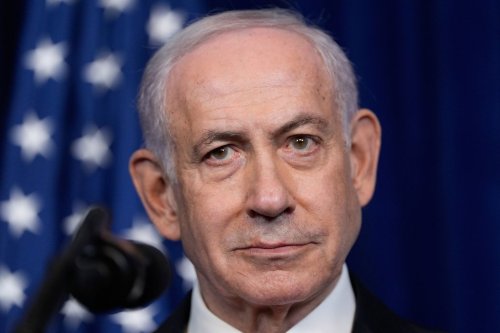
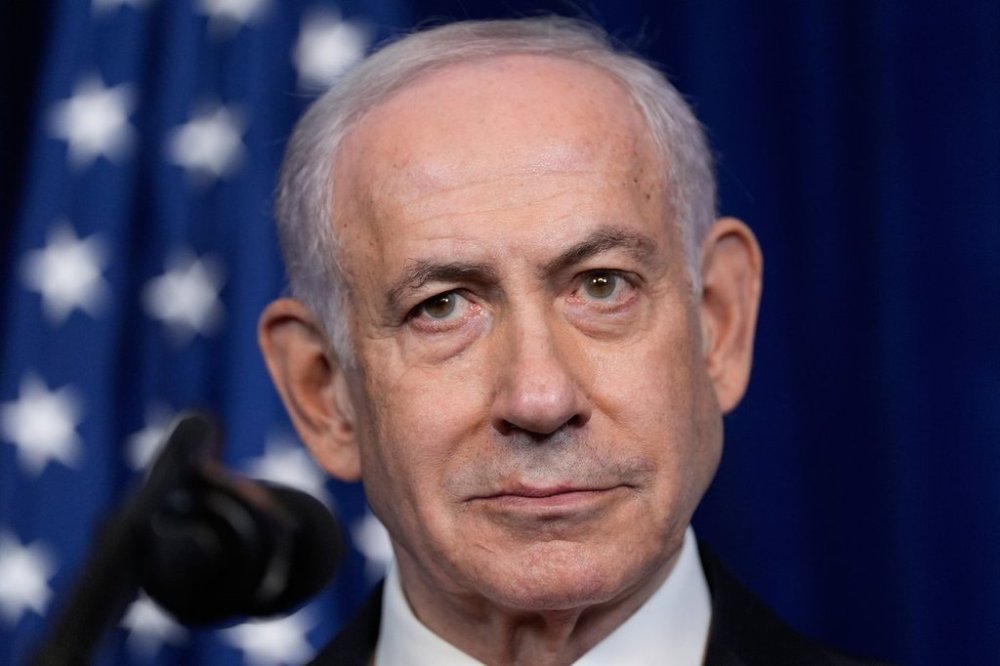
Israel’s Prime Minister Benjamin Netanyahu said he’s agreed to join the board — a departure from an earlier stance when his office criticized the makeup of another committee tasked with overseeing Gaza.
Norway and Sweden say no, following in France’s footsteps
Norway’s state secretary, Kristoffer Thoner, said the Scandinavian country would not join the board because it “raises a number of questions that requires further dialogue with the United States.”
Swedish Prime Minister Ulf Kristersson said on the sidelines of Davos that his country wouldn’t sign up for the board as the text currently stands, Swedish news agency TT reported, though the country hasn’t formally responded.
Slovenian Prime Minister Robert Golob said that “the time has not yet come to accept the invitation,” according to the STA news agency. The main concern is the board’s mandate is too broad and could seriously undermine international order based on the U.N. Charter, Golob said.
France declined the invitation earlier in the week. French Foreign Minister Jean-Noel Barrot said, “Yes to implementing the peace plan presented by the president of the United States, which we wholeheartedly support, but no to creating an organization as it has been presented, which would replace the United Nations.”
The United Kingdom, the European Union’s executive arm, Canada, Russia, Ukraine and China also have not yet indicated their response to Trump’s invitations.
Several in the Middle East and beyond say they will join
Parties key to the Gaza ceasefire — Egypt and Israel — have said they would join the board, as have Argentina, Armenia, Azerbaijan, Bahrain, Belarus, Hungary, Kazakhstan, Kosovo, Morocco, Uzbekistan and Vietnam.

Netanyahu’s decision was significant because his office had previously said the composition of a Gaza executive committee — which includes Turkey, Israel’s key regional rival, and will work with those governing the territory day to day — was not coordinated with the Israeli government and ran “contrary to its policy,” without clarifying its objections.
The move could now put Netanyahu in conflict with some of the far-right allies in his coalition, such as Israel’s Finance Minister Bezalel Smotrich, who has criticized the board and called for Israel to take unilateral responsibility for Gaza’s future.
Many questions remain about the board. When asked by a reporter on Tuesday if the board would replace the U.N., Trump said: “It might.”
___
Magdy reported from Cairo. Associated Press writers Matthew Lee and Michelle L. Price in Washington, Josh Boak in Davos, Switzerland, Jovana Gec in Ljubljana, Slovenia, and Catherine Gaschka in Paris contributed to this report.
The Free Press acknowledges the financial support it receives from members of the city’s faith community, which makes our coverage of religion possible.