Judge dismisses Trump administration lawsuit alleging antisemitism at Harvard University
Advertisement
Read this article for free:
or
Already have an account? Log in here »
To continue reading, please subscribe:

Digital Subscription
One year of digital access for only $205*
- Enjoy unlimited reading on winnipegfreepress.com
- Read the E-Edition, our digital replica newspaper
- Access News Break, our award-winning app
- Play interactive puzzles
*First annual payment billed as $205.00 + GST for one year. This annual subscription will automatically renew at $233.00 + GST every 52 weeks (10% off the regular annual price of $259.35). Offer available to new and qualified returning subscribers only. Cancel any time.
To continue reading, please subscribe:
Add Free Press access to your Brandon Sun subscription for only an additional
$1 for the first 4 weeks*
- Enjoy unlimited reading on winnipegfreepress.com
- Read the E-Edition, our digital replica newspaper
- Access News Break, our award-winning app
- Play interactive puzzles
*Your next Brandon Sun subscription payment will increase by $1.00 and you will be charged $17.95 plus GST for four weeks. After four weeks, your payment will increase to $24.95 plus GST every four weeks.
Read unlimited articles for free today:
or
Already have an account? Log in here »
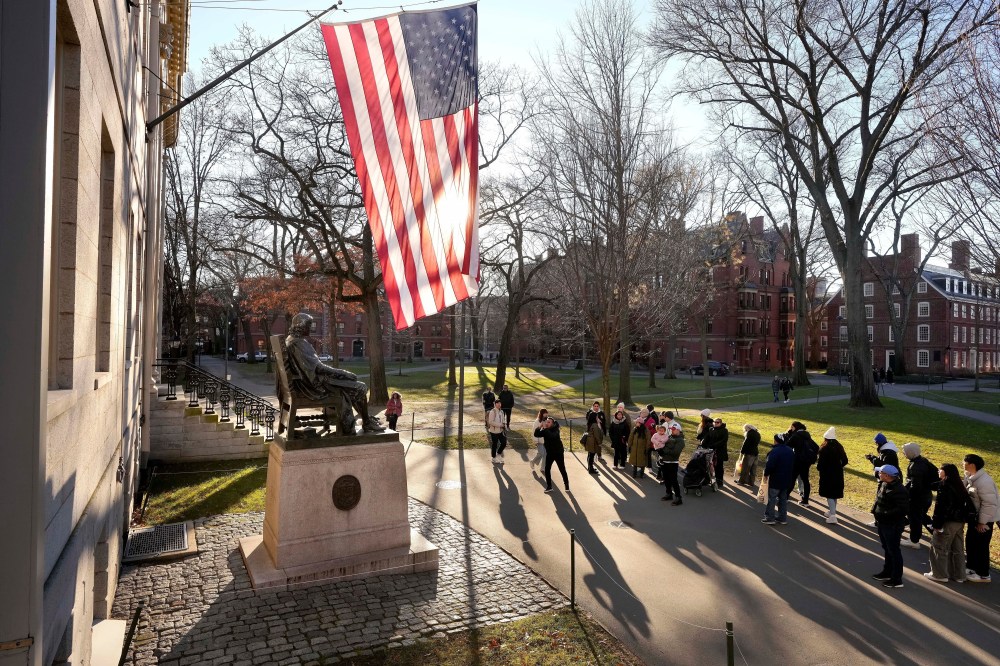
WASHINGTON (AP) — A federal judge in Boston on Thursday dismissed a Trump administration lawsuit that accused Harvard University of turning a blind eye to harassment of Jewish students.
The decision from U.S. District Judge Richard G. Stearns said that President Donald Trump’s administration failed to prove an ongoing violation of federal civil rights laws. The judge said the lawsuit, filed in March, mostly focuses on incidents that took place in the 2023-24 academic year, with a few from March 2025.
The cases were “too isolated and episodic” to prove a persistent civil rights violation at the Ivy League campus in Cambridge, Massachusetts, the judge said.
“We disagree with the ruling and are assessing next steps,” said Harmeet Dhillon, assistant attorney general for civil rights at the Department of Justice. Harvard did not immediately provide a comment on the decision.
The lawsuit accused Harvard of failing to protect Jewish students during pro-Palestinian demonstrations that roiled the campus after Hamas’ Oct. 7, 2023, attacks on Israel. The Trump administration argued Harvard officials did nothing as Jewish students were “harassed, physically assaulted, stalked, and spat upon.”
In a statement after the lawsuit was filed, Harvard said it “cares deeply about members of our Jewish and Israeli community and remains committed to ensuring they are embraced, respected, and can thrive on our campus.”

Harvard President Alan M. Garber says the university formed a task force to combat antisemitism. The university also hired a new provost and new deans and reformed its discipline policies to make them “more consistent, fair and effective,” Garber has said.
The government’s case sought to recover billions of dollars in federal research grants awarded to Harvard since October 2023. Trump officials argued they had a right to recoup the money under Title VI of the Civil Rights Act of 1964, a federal law barring discrimination based on race or national origin.
The lawsuit is among several actions the government has taken against Harvard since the Ivy League university refused a list of demands made by the White House after Trump, a Republican, returned to office last year. Trump officials have separately sought to cut Harvard’s research funding and limit its ability to enroll foreign students and U.S. military members.
In a separate legal case last year, a federal judge ordered the Trump administration to reverse more than $2.6 billion in federal funding cuts to Harvard. That decision found that the White House put unconstitutional conditions on federal funding, using antisemitism as a “smokescreen for a targeted, ideologically-motivated assault” on universities.
Despite their bitter dispute, Harvard and the Trump administration have held some negotiations, and Trump himself said the two sides had been close to reaching an agreement. But when the Justice Department filed this civil rights lawsuit in March, it pointed to an extraordinary impasse. When colleges are found in violation of federal civil rights law, they almost always reach compliance through voluntary agreements.
The Free Press acknowledges the financial support it receives from members of the city’s faith community, which makes our coverage of religion possible.