‘Always had faith:’ Métis delegates say Vatican visit a step to repair relationship
Advertisement
Read this article for free:
or
Already have an account? Log in here »
To continue reading, please subscribe:

Digital Subscription
One year of digital access for only $205*
- Enjoy unlimited reading on winnipegfreepress.com
- Read the E-Edition, our digital replica newspaper
- Access News Break, our award-winning app
- Play interactive puzzles
*First annual payment billed as $205.00 + GST for one year. This annual subscription will automatically renew at $233.00 + GST every 52 weeks (10% off the regular annual price of $259.35). Offer available to new and qualified returning subscribers only. Cancel any time.
To continue reading, please subscribe:
Add Free Press access to your Brandon Sun subscription for only an additional
$1 for the first 4 weeks*
- Enjoy unlimited reading on winnipegfreepress.com
- Read the E-Edition, our digital replica newspaper
- Access News Break, our award-winning app
- Play interactive puzzles
*Your next Brandon Sun subscription payment will increase by $1.00 and you will be charged $17.95 plus GST for four weeks. After four weeks, your payment will increase to $24.95 plus GST every four weeks.
Read unlimited articles for free today:
or
Already have an account? Log in here »
Hey there, time traveller!
This article was published 25/03/2022 (1636 days ago), so information in it may no longer be current.
Métis leaders and residential school survivors say a trip to the Vatican to meet the Pope is as complicated as the history between their communities and the Roman Catholic Church itself.
“We’ve always had faith,” Angelina Crerar, 85, said in Edmonton in December.
“We’ve never ever given up and we never ever will.”
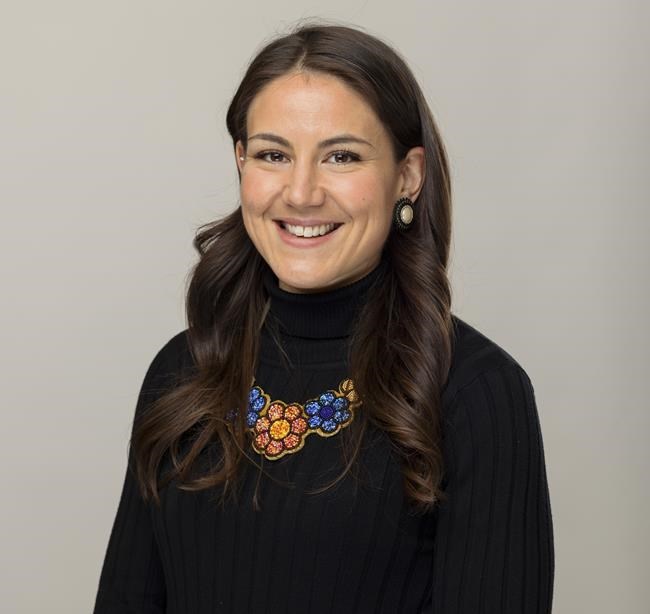
The residential school survivor became emotional explaining how her faith continues to give her strength. It also pushed her to join the Indigenous group heading to the Vatican.
Métis, First Nation and Inuit delegates are flying to Rome this weekend ahead of meetings with Pope Francis next week.
Crerar struggled to find words to express how she feels both empowered and torn. During a news conference announcing delegates from Alberta, she explained the church played a role in tearing apart her family and damaging her community.
When Crerar was in a residential school, she knew what was happening wasn’t right. She wanted to tell the person in charge — the one at the top. Now, almost 80 years later, she finally can.
Métis history and the Catholic Church is intertwined and knotty, said Mitch Case, a historian, regional councillor with Métis Nation Ontario and an intergenerational survivor of residential schools.
“Everything is always 10 times more complicated than we think it is,” Case said. “And certainly the relationship between the Métis communities and the Catholic Church is even more complicated than most things.”
That history goes back far.
A Catholic priest played a significant role in Métis leader Louis Riel’s founding of what would become Manitoba. Rev. Noël-Joseph Ritchot led the delegation Riel sent to Ottawa to negotiate the provisional government’s entry into Confederation.
Riel himself was Catholic but also wrote about his issues with the church.
Later, Case explained, Catholic priests in Saskatchewan went against the Métis during the Red River resistance. Some priests ran information to soldiers, refused to hear Métis confessions and excommunicated those who took part in the resistance.
Elsewhere in Ontario, Case said, Protestant churches and the government relocated Catholic Métis communities.
That created significant division with Métis people because the Catholic Church did not help them reclaim the land they lost over those religious affiliations, he said. But a large number of Métis are still Catholic and faith remains important in their lives, he added.
When Métis children were taken away to residential and day schools, “the faith in the institution was really, really shaken and damaged and tarnished,” Case said.
An estimated 150,000 Indigenous children were forced to attend residential schools. More than 60 per cent of the schools were run by the Catholic Church.
That travesty is separate from the spiritual component many people still have, said Cassidy Caron, president of the Métis National Council.
“It’s the institution of the Catholic Church that needs to rebuild the trust with our communities, not God, not the Creator, not the spirit,” she said.
For the eight Métis delegates going to the Vatican, the trip is not about demanding an apology from Pope Francis for the church’s role in residential schools, Caron said. But they do expect one when he visits Canada in the future.
“It is a trip to go and meet with the Pope to share the stories of our nations and to really open our hearts to (him) … so that he can start really to understand who we are, where we come from,” she said.
She wants to share stories not only of survivors but also talk about how Métis people are revitalizing their culture and how the church can support those efforts. Métis delegates will have a one-hour meeting with the Pope on Monday as well as a group meeting attended by all delegates on Friday.
Caron said she has heard a lot of skepticism about the delegation, but there should be. There haven’t been positive commitments from the Catholic Church and the Vatican in the past, she noted.
She expects the trip to mean different things to different Métis. For her, success won’t necessarily come when she is standing in front of the Pope.

“It will be the successes that come afterwards, those followups from the Vatican and from the Canadian Conference of Catholic Bishops, if we get those commitments … to continue this journey forward.”
Gary Gagnon of the Métis Settlement of St. Albert in Alberta said he is overwhelmed and still working out his feelings about being a delegate.
“We have our stories going there,” he said during the news conference. “Some of these stories are cemented. They are already done. But there should be new stories coming back.
“That’s what I’m looking for — the new stories.”
This report by The Canadian Press was first published March 25, 2022.
The Free Press acknowledges the financial support it receives from members of the city’s faith community, which makes our coverage of religion possible.