Groups join up to push Arctic renewable energy: ‘toughest place in the world’

Advertisement

Advertise with us

It ain't New York but when it comes to renewable energy and the Canadian Arctic, if they can make it there, they'll make it anywhere.

Read this article for free:


or

Already have an account? Log in here »

To continue reading, please subscribe:

Subscribe and receive a limited-edition Free Press branded hat or tote.

Digital Subscription

One year of digital access for only $205*

  • Enjoy unlimited reading on winnipegfreepress.com
  • Read the E-Edition, our digital replica newspaper
  • Access News Break, our award-winning app
  • Play interactive puzzles

*First annual payment billed as $205.00 + GST for one year. This annual subscription will automatically renew at $233.00 + GST every 52 weeks (10% off the regular annual price of $259.35). Offer available to new and qualified returning subscribers only. Cancel any time.

To continue reading, please subscribe:

Add Free Press access to your Brandon Sun subscription for only an additional

$1 for the first 4 weeks*

  • Enjoy unlimited reading on winnipegfreepress.com
  • Read the E-Edition, our digital replica newspaper
  • Access News Break, our award-winning app
  • Play interactive puzzles
Start now

*Your next Brandon Sun subscription payment will increase by $1.00 and you will be charged $17.95 plus GST for four weeks. After four weeks, your payment will increase to $24.95 plus GST every four weeks.

Hey there, time traveller!
This article was published 31/03/2016 (3839 days ago), so information in it may no longer be current.

It ain’t New York but when it comes to renewable energy and the Canadian Arctic, if they can make it there, they’ll make it anywhere.

Six organizations have banded together to help remote Arctic communities reduce diesel power generation and expand large-scale renewable energy.

“If you can crack the nut of renewables in the Canadian Arctic, the toughest place in the world, then maybe you can export that knowledge and technology around the world,” Paul Crowley, Arctic vice-president of the World Wildlife Fund Canada, said Thursday in an interview from Iqaluit.

The groups involved include the Alaska Center for Energy and Power, Qikiqtani Inuit Association, Tugliq Energy Co., Borden Ladner Gervais LLP, the Pembina Insitute, WWF Canada and the Waterloo Institute for Sustainable Energy.

Their goal is to have a least three northern communities running large-scale, renewable energy projects within the next four years.

There are about 300 diesel-dependent communities in Canada, said Crowley and provincial and territorial leaders recently agreed at a Vancouver meeting with Prime Minister Justin Trudeau that getting remote communities off diesel generation is a priority.

A Senate report last year concluded that northern electricity systems are “aging, underperforming and at capacity.” Most of Nunavut’s 17 generators are more than three decades old — held together with “duct tape and twine,” says Crowley. Not only is the system very expensive, diesel generation produces greenhouse gases and black carbon, which absorbs the sun’s energy and speeds snow and ice melt.

The first task of the alliance of non-governmental groups is to assess 17 communities in Nunavut and the Northwest Territories for renewable energy potential, a study that’s underway now at the University of Waterloo, Ont.

Neighbouring Alaska’s recent experience suggests there are a number of options.

Gwen Holdmann, director of the Alaska Center for Energy and Power at the University of Alaska in Fairbanks, said about 70 of Alaska’s 200 or so communities are connected to grid-scale renewable energy, including almost 40 wind projects, hydro, solar, geothermal and biomass.

A number of communities are able turn off all diesel generation and run on wind power alone at times. Holdmann says her own home in Fairbanks runs entirely off solar power for much of the summer. Multi-directional solar arrays can actually generate power 24 hours a day at times in the Arctic summer.

The state of Alaska’s US$50-million a year renewable-energy fund program has spent some $271 million since 2008 while tracking the annual offsets of diesel fuel use. It reports saving about 75 million litres of diesel fuel in 2015, up from 57 million litres in 2014.

In Nunavik, Que., a wind turbine installed at the Raglan Mine has offset 3.3. million litres of diesel fuel in its first 18 months of use.

“The challenge is really taking advantage of all these different kinds of renewable resources and integrating them effectively in a grid, where we’re maximizing the displacement of diesel fuel,” Holdmann said in an interview from Fairbanks.

“It’s really about power system integration and energy storage, flywheels and things like that.”

Holdmann notes that Alaska’s de-regulated utility structure — there are 92 different utilities in the state — and very low subsidy rates have contributed to a flexible system highly motivated to find savings.

“There’s huge drive from the communities themselves to switch over to renewable resources,” she said.

“At a macro level, we’re still using a lot of diesel fuel.”

The Liberal federal budget delivered last week committed $10.7 million over two years specifically for renewable energy projects in indigenous and northern communities that are off the grid and reliant on diesel power. That’s in addition to a $2.24-billion, five-year green infrastructure fund for First Nations communities.

The non-governmental groups will convene this fall in Iqaluit to invite local input into their assessment of the viability of renewable energy systems.

As Crowley puts it, “the stars appear to be aligning on getting renewable energy in the Canadian Arctic.”

— Follow @BCheadle on Twitter

Report Error Submit a Tip

More Stories

’Disgusting’ posters being investigated by police

Morgan Modjeski 4 minute read Yesterday at 2:22 PM CDT

The Winnipeg Police Service major crimes unit is investigating what some have labelled offensive and hateful posters on full-display at a Winnipeg home.

One of the people irked by the display is Gracie Garrett. She’s has lived on Ashburn Street in Winnipeg’s Minto neighbourhood for almost ten years. She’s never felt unsafe in the neighbourhood before, but now, a set of posters plastered on a nearby house are making her feel uneasy.

The five signs, posted facing the street prominently on a front window, contain a slur, refer to Nazis as “heroes” and call Muslims, Christians and other groups “evil.”

Learning of the signs Friday, Garrett said she’ll be reporting the posters to police, as she worries they incite and promote violence.

Moving drama at MTYP gives voice to boy who changed law

Holly Harris 4 minute read Preview

Moving drama at MTYP gives voice to boy who changed law

Holly Harris 4 minute read Yesterday at 2:37 PM CDT

The heroic true tale of Norway House Cree Nation-born Jordan River Anderson came home Friday night, as Manitoba Theatre for Young People presented Yvette Nolan’s Jordan.

The touring production, a collaboration with Geordie Theatre, runs weekends through Oct. 11, with additional stops in Toronto, Vancouver and Ottawa’s National Arts Centre.

Having several of Anderson’s family members witness the local première underscored the evening with poignancy. Elder and Pine Creek First Nation member Barbara Nepinak added her own dignified presence and prayers following MTYP artistic director Pablo Felices-Luna’s welcoming remarks.

The season-opener also marks the Winnipeg-raised playwright’s homecoming; the Algonquin playwright, director, dramaturg, actor and educator was a fixture in our local theatre community for many years before going on to serve as artistic director for Native Earth Performing Arts from 2003 to ‘11, among other contributions.

Read
Yesterday at 2:37 PM CDT

Winnipeggers witness unveiling of Japanese Canadian monument in B.C.

Morgan Modjeski 5 minute read Preview

Winnipeggers witness unveiling of Japanese Canadian monument in B.C.

Morgan Modjeski 5 minute read Yesterday at 8:39 PM CDT

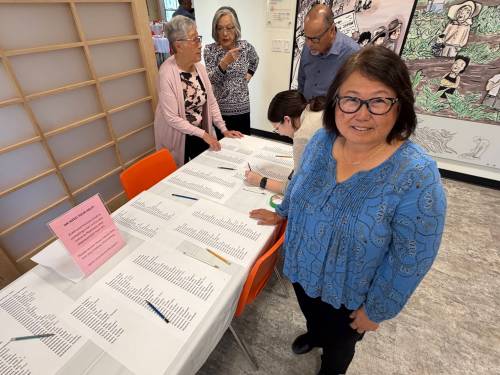
As Miki Stewart gathered with her family at the Japanese Cultural Association of Manitoba on Saturday afternoon, she was thinking of her parents, Yoshimaru and Yoshi Abe.

Both Stewart, 80, and her sister Yumi Falk, 81, alongside an older brother, were born in the Tashme internment camp in British Columbia. They were among more than 2,600 Japanese Canadians who were forcefully removed and interred at the camp following the bombing of Pearl Harbour and Canada’s declaration of war on Japan in 1941.

“They didn’t talk much about how they suffered,” Stewart said of her parents. “But they did.”

She was amongst a group of more than 150 people who gathered at the association’s McPhillips headquarters on Saturday afternoon to watch the unveiling of the Japanese Canadian Monument in Victoria B.C.

Read
Yesterday at 8:39 PM CDT

Today’s horoscope

Georgia Nicols 4 minute read Preview

Today’s horoscope

Georgia Nicols 4 minute read 2:00 AM CDT

MOON ALERT: Caution! Avoid shopping (except food and gas) and important decisions until after 6:30 p.m. today. After that, the moon moves from Cancer into Leo.

ARIES (March 21-April 19)

Don’t expect much co-operation from partners, spouses and close friends. This is why you might feel cut off from others or a bit lonely. There’s the sense a gulf exists between you and everyone else. But this is temporary. Courage!

TAURUS (April 20-May 20)

Read
2:00 AM CDT

Manitoba’s own Summer Howell takes on biggest role yet as Stephen King’s telekinetic teen Carrie

Randall King 7 minute read Preview

Manitoba’s own Summer Howell takes on biggest role yet as Stephen King’s telekinetic teen Carrie

Randall King 7 minute read Friday, Oct. 2, 2026

From the tender age of eight, actress Summer Howell has made her presence known in a series of horror films shot in her home province of Manitoba.

Her first film was Curse of Chucky (2013), director Don Mancini’s continuation of the venerable killer doll series he started (as a screenwriter) in 1988 with Child’s Play.

“Even then, it was obvious she was very talented, intelligent and delightful,” Mancini said of Howell.

Though she has worked in other genres, Howell gravitated to horror repeatedly, with credits in Shawn Linden’s harrowing Hunter Hunter (2020) and the 2023 possession thriller All Fun and Games. Earlier this year, she shot the horror film Sundown in Winnipeg with director Rebekah McKendry, which premièred last week at Beyond Fest in Los Angeles and is headed for a streaming berth on Shudder.

Read
Friday, Oct. 2, 2026

Brandonmeat packer thriving on its own

Abiola Odutola 3 minute read Preview

Brandonmeat packer thriving on its own

Abiola Odutola 3 minute read Yesterday at 2:01 AM CDT

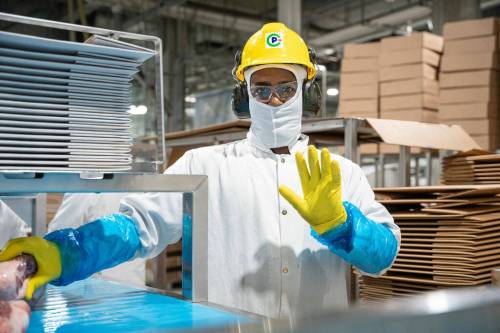
BRANDON — Canada Packers has strengthened its business and laid the foundation for future growth during its first year as an independent company, its president says.

The Brandon-based pork producer, separated from Maple Leaf Foods in October 2025, established its own leadership, strategy, systems, culture and identity while continuing operations across its hog production farms and regional hog barns in southern and eastern Manitoba.

The company’s first year was focused on building a successful standalone business while continuing to serve customers, communities and shareholders, president Dennis Organ said.

“Market conditions over the past year have been more challenging than we anticipated when we became a separate entity,” he said in an email. “Despite that, we continued to execute against our priorities, including increasing processing volumes, maintaining disciplined operations and strengthening the business.”

Read
Yesterday at 2:01 AM CDT