‘This is a wake-up call:’ swift action needed on rising seas, experts say
Advertisement
Read this article for free:
or
Already have an account? Log in here »
To continue reading, please subscribe:

Digital Subscription
One year of digital access for only $205*
- Enjoy unlimited reading on winnipegfreepress.com
- Read the E-Edition, our digital replica newspaper
- Access News Break, our award-winning app
- Play interactive puzzles
*First annual payment billed as $205.00 + GST for one year. This annual subscription will automatically renew at $233.00 + GST every 52 weeks (10% off the regular annual price of $259.35). Offer available to new and qualified returning subscribers only. Cancel any time.
To continue reading, please subscribe:
Add Free Press access to your Brandon Sun subscription for only an additional
$1 for the first 4 weeks*
- Enjoy unlimited reading on winnipegfreepress.com
- Read the E-Edition, our digital replica newspaper
- Access News Break, our award-winning app
- Play interactive puzzles
*Your next Brandon Sun subscription payment will increase by $1.00 and you will be charged $17.95 plus GST for four weeks. After four weeks, your payment will increase to $24.95 plus GST every four weeks.
Read unlimited articles for free today:
or
Already have an account? Log in here »
Hey there, time traveller!
This article was published 06/04/2019 (2723 days ago), so information in it may no longer be current.
HALIFAX – Worrying figures released this week on the rising seas in Atlantic Canada should prompt governments and citizens to move more swiftly to protect coastal buildings and vital transport links, say flooding experts.
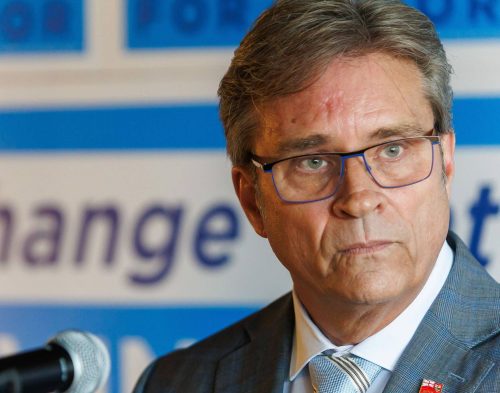
Blair Feltmate, head of the Intact Centre on Climate Adaptation at the University of Waterloo, said in an interview Friday that projections of 75 centimetres to one metre of relative sea level rise for the East Coast by the end of the century are “a wake up call and a call to arms.”
He was reacting to Chapter 7 of Canada’s Changing Climate Report, which includes a survey of federal science on sea level rise under various emissions scenarios developed by Environment and Climate Change Canada.
540959.jpg?w=1000)
Feltmate points to the study’s predictions for quadrupling of flooding along the Halifax waterfront as sea levels rise 20 centimetres over current levels by mid century.
Blair Greenan, a federal oceanographer who oversaw the oceans chapter of the report, said in an interview that without any adaptation measures, flooding during Halifax storms will be noticeable in just a decade as relative sea level goes up about 10 centimetres.
“It will probably have doubled,” he said during an interview. “It is an important point that southern Atlantic Canada is the highest risk area in Canada for sea level rise.”
The Atlantic region is facing a dual effect of rising seas and falling coastlines, says the study.
It notes that while in much of the country the coast is rebounding from glaciation — helping counter sea level rise — the eastern coasts are continuing to sink.
Feltmate said while the report documents less drastic outcomes in a scenario of lower emissions, he believes the current “high emissions scenario” — where current amounts of fossil fuels continue to be burned — is much likelier.
“That (high emission scenario) is what is going to happen,” he said, adding that he has attended the most recent G20 meetings and has heard no firm commitments from nations that they will even meet goals set in the Paris Accord.
The federal study also highlights the vulnerability of the Chignecto Isthmus — a low-lying, 20-kilometre band of land which joins Nova Scotia to New Brunswick, said Feltmate.
The Canadian Press recently reported on the risk of much of the East Coast being cut off if the key trade corridor is submerged due to a strong tidal surge overtopping dikes that were last upgraded over 50 years ago.
An engineering assessment seeking proposals for solutions to the possible damage to the trade corridor is expected to begin this spring and last 12 to 18 months, provincial officials have said.
After options are presented, the governments must agree on the way forward and how much they will spend. All of the options presented in a 2016 required at least five years to complete.
The pace needs to pick up, said Feltmate.
“This report should put action on adaptation on steroids for a response to this. We have to act quicker than we currently are.”
Nancy Anningson, the coastal adaptation co-ordinator of the Ecology Action Centre, says part of the response to sea level rise is stricter building rules and the preservation of wetlands.
She said Nova Scotia’s recently introduced Coastal Protection Act is a major step in the right direction, though it may take over a year to have the legislation proclaimed.
However, the environmental group is encouraging Nova Scotia’s Liberal government to rapidly explore some form of rebate program — similar to the energy efficiency programs offered to homeowners — to encourage people to make changes that protect structures or move them away from the coast.
“This is scientific reality, now what are we going to do to prepare?” said Anningson.
One key response would be for the province to begin providing detailed assessments of how sea level rise will impact coastal residents, she added.
www.sealevelrise.ca to give building owners a place to gather basic information.
Jason Thistlethwaite, a professor of environment and business at the University of Waterloo, says all Canadian jurisdictions also need to rapidly begin providing easily accessible flood risk maps for citizens.

In other G8 countries maps are used to raise public awareness and help create the political will for investment in preparing for sea level rise, he said.
A recent study by his research group indicated many Canadians lack access to clear maps that tell them the risks to their property and what actions to take to prevent flooding, he said.
“This report demonstrates the urgency of this issue … This is reminding us that climate change will have disproportionate impact on northern countries and we’re one of them,” said Thistlethwaite in an interview Saturday.
One of the report’s key overall findings is that Canada is warming up twice as fast as the rest of the world and it’s “effectively irreversible.”
Follow (at)mtuttoncporg on Twitter.


540959.jpg?w=500)