Agency ruling delivers big setback to Okefenokee mining plan

Advertisement

Advertise with us

SAVANNAH, Ga. (AP) — A federal agency has delivered a big setback to a company's controversial plan to mine near the edge of the Okefenokee Swamp and its vast wildlife refuge.

Read this article for free:


or

Already have an account? Log in here »

To continue reading, please subscribe:

Subscribe and receive a limited-edition Free Press branded hat or tote.

Digital Subscription

One year of digital access for only $205*

  • Enjoy unlimited reading on winnipegfreepress.com
  • Read the E-Edition, our digital replica newspaper
  • Access News Break, our award-winning app
  • Play interactive puzzles

*First annual payment billed as $205.00 + GST for one year. This annual subscription will automatically renew at $233.00 + GST every 52 weeks (10% off the regular annual price of $259.35). Offer available to new and qualified returning subscribers only. Cancel any time.

To continue reading, please subscribe:

Add Free Press access to your Brandon Sun subscription for only an additional

$1 for the first 4 weeks*

  • Enjoy unlimited reading on winnipegfreepress.com
  • Read the E-Edition, our digital replica newspaper
  • Access News Break, our award-winning app
  • Play interactive puzzles
Start now

*Your next Brandon Sun subscription payment will increase by $1.00 and you will be charged $17.95 plus GST for four weeks. After four weeks, your payment will increase to $24.95 plus GST every four weeks.

Hey there, time traveller!
This article was published 03/06/2022 (1568 days ago), so information in it may no longer be current.

SAVANNAH, Ga. (AP) — A federal agency has delivered a big setback to a company’s controversial plan to mine near the edge of the Okefenokee Swamp and its vast wildlife refuge.

A government memo said Friday that the Army Corps of Engineers is reasserting jurisdiction over Twin Pines Minerals’ proposal to mine minerals just outside the Okefenokee, home to the largest U.S. wildlife refuge east of the Mississippi River.

Scientists have warned that mining close to the swamp’s bowl-like rim could damage its ability to hold water. They urged the Army Corps of Engineers to deny the project a permit. But the agency declared in 2020 it no longer had that authority after regulatory rollbacks under then-President Donald Trump narrowed the types of waterways qualifying for protection under the Clean Water Act.
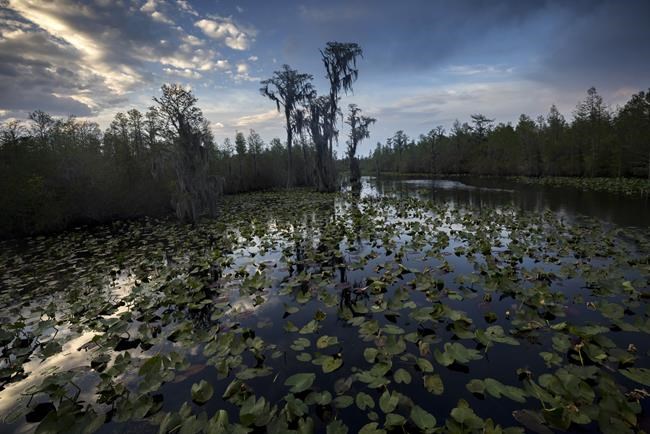
FILE - The sun sets over water lilies and cypress trees along the remote Red Trail wilderness water trail of Okefenokee National Wildlife Refuge, Wednesday, April 6, 2022, in Fargo, Ga. The refuge is one of the world's largest intact freshwater ecosystems and averages 300,000 visitors a year and 4,000 visitors permitted for overnight camping along trails such as this. According to a government memo, Friday, June 3, 2022, a federal agency has delivered a big setback to a company's controversial plan to mine at the edge of the Okefenokee Swamp's vast wildlife refuge. (AP Photo/Stephen B. Morton, File)

Trump’s rollbacks were later scrapped by federal courts. President Joe Biden’s administration has sought to restore federal oversight of development projects that under Trump had been allowed to sidestep regulations to prevent pollution of streams or draining of wetlands.

Michael Connor, the assistant Army secretary for civil works, said in the Friday memo that prior decisions waiving the Army Corps’ jurisdiction over the Georgia mining plan and another proposed mine outside Tucson, Arizona, had been reversed.

Connor wrote that both projects would have to start over with new applications for federal permits. He said the prior decisions allowing them to bypass federal regulators “are not valid” because tribal governments with ancestral ties to the proposed mining sites had not been consulted.

The Twin Pines project in Georgia will require consultation with the Muscogee Creek Nation before it can move forward, the memo said.

“We have said from the day we announced our plans that we would follow the regulations before us at any given time,” Steve Ingle, president of Twin Pines, said in a statement. He added: “We intend to move forward with our application and fulfill all requirements.”

U.S. Sen. Jon Ossoff, a Georgia Democrat who has fought the proposed mine outside the Okefenokee since he took office last year, called the decision a major victory.

“I am pleased to announce the restoration of protection for this wildlife refuge and its surrounding wetlands,” Ossoff said in a statement late Friday. “The Okefenokee is a natural wonder and one of Georgia’s most precious lands. I will continue fighting to protect it for future generations.”

Alabama-based Twin Pines had been awaiting a permitting decision by Georgia’s Environmental Protection Division, the sole regulator with oversight over the project before the federal government’s Friday decision, which restores the Army Corps regulatory authority over 556 acres (225 hectares) of wetlands in the proposed mining area.

The Okefenokee National Wildlife Refuge covers nearly 630 square miles (1,630 square kilometers) in southeast Georgia and is home to alligators, bald eagles and other protected species. The swamp’s wildlife, cypress forests and flooded prairies draw roughly 600,000 visitors each year, according to the U.S. Fish and Wildlife Service, which manages the refuge.

Two decades ago, chemical giant DuPont retreated from plans to mine outside the Okefenokee after meeting fierce resistance. Twin Pines wants permits to mine a small fraction of the acreage DuPont pursued. Ingle has insisted his company can mine the site without harming the swamp.

Government scientists have been skeptical. In February 2019, the Fish and Wildlife Service wrote that the proposed mine could pose “substantial risks” to the swamp, including its ability to hold water. Some impacts, it said, “may not be able to be reversed, repaired, or mitigated for.”

Conservation groups cheered the federal government’s decision.

“Mining on the doorstep of a rare ecological treasure like Georgia’s Okefenokee Swamp defies common sense,” Kelly Moser, an attorney for the Southern Environmental Law Center who specializes in clean water issues, said in a statement. “And we are thrilled that this announcement removes the threat to hundreds of acres of critically important wetlands.”


Report Error Submit a Tip

More Stories

‘She was looking to destroy me’: convicted harasser faces new charges

Dean Pritchard 6 minute read Preview

‘She was looking to destroy me’: convicted harasser faces new charges

Dean Pritchard 6 minute read 6:54 PM CDT

When Agnieszka Ciochon-Newton moved into the 55-plus apartment building on Stradbrook Avenue last year, she came across as “timid, soft-spoken and sensitive,” said building manager Tanya Owen.

Little did Owen know the meek-looking 58-year-old woman would soon turn her life and the lives of many of her tenants upside down and threaten her career and family.

“She was looking to destroy me for a simple tenant disagreement,” Owen said Thursday.

Court records show Ciochon-Newton was arrested earlier this month and charged with seven counts of criminal harassment, two counts of uttering threats and one count each of fraud, breaking and entering, attempting to obstruct justice, intimidation of a justice official, mischief and defamatory libel.

Read
6:54 PM CDT

City to use survey to determine transportation needs

Joyanne Pursaga 4 minute read Preview

City to use survey to determine transportation needs

Joyanne Pursaga 4 minute read Yesterday at 5:53 PM CDT

The city wants to know how Winnipeggers get around.

It plans to hire a consultant to conduct a household travel survey next year to provide data deemed critical to planning roads and active transportation routes.

“This (will) help … when it comes to prioritizing road renewal investments because our city is growing, travel patterns are changing. A lot has happened in our city in 20 years. And, especially when we’re a city without freeways, I know there’s some major intersections and major corridors that need refinement,” said Coun. Janice Lukes (Waverley West), council’s public works chairwoman.

The survey will delve into everything from the number of vehicles owned by residents to where they go and how they get there, providing the city’s first such fine-tuned poll since 2007. It will involve a representative sample of households in Winnipeg and surrounding communities.

Read
Yesterday at 5:53 PM CDT

Federal Court awards OCN $27M, 62 years after construction of hydro dam

Nicole Buffie 5 minute read Preview

Federal Court awards OCN $27M, 62 years after construction of hydro dam

Nicole Buffie 5 minute read Updated: Yesterday at 12:02 PM CDT

The Federal Court has ordered Ottawa pay Opaskwayak Cree Nation $27 million over damages suffered due to the construction of the Grand Rapids hydro dam in the 1960s.

In a decision dated Sept. 3, Federal Court Justice Sébastien Grammond says the federal government had a fiduciary duty to protect the community from the impacts of the dam.

“When the Crown exercises a discretionary power over an Indigenous interest, it has a fiduciary duty and it must exercise the discretion in the best interests of the Indigenous group,” the ruling said. “Canada breached its fiduciary duty to OCN because it approved the (project) without ensuring that the impacts of the Grand Rapids dam on OCN’s traditional way of life were mitigated or compensated.”

The First Nation took the federal government to court in February over impacts on the community after the dam, located about 145 kilometres southeast of Opaskwayak Cree Nation, was installed on the Saskatchewan River in 1964. The case was heard over 14 days in a judge-alone trial in Winnipeg.

Read
Updated: Yesterday at 12:02 PM CDT

Sweeney’s sexist U.S. gambling-site ad isn’t the real problem

Dan Lett 5 minute read Preview

Sweeney’s sexist U.S. gambling-site ad isn’t the real problem

Dan Lett 5 minute read Yesterday at 1:33 PM CDT

Until very recently, there was no reason to connect actress and model Sydney Sweeney with online sports betting. But the degrees separating these two culture trends evaporated in short order this week.

Read
Yesterday at 1:33 PM CDT

Today’s horoscope

Georgia Nicols 4 minute read Preview

Today’s horoscope

Georgia Nicols 4 minute read Yesterday at 2:00 AM CDT

MOON ALERT: Avoid shopping (except food and gas) or important decisions until noon today. After that, the moon moves from Scorpio into Sagittarius.

ARIES (March 21-April 19)

Your idealism is aroused, perhaps because you feel sympathy for the suffering of someone far away. Because you are proactive by nature, you might do something to help in any way you can. Pay attention to what you say and do. Expect detours.

TAURUS (April 20-May 20)

Read
Yesterday at 2:00 AM CDT

Man gets 18 year sentence for sex assault that impregnated teen girl

Tessa Adamski 4 minute read Yesterday at 2:01 AM CDT

BRANDON — A 29-year-old man has been sentenced to 18 years in prison for sexually abusing and impregnating a 14-year-old girl in 2024.

“Sexual abuse of a child is inherently a grave violation of the child’s bodily integrity, dignity, and security, and in this case, the consequences were compounded by the victim’s pregnancy and the need to undergo a termination,” Brandon provincial court Judge Patrick Sullivan said on Tuesday.

The accused had pleaded guilty to two counts of sexual interference and two counts of breaching a court order banning him from contacting anyone under 18.

A publication ban prohibits the publication of information that could identify the 14-year-old, who is from a western Manitoba First Nation, and two other minors with whom he communicated.