Judge throws out Trump-era rollbacks on endangered species

Advertisement

Advertise with us

WASHINGTON (AP) — A federal judge on Tuesday threw out a host of actions by the Trump administration to roll back protections for endangered or threatened species, a year after the Biden administration said it was moving to strengthen such species protections.

Read this article for free:


or

Already have an account? Log in here »

To continue reading, please subscribe:

Subscribe and receive a limited-edition Free Press branded hat or tote.

Digital Subscription

One year of digital access for only $205*

  • Enjoy unlimited reading on winnipegfreepress.com
  • Read the E-Edition, our digital replica newspaper
  • Access News Break, our award-winning app
  • Play interactive puzzles

*First annual payment billed as $205.00 + GST for one year. This annual subscription will automatically renew at $233.00 + GST every 52 weeks (10% off the regular annual price of $259.35). Offer available to new and qualified returning subscribers only. Cancel any time.

To continue reading, please subscribe:

Add Free Press access to your Brandon Sun subscription for only an additional

$1 for the first 4 weeks*

  • Enjoy unlimited reading on winnipegfreepress.com
  • Read the E-Edition, our digital replica newspaper
  • Access News Break, our award-winning app
  • Play interactive puzzles
Start now

*Your next Brandon Sun subscription payment will increase by $1.00 and you will be charged $17.95 plus GST for four weeks. After four weeks, your payment will increase to $24.95 plus GST every four weeks.

Hey there, time traveller!
This article was published 05/07/2022 (1533 days ago), so information in it may no longer be current.

WASHINGTON (AP) — A federal judge on Tuesday threw out a host of actions by the Trump administration to roll back protections for endangered or threatened species, a year after the Biden administration said it was moving to strengthen such species protections.

U.S. District Judge Jon Tigar in Northern California eliminated the Trump-era rules even as two wildlife agencies under President Joe Biden are reviewing or rescinding the regulations. The decision restores a range of protections under the Endangered Species Act — including some that date to the 1970s — while the reviews are completed. Environmental groups hailed the decision, which they said sped up needed protections and critical habitat designations for threatened species, including salmon in the Pacific Northwest.

Tigar’s ruling “spoke for species desperately in need of comprehensive federal protections without compromise,” said Kristen Boyles, an attorney for the environmental group Earthjustice. “Threatened and endangered species do not have the luxury of waiting under rules that do not protect them.”

FILE - In this February 2021, photo released by California Department of Fish and Wildlife, shows a gray wolf (OR-93), seen near Yosemite, Calif., shared by the state's Department of Fish and Wildlife. A federal judge on July 5, 2022, threw out a host of actions by the Trump administration to roll back protections for endangered or threatened species, a year after the Biden administration said it was moving to strengthen those species protections. (California Department of Fish and Wildlife via AP, File)

The court ruling comes as two federal agencies — the U.S. Fish and Wildlife Service and National Marine Fisheries Service — review five Endangered Species Act regulations finalized by President Donald Trump’s administration, including critical habitat designations and rules requiring federal agencies to consult with the wildlife or fisheries services before taking actions that could affect threatened or endangered species.

Fish and Wildlife also said it will reinstate the decades-old “blanket rule,” which mandates additional protections for species that are newly classified as threatened. Those protections were removed under Trump.

Critical habitat designations for threatened or endangered species can result in limitations on energy development such as mining or oil drilling that could disturb a vulnerable species, while the consultation rule and a separate rule on the scope of proposed federal actions help determine how far the government may go to protect imperiled species.

Under Trump, officials rolled back protections for the northern spotted owl, gray wolves and other species, actions that Biden has vowed to review. The Biden administration previously moved to reverse Trump’s decision to weaken enforcement of the century-old Migratory Bird Treaty Act, which made it harder to prosecute bird deaths caused by the energy industry.

The bird law reversal was among more than 150 business-friendly actions on the environment that Trump took and Biden wants to reconsider, revise or scrap, including withdrawal last month of a 2020 rule that limited which lands and waters could be designated as places where imperiled animals and plants could receive federal protection.

FILE - In this May 15, 2019 photo, the Lower Granite Dam on the Snake River is seen from the air near Colfax, Wash. A report released Thursday, June 9, 2022, said the benefits provided by four giant hydroelectric dams on the Snake River in Washington state can be replaced if the dams are breached to save endangered salmon runs. But finding other ways to provide electricity, irrigation and enabling commerce would cost up to $27.2 billion, the report said. (AP Photo/Ted S. Warren, File)

A spokesman for the Interior Department, which oversees the Fish and Wildlife Service, said Tuesday the agency is reviewing the court ruling.

Fish and Wildlife, along with the marine fisheries service, announced in June 2021 that it was reviewing the Trump-era actions on endangered species. The reviews could take months or years to complete, officials said.

Industry groups and Republicans in Congress have long viewed the Endangered Species Act as an impediment to economic development, and under Trump they successfully lobbied to weaken the law’s regulations. Environmental groups and Democratic-controlled states battled the moves in court, but many of those cases remained unresolved.

Ryan Shannon, a lawyer with the Center for Biological Diversity, another environmental group, said he was “incredibly relieved” that “terrible” Trump-era rules on endangered species were thrown out by the Oakland, California-based Tigar, who was appointed to the federal bench by former President Barack Obama.

“I hope the Biden administration takes this opportunity to strengthen this crucial law, rather than weaken it, in the face of the ongoing extinction crisis,” Shannon said Tuesday.
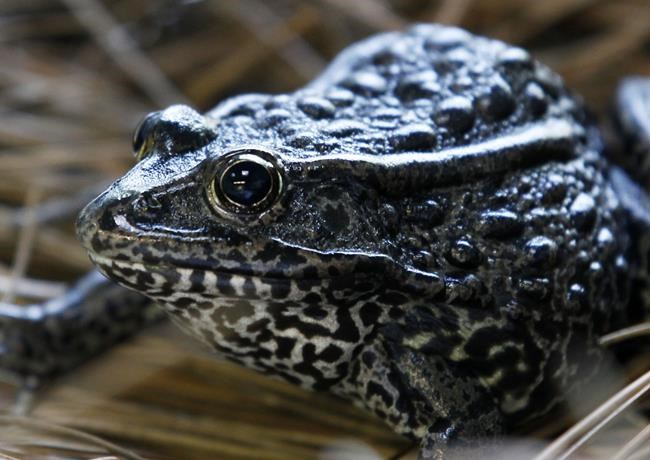
FILE - A gopher frog is pictured at the Audubon Zoo in New Orleans on Sept. 27, 2011. The Biden administration on Thursday, June 23, 2022, withdrew a rule adopted under former President Donald Trump that limited which lands and waters could be designated as places where imperiled animals and plants could receive federal protection. (AP Photo/Gerald Herbert, File)

Rebecca Riley of the Natural Resources Defense Council said the court ruling “ensures that the previous administration’s ‘extinction package’ will be rolled back.”

She and other advocates called on the Biden administration to ensure the Endangered Species Act “can do its job: preventing the extinction of vulnerable species.”

Report Error Submit a Tip

More Stories

Puzzles Palace

1 minute read Monday, Jul. 27, 2026

To solve our puzzles, please subscribe with this special offer: |

Nothing wrong with planting trees, but it won’t get province very far on path to net zero

Dan Lett 5 minute read Preview

Nothing wrong with planting trees, but it won’t get province very far on path to net zero

Dan Lett 5 minute read Yesterday at 2:39 PM CDT

Manitoba’s new plan to achieve net zero carbon emissions by 2050 is a lot of things. It’s detailed. It’s certainly comprehensive in scope. But when it is all said and done, it is still very much a work in progress.

Read
Yesterday at 2:39 PM CDT

Menstruation, consent move up in sex-ed lesson plan

Maggie Macintosh 5 minute read Preview

Menstruation, consent move up in sex-ed lesson plan

Maggie Macintosh 5 minute read Yesterday at 6:00 AM CDT

Manitoba’s newest curriculum introduces the menstrual cycle earlier and repeatedly calls for explicit lessons on how students can give, seek, and decline to provide their consent.

The education department has released its sweeping proposal to overhaul how exercise, nutrition and sexuality are taught between kindergarten and Grade 12.

Grade 5 has long served as a key turning point for “the talk,” said J Fiedler, a sexual and reproductive health educator who provided input on the new curriculum.

“There’s no ‘the talk’ anymore. Now, there’s continuations of multiple ‘talks,’ which can hopefully reduce stress for students and stigma that people experience talking about sexuality.”

Read
Yesterday at 6:00 AM CDT

Federal Court awards OCN $27M, 62 years after construction of hydro dam

Nicole Buffie 5 minute read Preview

Federal Court awards OCN $27M, 62 years after construction of hydro dam

Nicole Buffie 5 minute read 6:34 PM CDT

The Federal Court has ordered Ottawa pay Opaskwayak Cree Nation $27 million over damages suffered due to the construction of the Grand Rapids hydro dam in the 1960s.

In a decision dated Sept. 3, Federal Court Justice Sébastien Grammond says the federal government had a fiduciary duty to protect the community from the impacts of the dam.

“When the Crown exercises a discretionary power over an Indigenous interest, it has a fiduciary duty and it must exercise the discretion in the best interests of the Indigenous group,” the ruling said. “Canada breached its fiduciary duty to OCN because it approved the (project) without ensuring that the impacts of the Grand Rapids dam on OCN’s traditional way of life were mitigated or compensated.”

The First Nation took the federal government to court in February over impacts on the community after the dam, located about 145 kilometres southeast of Opaskwayak Cree Nation, was installed on the Saskatchewan River in 1964. The case was heard over 14 days in a judge-alone trial in Winnipeg.

Read
6:34 PM CDT

Police cracking down on gangs, organized crime in bars and lounges

Nicole Buffie 2 minute read Preview

Police cracking down on gangs, organized crime in bars and lounges

Nicole Buffie 2 minute read 12:16 PM CDT

Patrons can expect to see more police officers in and around bars and lounges in the coming months as the Winnipeg Police Service plans to crack down on gangs and organized crime.

Uniformed officers will be patrolling bars, lounges and other licensed establishments, targeting gang members and people associated with organized crime. Priority will be given to those who pose the greatest risk to public safety, WPS said in a news release Tuesday.

Under provincial liquor legislation, officers have the authority to remove people whose “presence creates a risk of violence or an increased possibility of violent conduct by or against that individual.”

Police will be working with bar and lounge operators to help them understand the requirements under the Liquor, Gaming and Cannabis Control Act. Manitoba’s liquor regulations say licensed establishments can ban gang identifiers and may refuse entry to, or remove, those who do not comply.

Read
12:16 PM CDT

A father and son arrested last month are accused of travelling across Canada — and using courier services and Canada Post — to supply their Winnipeg drug-trafficking operation, a recent court filing shows.