African wildlife parks face climate, infrastructure threats

Advertisement

Advertise with us

MOMBASA, Kenya (AP) — Africa's national parks, home to thousands of wildlife species such as lions, elephants and buffaloes, are increasingly threatened by below-average rainfall and new infrastructure projects.

Read this article for free:


or

Already have an account? Log in here »

To continue reading, please subscribe:

Subscribe and receive a limited-edition Free Press branded hat or tote.

Digital Subscription

One year of digital access for only $205*

  • Enjoy unlimited reading on winnipegfreepress.com
  • Read the E-Edition, our digital replica newspaper
  • Access News Break, our award-winning app
  • Play interactive puzzles

*First annual payment billed as $205.00 + GST for one year. This annual subscription will automatically renew at $233.00 + GST every 52 weeks (10% off the regular annual price of $259.35). Offer available to new and qualified returning subscribers only. Cancel any time.

To continue reading, please subscribe:

Add Free Press access to your Brandon Sun subscription for only an additional

$1 for the first 4 weeks*

  • Enjoy unlimited reading on winnipegfreepress.com
  • Read the E-Edition, our digital replica newspaper
  • Access News Break, our award-winning app
  • Play interactive puzzles
Start now

*Your next Brandon Sun subscription payment will increase by $1.00 and you will be charged $17.95 plus GST for four weeks. After four weeks, your payment will increase to $24.95 plus GST every four weeks.

Hey there, time traveller!
This article was published 11/08/2022 (1502 days ago), so information in it may no longer be current.

MOMBASA, Kenya (AP) — Africa’s national parks, home to thousands of wildlife species such as lions, elephants and buffaloes, are increasingly threatened by below-average rainfall and new infrastructure projects.

A prolonged drought in much of the continent’s east, exacerbated by climate change, and large-scale developments, including oil drilling and livestock grazing, are hampering conservation efforts in protected areas, several environmental experts say.

The at-risk parks stretch all the way from Kenya in the east — home to Tsavo and Nairobi national parks — south to the Mkomazi and Serengeti parks in Tanzania, the Quirimbas and Gorongosa parks in Mozambique and the famous Kruger National Park in South Africa, and west to the Kahuzi Biega, Salonga and Virunga reserves in Congo.
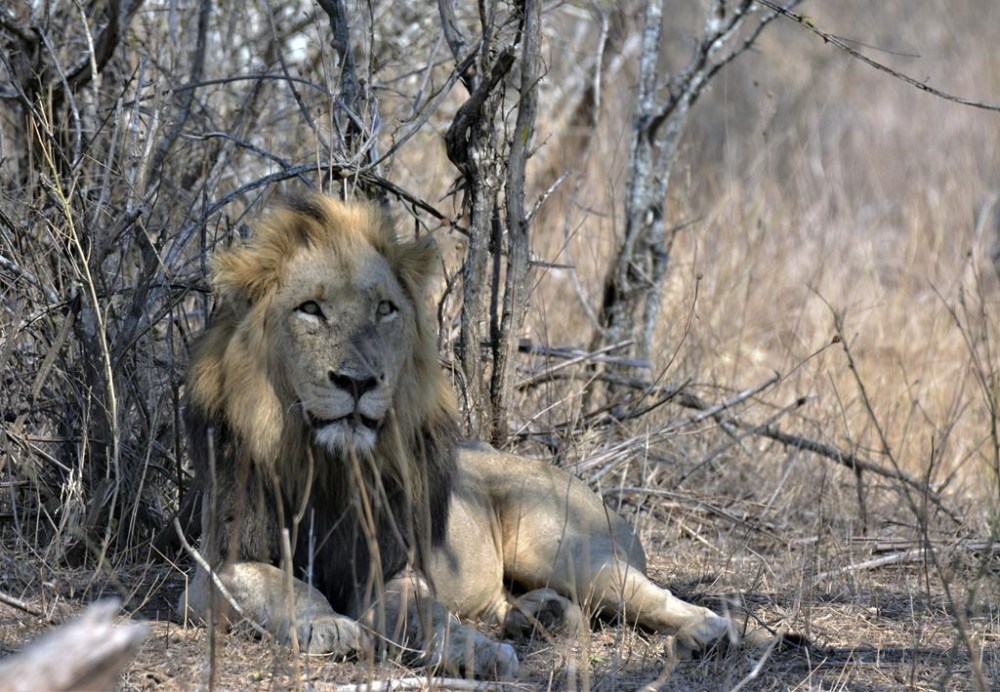
FILE - A lion lies in the Kruger National Park, South Africa, Tuesday, Aug, 25, 2020. Africa's national parks, home to thousands of wildlife species are increasingly threatened by below-average rainfall and new infrastructure projects, stressing habitats and the species that rely on them. (AP Photo/Kevin Anderson, File)

The parks not only protect flora and fauna but also act as natural carbon sinks — storing carbon dioxide emitted into the air and reducing the effects of global warming.

An estimated 38% of Africa’s biodiversity areas are under severe threat from climate change and infrastructure development, said Ken Mwathe of BirdLife International.

“Key biodiversity areas over the years, especially in Africa, have been regarded by investors as idle and ready for development,” said Mwathe. “Governments allocate land in these areas for infrastructural development.”

He added that the “powerlines and other energy infrastructure cause collisions with birds, due to low visibility. The numbers killed this way are not few.”

In their quest to bolster living standards and achieve sustainable development goals, such as access to clean water and food, boosting jobs and economic growth and improving the quality of education, African governments have set their sights on large building projects, many of them funded by foreign investments, especially by China.

The proposed East African Oil Pipeline, for example, which the Ugandan government says can help lift millions out of poverty, runs through Uganda’s Kidepo valley, Murchison Falls and Bwindi Impenetrable Forest, threatening species and drawing criticism from climate campaigners.

The growth of urban populations and the building that goes with it, like new roads, electricity grids, gas pipes, ports and railways, have also added to the pressure on parks, conservationists said.

But they add that replacing wildlife with infrastructure is the wrong approach for economic growth.

“We have to have a future where wildlife is not separated from people,” said Sam Shaba, the program manager at the Honeyguide Foundation in Tanzania, an environmental non-profit organization.

When “people start to see that living with wildlife provides the answer to sustainable development … that’s the game-changer,” said Shaba.

Most of Africa’s wildlife parks were created in the late 19th and early 20th centuries by colonial regimes that fenced off the areas and ordered local people to stay out. But now conservationists are finding that a more inclusive approach to running the parks and seeking the expertise of Indigenous communities that live around the parks can help protect them, said Ademola Ajagbe, Africa regional managing director of The Nature Conservancy.

“The inhabitants of these areas are forcefully evicted or prevented from living there such as the Maasai (in Tanzania and Kenya), Twa and Mbutis (in central Africa) who for generations have lived with wildlife,” said Simon Counseill, an advisor with Survival International.
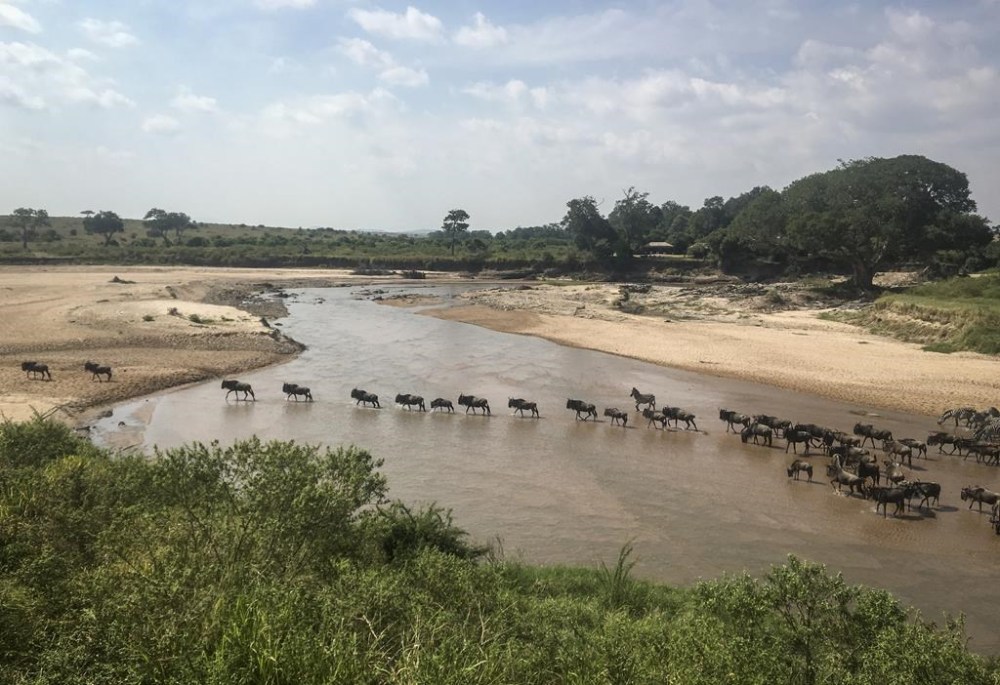
FILE - The annual migration of wildebeest from the Serengeti National park in Tanzania to the Maasai Mara national reserve in Kenya is seen from a drone in the Maasai Mara, July 22, 2020. Africa's national parks, home to thousands of wildlife species are increasingly threatened by below-average rainfall and new infrastructure projects, stressing habitats and the species that rely on them. (AP Photo/Joe Mwihia, File)

“Africa is depicted as a place of wildlife without people living there and this narrative needs to change,” he said.

“If we don’t pay attention to communities’ social needs, health, education and where they are getting water, we miss the key thing,” said John Kasaona the executive director of the Integrated Rural Development in Nature Conservation in Namibia.

The effects of worsening weather conditions in national parks due to climate change should also not be ignored, experts said.

A recent study conducted in Kruger National Park linked extreme weather events to the loss of plants and animals, unable cope with the drastic conditions and lack of water due to longer dry spells and hotter temperatures.

Drought has seriously threatened species like rhinos, elephants and lions as it reduces the amount of food available, said Philip Wandera, a former warden with the Kenya Wildlife Service who’s now range management lecturer at the Catholic University of East Africa.

More intensive management of parks and removing fences that prevent species from migrating to less drought-prone areas are important first steps to protecting wildlife, Wandera said.

He added that financial help to “support communities in and around national parks” would also help preserve them.

___

Associated Press climate and environmental coverage receives support from several private foundations. See more about AP’s climate initiative here. The AP is solely responsible for all content.

Report Error Submit a Tip

More Stories

CMU instructor uses camper audio studio to capture stories of human connection in a time of isolation, alienation

Josiah Neufeld 7 minute read Preview

CMU instructor uses camper audio studio to capture stories of human connection in a time of isolation, alienation

Josiah Neufeld 7 minute read 6:00 AM CDT

GRUNTHAL — Last Sunday, David Balzer parked his vintage 1978 Triple E Surfside camper trailer on a church lot in town and, like an itinerant priest with a mobile confessional, prepared to hear people’s stories.

It was a crisp sunny morning. Inside the trailer were a pair of yellow mugs that matched the trailer’s egg yolk trim. On a table were two microphones.

Outside the trailer stood a sandwich board with an invitation: “Step in.”

Balzer doesn’t actually hear confessions, but he does perform what some might consider a priestly duty: helping people share their stories.

Read
6:00 AM CDT

Today’s horoscope

Georgia Nicols 4 minute read Preview

Today’s horoscope

Georgia Nicols 4 minute read Yesterday at 2:00 AM CDT

MOON ALERT: There are no restrictions to shopping or important decisions today. The moon is in Capricorn.

ARIES (March 21-April 19)

Be aware that people notice you more than usual. In fact, some people will even know personal details about your private life. Consider this in case you have to do some damage control. This is a relaxed day and a chatty one.

TAURUS (April 20-May 20)

Read
Yesterday at 2:00 AM CDT

Thief steals almost $70K in Pokémon cards from flea-market owner

Scott Billeck 5 minute read Preview

Thief steals almost $70K in Pokémon cards from flea-market owner

Scott Billeck 5 minute read 2:11 PM CDT

The owner of a local flea market was left feeling disrespected and in disbelief after roughly $70,000 worth of Pokémon products were stolen over the weekend, but is vowing to rebuild.

Kenan Hyseni, who has owned and operated the popular Mulvey Market in South Osborne since 2022, said high-end sealed products and valuable individual cards from the massively popular collectible card game were stolen sometime between the market’s closing Friday night and midnight.

Hyseni believes someone hid inside the market until employees had left for the night, loaded up the merchandise and fled.

“The night finished, we locked up, did the usual thing, and then we went home and just before midnight, I got a call from the landlord and they said the alarm had been tripped, and that someone was seen leaving the market with bags,” Hyseni said.

Read
2:11 PM CDT

Jets up against the clock

Mike McIntyre 8 minute read Preview

Jets up against the clock

Mike McIntyre 8 minute read Yesterday at 7:03 PM CDT

Time has often been on the side of the Winnipeg Jets, with Cole Perfetti’s famous “Manitoba Miracle” buzzer-beater serving as Exhibit A.

But that won’t necessarily be the case this coming season, when the clock threatens to become a stubborn and, at times, confusing opponent.

Premier Wab Kinew’s decision to adopt permanent daylight time will have a significant impact on the hockey club, both as hosts and visitors, head coach Scott Arniel told the Free Press on Sunday.

Athletes are creatures of habit, and their regular routines are going to be challenged during the period from Nov. 1 to March 14, which covers the majority of the 84-game campaign.

Read
Yesterday at 7:03 PM CDT

Leila Avenue closed following serious two-vehicle crash

1 minute read Updated: Yesterday at 3:36 PM CDT

Leila Avenue was closed Sunday morning after a serious car crash.

Winnipeg Police Service spokesman Const. Pat Saydak confirmed the crash involved two vehicles near Leila and McGregor Street. He could not provide any more details on the crash, or say whether there were any injuries.

Westbound Leila from Powers Street to McGregor , and McGregor from Partridge Avenue to Templeton Avenue were closed Sunday morning.

The crash is being investigated.

AC/DC fans power up with pre-show pop-up

By Sheldon Birnie 3 minute read Preview

AC/DC fans power up with pre-show pop-up

By Sheldon Birnie 3 minute read Friday, Sep. 18, 2026

Those getting ready to rock on Sunday night at Princess Auto Stadium, can prime their engines at AC/DC’s PWR/UP Pop-Up this weekend.

Fans lined up all the way down Fort Street south of the Pyramid Cabaret for a special preview event on Friday night.

“We’re so excited,” said Marcella Ceron shortly after getting into the Pyramid. Ceron and her husband were hoping to win tickets to Sunday’s concert, one of a number of promotions running throughout the pop-up’s tenure at the downtown bar. “We were in line since 5 o’clock.”

According to organizers, the venues across Canada have been handpicked – including the Commodore Ballroom in Vancouver and Foufounes Électriques in Montreal, among others — owing to their reputations as “places where fans already gather and music culture lives.”

Read
Friday, Sep. 18, 2026