California tribes will manage, protect state coastal areas

Advertisement

Advertise with us

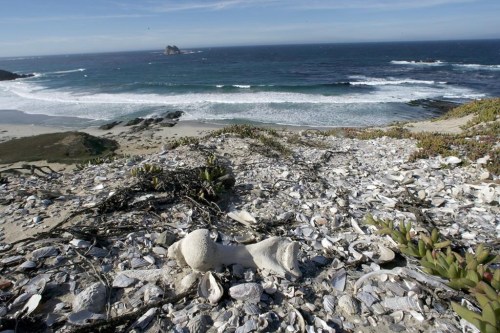
SACRAMENTO, Calif. (AP) — Five California tribes will reclaim their right to manage coastal land significant to their history under a first-in-the-nation program backed with $3.6 million in state money.

Read this article for free:


or

Already have an account? Log in here »

To continue reading, please subscribe:

Subscribe and receive a limited-edition Free Press branded hat or tote.

Digital Subscription

One year of digital access for only $205*

  • Enjoy unlimited reading on winnipegfreepress.com
  • Read the E-Edition, our digital replica newspaper
  • Access News Break, our award-winning app
  • Play interactive puzzles

*First annual payment billed as $205.00 + GST for one year. This annual subscription will automatically renew at $233.00 + GST every 52 weeks (10% off the regular annual price of $259.35). Offer available to new and qualified returning subscribers only. Cancel any time.

To continue reading, please subscribe:

Add Free Press access to your Brandon Sun subscription for only an additional

$1 for the first 4 weeks*

  • Enjoy unlimited reading on winnipegfreepress.com
  • Read the E-Edition, our digital replica newspaper
  • Access News Break, our award-winning app
  • Play interactive puzzles
Start now

*Your next Brandon Sun subscription payment will increase by $1.00 and you will be charged $17.95 plus GST for four weeks. After four weeks, your payment will increase to $24.95 plus GST every four weeks.

Hey there, time traveller!
This article was published 09/10/2022 (1442 days ago), so information in it may no longer be current.

SACRAMENTO, Calif. (AP) — Five California tribes will reclaim their right to manage coastal land significant to their history under a first-in-the-nation program backed with $3.6 million in state money.

The tribes will rely on their traditional knowledge to protect more than 200 miles of coastline in the state, as climate change and human activity have impacted the vast area.

Some of the tribes’ work will include monitoring salmon after the removal of a century-old defunct dam in the redwood forests in the Santa Cruz mountains and testing for toxins in shellfish, while also educating future generations on traditional practices.
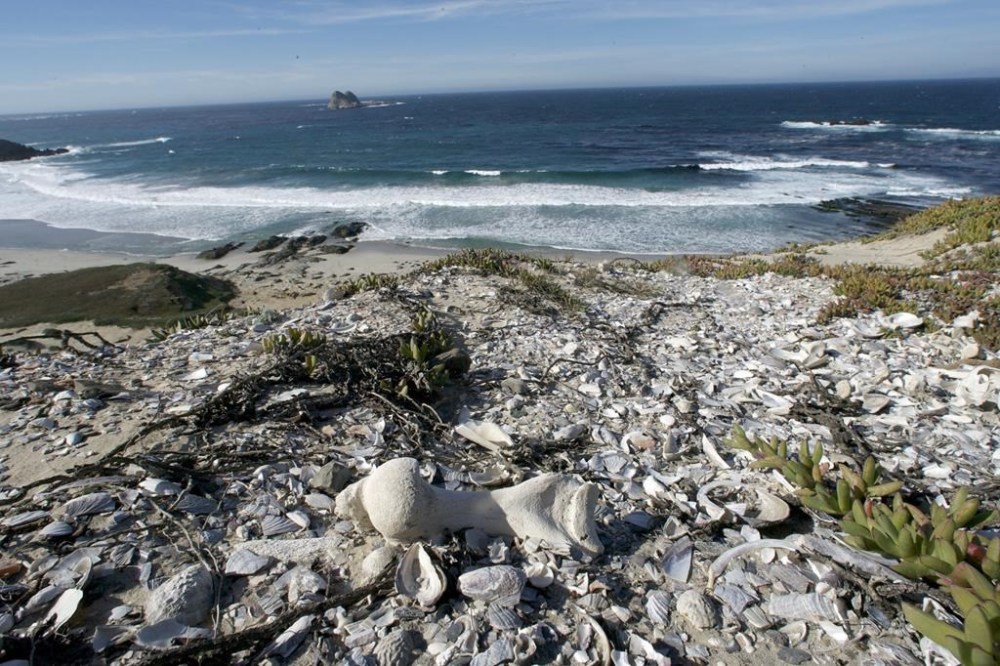
FILE - Remnants of discarded abalone, mussel and other shellfish that hold clues to an ancient human diet lie on a sand dune in San Miguel Island, Calif., on Tuesday, Jan. 6, 2009. The California Ocean Protection Council voted Thursday, Oct. 6, 2022, to provide $3.6 million to support the Tribal Marine Stewards Network, a collaboration between five coastal tribes and state government to protect marine ecosystems. (AP Photo/Damian Dovarganes, File)

The partnership comes three years after Democratic Gov. Gavin Newsom apologized for the state’s previous violence and mistreatment against Indigenous peoples. Newsom said the state should allow for more co-management of tribes’ ancestral lands.

Megan Rocha, who’s on the Tribal Marine Stewards Network’s leadership council, said these coastal areas hold cultural significance for various tribes, making the partnership monumental.

“It’s focused on tribal sovereignty,” she said. “So how do we build a network where it provides for collaboration, but again, it allows each tribe to do it in the way that they see fit and respects each tribe’s sovereignty.”

The network plans to create agreements between tribes and with state government for managing these areas.

Rocha is also executive director of Resighini Rancheria, a tribe of Yurok people that is part of the network.

She worked with other tribal leaders, members of nonprofit groups and the state’s Ocean Protection Council, which coordinates activities of ocean-related state agencies, to develop a pilot program for the network that was years in the making.

In 2020, Ocean Protection Council staff recommended the agency set aside $1 million toward the pilot program to support the network in conducting research, reaching out to tribes and creating plans for the future.

The council voted Thursday to provide an additional $3.6 million which will support the groups in their continued efforts to monitor coastal and ocean resources, offer educational opportunities to tribal members, and pass along cultural knowledge to younger generations.

Taking inspiration from similar partnerships in Australia and Canada, the groups said they hope other networks bloom across the United States.

Leaders plan to expand the network to include more tribes throughout the state, Rocha said. California has 109 federally-recognized tribes, the second highest number in the country behind Alaska. But there are also many tribes that aren’t federally recognized.

Multiple tribal leaders referenced Newsom’s public apology in explaining part of why the network’s public launch is happening now. In recent years, U.S. officials have committed to collaborating with tribes on managing public lands.

Creating a network of tribes to steward areas with the backing of state government money and nonprofit support breaks new ground in the United States, said Kaitilin Gaffney of the nonprofit Resources Legacy Fund.

“I think we’re going to look back in 20 years and be like, ‘Oh, we were there. That was where it was started. Look what’s happened since,’” she said.

Some tribes in California and around the nation have had their rights to ancestral lands restored under the Land Back movement.

About 60 attendees from nonprofit groups, tribal nations and the Ocean Protection Council gathered in Sacramento to commemorate the network’s public launch last week. Leaders thanked experts, advocates, tribal leaders and public officials who made the launch possible.

Valentin Lopez, chair of the Amah Mutsun Tribal Band, which is part of the network, said climate change has forced governments with a history of exploiting Indigenous lands to acknowledge tribes’ deep-rooted knowledge of protecting ecosystems.

“We’re in the crisis mode,” he said.

___

Sophie Austin is a corps member for the Associated Press/Report for America Statehouse News Initiative. Report for America is a nonprofit national service program that places journalists in local newsrooms to report on undercovered issues. Follow her on Twitter.


Report Error Submit a Tip

More Stories

Today’s horoscope

Georgia Nicols 4 minute read Preview

Today’s horoscope

Georgia Nicols 4 minute read 2:01 AM CDT

MOON ALERT: After 12:15 a.m., there are no restrictions to shopping or important decisions today. The moon is in Capricorn.

ARIES (March 21-April 19)

This is a tricky day. Don’t be too ambitious. It’s totally OK to kick back and relax. But be aware that communications with parents and authority figures might be confused, vague or subject to misunderstandings. Nevertheless, romance is sweet and cosy!

TAURUS (April 20-May 20)

Read
2:01 AM CDT

Manitoba abandoning spring, fall clock changes

Carol Sanders 8 minute read Preview

Manitoba abandoning spring, fall clock changes

Carol Sanders 8 minute read Updated: Yesterday at 8:48 AM CDT

Time’s up for the time change in Manitoba.

Manitobans won’t be setting their clocks back an hour in November. The province has decided to permanently stay on daylight time after surveying residents on the twice annual clock adjustment.

“We heard from Manitobans loud and clear — no more changing the clocks in Manitoba,” Premier Wab Kinew said in a news release Thursday.

Most of the 72,000 votes submitted in an online EngageMB survey — 92 per cent — said they would like to see the practice end. The survey asked if they preferred earlier sunrises in winter with standard time or the later sunsets in summer with daylight time. More than half of survey participants (58 per cent) indicated a preference to stay on permanent daylight time; 34 per cent voted to eliminate the time change but stay on standard time.

Read
Updated: Yesterday at 8:48 AM CDT

Desperate Poilievre wants Canadians to believe the sky is falling when it’s just cloudy outside

Tom Brodbeck 5 minute read Preview

Desperate Poilievre wants Canadians to believe the sky is falling when it’s just cloudy outside

Tom Brodbeck 5 minute read Yesterday at 12:47 PM CDT

Pierre Poilievre has a problem.

Canadians just don’t seem to be paying much attention to him anymore.

So, naturally, the Conservative Opposition leader has decided to turn up the volume.

At a recent party caucus retreat in Penticton, B.C., Poilievre delivered the familiar message: Canada is in trouble, Canadians are hurting and the Liberal government is making everything worse.

Read
Yesterday at 12:47 PM CDT

Hellebuyck standoff caused by… Nathan MacKinnon?

Mike McIntyre 6 minute read Preview

Hellebuyck standoff caused by… Nathan MacKinnon?

Mike McIntyre 6 minute read Yesterday at 6:34 PM CDT

Looking for someone to blame in the Connor Hellebuyck fiasco and cast as public enemy No. 1? How about long-time Winnipeg Jets nemesis Nathan MacKinnon?

Allow us to explain as we fire up the time machine and head back to February in Italy.

Oh, what could have been if MacKinnon had been able to score on what appeared to be an open net late in the third period of the men’s gold medal game with Hellebuyck down and seemingly out of position.

Instead, the star forward fired wide, keeping the score deadlocked at 1-1 as the clock ticked down on regulation.

Read
Yesterday at 6:34 PM CDT

California tribes will manage, protect state coastal areas

Sophie Austin, The Associated Press 4 minute read Preview

California tribes will manage, protect state coastal areas

Sophie Austin, The Associated Press 4 minute read Sunday, Oct. 9, 2022

SACRAMENTO, Calif. (AP) — Five California tribes will reclaim their right to manage coastal land significant to their history under a first-in-the-nation program backed with $3.6 million in state money.

The tribes will rely on their traditional knowledge to protect more than 200 miles of coastline in the state, as climate change and human activity have impacted the vast area.

Some of the tribes' work will include monitoring salmon after the removal of a century-old defunct dam in the redwood forests in the Santa Cruz mountains and testing for toxins in shellfish, while also educating future generations on traditional practices.

The partnership comes three years after Democratic Gov. Gavin Newsom apologized for the state’s previous violence and mistreatment against Indigenous peoples. Newsom said the state should allow for more co-management of tribes' ancestral lands.

Read
Sunday, Oct. 9, 2022

Siloam Mission, WFPS discussing on-site paramedic to reduce staggering number of emergency calls

Scott Billeck 4 minute read Preview

Siloam Mission, WFPS discussing on-site paramedic to reduce staggering number of emergency calls

Scott Billeck 4 minute read Yesterday at 2:00 AM CDT

Winnipeg’s fire-paramedic service and its largest homeless-serving organization are discussing what it would look like to station at least one paramedic at Siloam Mission, as emergency calls to the downtown facility surge.

The ongoing discussions come as Winnipeg Fire Paramedic Service crews were dispatched 1,771 times during the first eight months of the year to the two adjacent Siloam properties at 303 Stanley St. and 300 Princess St.

WFPS said most of the calls were related to overdoses or other consequences of substance use, with the total nearly double the 854 calls recorded over the same period last year. By comparison, there were 831 calls during the same span in 2024, and 591 in 2023.

“The number of emergency calls isn’t sustainable for us as a service, but it’s certainly not sustainable for them as an agency trying to provide services,” WFPS chief Ryan Sneath told the Free Press. “And they recognize that they’re impacting emergency services, not them specifically, but the site in a significant way.”

Read
Yesterday at 2:00 AM CDT