‘Gone wrong’: Doubts on carbon-credit program in Peru forest
Advertisement
Read this article for free:
or
Already have an account? Log in here »
To continue reading, please subscribe:

Digital Subscription
One year of digital access for only $205*
- Enjoy unlimited reading on winnipegfreepress.com
- Read the E-Edition, our digital replica newspaper
- Access News Break, our award-winning app
- Play interactive puzzles
*First annual payment billed as $205.00 + GST for one year. This annual subscription will automatically renew at $233.00 + GST every 52 weeks (10% off the regular annual price of $259.35). Offer available to new and qualified returning subscribers only. Cancel any time.
To continue reading, please subscribe:
Add Free Press access to your Brandon Sun subscription for only an additional
$1 for the first 4 weeks*
- Enjoy unlimited reading on winnipegfreepress.com
- Read the E-Edition, our digital replica newspaper
- Access News Break, our award-winning app
- Play interactive puzzles
*Your next Brandon Sun subscription payment will increase by $1.00 and you will be charged $17.95 plus GST for four weeks. After four weeks, your payment will increase to $24.95 plus GST every four weeks.
Read unlimited articles for free today:
or
Already have an account? Log in here »
Hey there, time traveller!
This article was published 30/03/2023 (1264 days ago), so information in it may no longer be current.
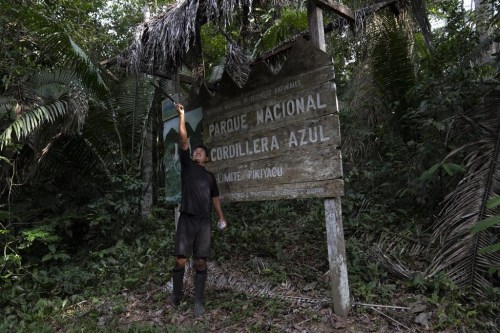
SAN MARTÍN, Peru (AP) — The Cordillera Azul National Park on the eastern flank of the Peruvian Andes takes in a sweep of Amazon rainforest, mountains and waterfalls in a territory about the size of Connecticut, so precious that tens of millions of dollars in carbon credits have been sold in a program that supporters said would protect its trees.
But an analysis by independent experts and reporting by The Associated Press raises doubts about whether the project has delivered on its promise to counter-balance emissions by oil companies such as Shell, TotalEnergies and others. And the tree loss has more than doubled, according to satellite analysis.
Experts say the Cordillera Azul project was flawed from the beginning, with far too many carbon credits generated and exaggerated benefits that allowed the nonprofit running the park for the Peruvian government to make more money — even as the tree canopy shrank.
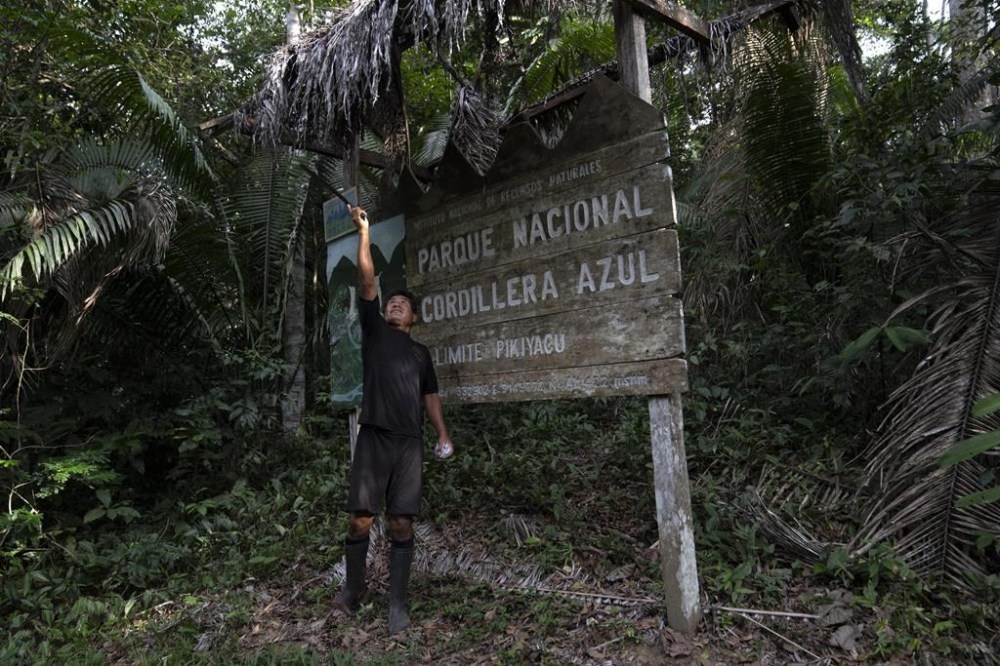
Defenders of the project dispute that benefits were inflated. They say the tree loss was virtually all from natural causes, even as satellite analysis shows it’s concentrated on the western and northern borders of the park near large population centers and largely along rivers. These are places far easier to reach and illegally log than elsewhere in the mostly primordial landscape.
“It is clear something has gone wrong in this project,” said Edward Mitchard, an expert in deforestation and carbon credits at the University of Edinburgh School of Geosciences.
Skeptics of forest protection carbon credit programs note the market is largely self-regulated, and it’s easy for participants to exaggerate the benefits of a given project. But done correctly, they are supposed to allow a company to break even on carbon emissions by preventing them in one place — such as a rainforest — while the company emits a comparable amount elsewhere. And demand for the projects is growing as companies come under pressure to be carbon-neutral, with one database showing the number of programs has nearly doubled in the past two years.
Peru’s forests have long come under frequent pressure from people migrating into new areas to clear land for farming. In Cordillera Azul, the carbon credit program raises money that pays for forest patrols and education of local communities to stop deforestation, which releases huge amounts of carbon dioxide that contributes to climate change. Documents show more than 28 million credits have been sold for the Cordillera Azul project, enough to offset 28 million tons of carbon dioxide — and raising millions of dollars in a process that Indigenous Kichwa tribes have complained did not recognize their ancestral claim to the land.
Founding documents say the project, launched in 2008 and among the world’s largest such ventures, aimed to prevent “all deforestation” in the park.
But Mitchard’s company, Space Intelligence, found tree canopy loss jumped from an average of 262 hectares (650 acres) per year in the five years before the project launched to an average of 572 hectares (1,400 acres) per year from 2009 to 2021, the last year for which data is available. Space Intelligence is a for-profit company that undertakes satellite mapping that is used to verify carbon credits.
Some of the tree loss in the park can be seen in satellite images taken in 2010 and 2019 and provided to AP by Planet, a company that makes such images for governments, businesses and researchers.
CIMA, the Spanish acronym for the independent non-profit set up to run the park, said natural phenomena such as landslides caused the tree loss, not logging, farming or mining.
Inspection of satellite data does show many landslides, but deforestation is a major cause of landslides because tree roots help hold steep slopes in place. Academic modeling has found landslides happen up to 13 times more often in deforested areas. It’s impossible to know what caused the Cordillera Azul landslides without site inspections, but forest loss within 1 kilometer (0.6 mile) of a park boundary or rivers — the most accessible and logging-vulnerable areas of the park — was about double that of the rest of the park, Space Intelligence found. More than a third of all the tree loss mapped in the gigantic park was in these narrow bands of territory.
That “does suggest that there has been human disturbance of the forest, making these landslides more likely,” Mitchard said, though he noted that natural causes could not be ruled out.
Mitchard also said data showing that annual tree canopy loss inside the park rose at about the same rate as tree loss outside the park after 2008 suggested the carbon credit project afforded little protection to Cordillera Azul. The data implied “the same human pressures” operating inside and outside the park, he said.
Forest carbon credits each represent a ton of CO2 kept from entering the atmosphere by protecting trees. They are supposed to be minted only if a forest is at risk — and the Cordillera Azul was legally protected by presidential decree in 2001. But official documents show that CIMA pushed for the program, arguing that it was necessary to pay for enforcement and education because the law alone wouldn’t have saved its forests from slash and burn agriculture, logging or mining. They also cite the program as a more reliable source of funding for the park than depending on donations.
“Existence of a national park title in a country like Peru is not sufficient to halt deforestation,” Gonzalo Varillas, executive director of CIMA, said by email in response to questions from AP. He also said the sale of the credits brought in enough money to cover 90% of the park’s operating costs, making up for difficulty obtaining international donations. Peru’s government began letting nonprofits run some parks on the theory that they might better be able to attract foreign funding.
Steve Zwick, a spokesman for the nonprofit Verra, a certifier for forest carbon projects including this one, defended the program as a “lifeline” for the park. Without income from the carbon credits, CIMA would have been dependent on unreliable funders, he said. Carbon savings were thus “crystal clear.”
But experts said the project inflated projected benefits from the start.
In 2008, CIMA said without the carbon credit program, almost 29 million tons of CO2 would be released from illegal deforestation in the park over the next decade. To calculate those “prevented emissions,” under industry standard guidelines, CIMA compared the project to a reference area to predict what would happen without its protection.
Simon Counsell, who has been assessing forest carbon credit projects for nearly 15 years, analyzed the areas CIMA selected for Friends of the Earth Netherlands. He found that CIMA’s reference area artificially boosted the figure by oversampling lowland valleys and floodplains far more attractive to farmers — and thus vulnerable to logging — than the park’s more rugged terrain.
The bigger the figure for prevented emissions, the more credits could be sold — even as the supposed benefits were overstated, Counsell found.
Counsell said CIMA’s numbers were also distorted by questionable estimates of population growth in the reference area — another data point used to estimate prevented emissions, since more people typically means more forest destruction.
For example, in the district of Pampa Hermosa, CIMA used estimates that population would grow by more than 700% in the decade following the program’s launch. But the park’s own figures showed population had grown on average by only 2.2% per year between 1993 and 2002.
Compensate, a company that assesses and sells carbon credits, rejected Cordillera Azul for its portfolio in 2020. Its evaluation, shared with AP, also flagged both the population growth and deforestation estimates. It described the latter as “one way to inflate” the program’s prevented emissions.
Will Lock, an expert in the voluntary carbon market and Peruvian Amazon conservation at the School of Global Studies in the University of Sussex, said predictions employed a “heavily exaggerated, worst-case scenario approach” that resulted in a “worrying tendency to overemphasize threats” and maximize claims of carbon saved.
Zwick, from Verra, said the reference region was chosen by peer-reviewed processes, the best then available, and certain areas were excluded. He said people can and do farm on steep slopes, and topography was factored into the assessment. Questions raised at the time by independent auditors were addressed, he said, while population data was the best available then.
Verra has recently said it will bring in a new rainforest carbon credit methodology by 2025.
The project was carried out to the “highest quality,” said CIMA’s Varillas. Some of the observed deforestation was from natural causes, he argued, and population estimates were based on robust modeling.
The project’s biggest buyers, Shell and TotalEnergies, defended their participation.
A TotalEnergies spokesman said by email that comparing tree loss before and after the project gave the misleading impression it had failed, because deforestation cannot be halted instantaneously. The company only invests in carbon projects meeting “international standards and methodologies of the highest quality,” said the spokesman, who declined to allow his name to be used.
A Shell spokesman also cited protection of the park as a benefit of its credit purchases, and said “catastrophic deforestation” would have occurred without the program. But the spokesman, who also declined to allow his name to be used, said Shell will conduct an additional review before further purchases.
___
Follow Ed Davey on Twitter: https://twitter.com/EdDavey1
___
Associated Press climate and environmental coverage receives support from several private foundations. See more about AP’s climate initiative here. The AP is solely responsible for all content.