Weeks before EU and Latin American joint summit, trade deal remains elusive
Advertisement
Read this article for free:
or
Already have an account? Log in here »
To continue reading, please subscribe:

Digital Subscription
One year of digital access for only $205*
- Enjoy unlimited reading on winnipegfreepress.com
- Read the E-Edition, our digital replica newspaper
- Access News Break, our award-winning app
- Play interactive puzzles
*First annual payment billed as $205.00 + GST for one year. This annual subscription will automatically renew at $233.00 + GST every 52 weeks (10% off the regular annual price of $259.35). Offer available to new and qualified returning subscribers only. Cancel any time.
To continue reading, please subscribe:
Add Free Press access to your Brandon Sun subscription for only an additional
$1 for the first 4 weeks*
- Enjoy unlimited reading on winnipegfreepress.com
- Read the E-Edition, our digital replica newspaper
- Access News Break, our award-winning app
- Play interactive puzzles
*Your next Brandon Sun subscription payment will increase by $1.00 and you will be charged $17.95 plus GST for four weeks. After four weeks, your payment will increase to $24.95 plus GST every four weeks.
Read unlimited articles for free today:
or
Already have an account? Log in here »
Hey there, time traveller!
This article was published 25/05/2023 (1230 days ago), so information in it may no longer be current.
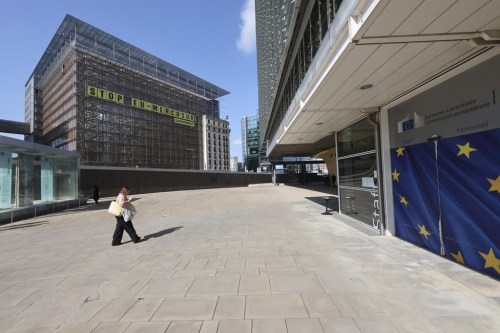
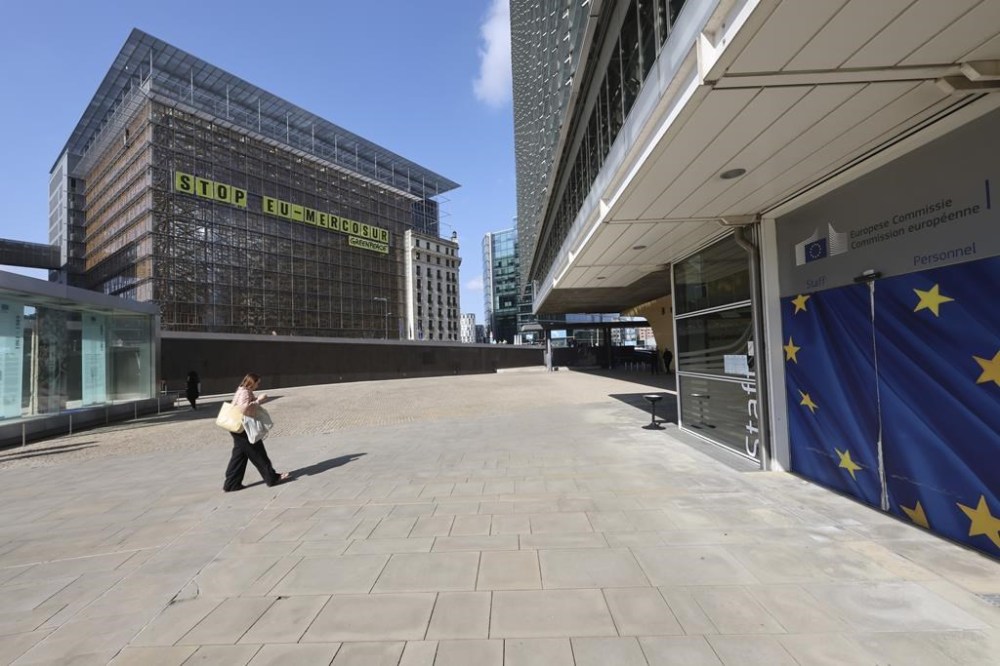
BRUSSELS (AP) — Only weeks before a joint summit between the European Union and Latin American nations was supposed to seal an oft-delayed trade deal, the writing on the wall of EU headquarters Thursday made it clear why it still might not happen.
“STOP EU-MERCOSUR,” the environmental group Greenpeace had put in giant letters on the building where the 27 EU trade ministers were meeting. They were assessing the last differences ahead of clinching what would amount to a massive cooperation deal for both the EU and the group of Brazil, Argentina, Uruguay and Paraguay.
And if objections from environmentalists were hung outside the building, it was obvious that among ministers, despite almost a quarter-century of talks and a four-year “agreement in principle,” a final sign-off was still complicated.
Trying to put a positive spin on it, EU Trade Commissioner Valdis Dombrovskis said that the July 18-19 summit would be “a very important milestone for those negotiations,” stopping short of saying there could be a deal.
The remaining demands were clearly stated.
“France has set extremely clear conditions. It must be noted that, at this stage, the boxes are not ticked,” said French Trade Minister Olivier Becht said.
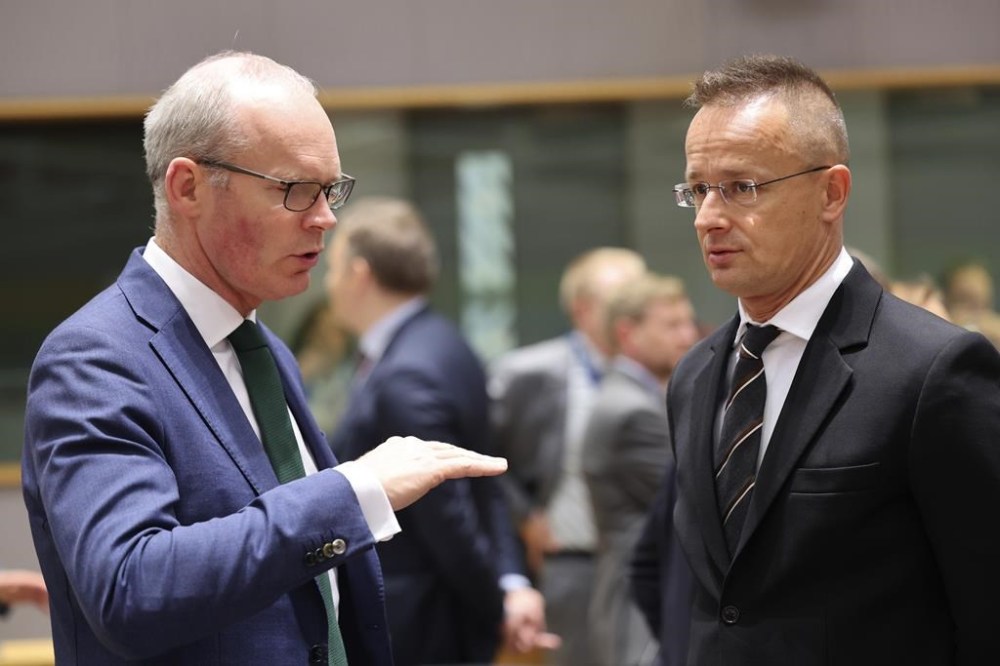
Like France, Ireland also has major farm interests to defend in the face of cheap South American imports. Its Trade Minister Simon Coveney was similarly non-committal that any deal could be agreed by the time of the summit.
The main challenge was, he said, “ensuring that there’s not significant trade disruption for our beef products which are being sold right across the European Union. Ireland is the largest beef exporter in the northern hemisphere.”
That, of course, was not the concern of Greenpeace, which says the proposed deal would lead to a sharp increase in the use of pesticides produced in the EU.
“We call for a complete stop of this toxic trade deal. If it was meant to be sustainable, it would have to be completely renegotiated,” said Lis Cunha, Greenpeace Trade campaigner.

“Like beef, like pesticides, like combustion engine cars — as long as these products are being boosted by the deal, it makes absolutely no sense,” said Cunha. “It is a bad deal. It’s a disaster for nature and climate.”
Only last month, Brazilian President Luiz Inácio Lula da Silva visited Spain, seeking to make progress on the deal.
If adopted, the agreement will mean the integration of a market of around 800 million people, about a fourth of the world’s gross domestic product and more than $100 billion in bilateral trade of goods and services. The deal would cut customs duties and ease access for agricultural exporters to the EU market, and for European manufacturers to Mercosur countries.
Both Brazil and Spain will hold the presidencies of their trade blocs by July and both want the deal. Within the EU, the election of Lula coming after the presidential term of Jair Bolsonaro has raised hopes. Bolsonaro defanged environmental authorities, encouraged illegal gold mining in Indigenous areas and oversaw a surge in deforestation to its fastest rate in two decades.
“The situation, we understand, has changed a lot on the other side of Mercosur and we have, for example, in Brazil, a government that is very involved and committed to defending the environment,” said Spain’s Trade Secretary Xiana Méndez Bertolo.