Three years too long a wait for Line 5 reroute, Indigenous band in Wisconsin says
Advertisement
Read this article for free:
or
Already have an account? Log in here »
To continue reading, please subscribe:

Digital Subscription
One year of digital access for only $205*
- Enjoy unlimited reading on winnipegfreepress.com
- Read the E-Edition, our digital replica newspaper
- Access News Break, our award-winning app
- Play interactive puzzles
*First annual payment billed as $205.00 + GST for one year. This annual subscription will automatically renew at $233.00 + GST every 52 weeks (10% off the regular annual price of $259.35). Offer available to new and qualified returning subscribers only. Cancel any time.
To continue reading, please subscribe:
Add Free Press access to your Brandon Sun subscription for only an additional
$1 for the first 4 weeks*
- Enjoy unlimited reading on winnipegfreepress.com
- Read the E-Edition, our digital replica newspaper
- Access News Break, our award-winning app
- Play interactive puzzles
*Your next Brandon Sun subscription payment will increase by $1.00 and you will be charged $17.95 plus GST for four weeks. After four weeks, your payment will increase to $24.95 plus GST every four weeks.
Read unlimited articles for free today:
or
Already have an account? Log in here »
Hey there, time traveller!
This article was published 21/06/2023 (1195 days ago), so information in it may no longer be current.
WASHINGTON – Three years is more than enough time for Line 5 to suffer a catastrophic rupture and far too long to make an Indigenous band in Wisconsin wait for the controversial cross-border pipeline to be rerouted, the band’s lawyers say.
And they further warn that the US$5.1-million profit-sharing penalty imposed on Calgary-based operator Enbridge Inc. will do little to discourage other resource companies from violating Indigenous sovereignty.
Those were the orders issued late last week by district court Judge William Conley, who has been presiding for nearly four years over the Line 5 dispute between Enbridge and the Bad River Band of the Lake Superior Chippewa.
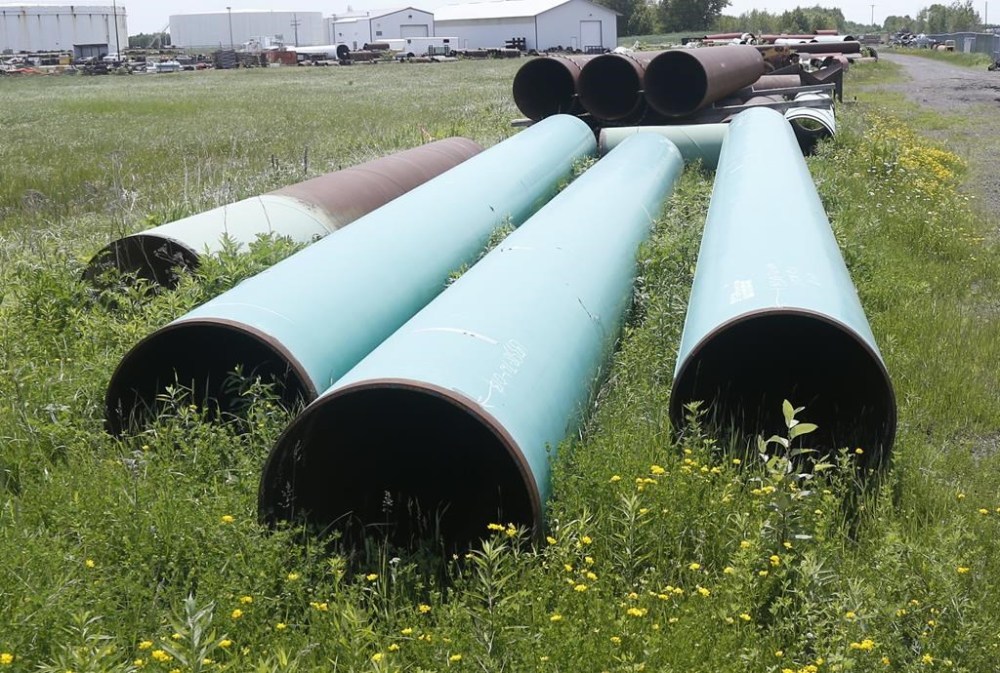
Conley had already concluded that Enbridge has been trespassing on the Bad River reservation ever since easements for the pipeline were allowed to lapse in 2013, despite what the company says was a deal in 1992 to keep operating.
In the opinion released Friday, he found that a rupture of Line 5 on Bad River territory would “unquestionably” meet the definition of a public nuisance under federal law.
But Conley has long been reluctant to order a shutdown, citing reams of expert opinion warning of dire economic consequences, lingering fuel shortages in the Midwest, Ontario and Quebec and a lasting scar on Canada-U.S. relations.
Not surprisingly, his middle ground has satisfied neither side.
“The three-year timeline leaves the Bad River vulnerable to catastrophe, and there is no warrant for allowing Enbridge’s trespass to continue for that long,” said band lawyer Erick Arnold.
The band’s fight has never been about money, he added, but Conley’s formula for compensating Bad River — a small percentage of the profits from Line 5 based on how much territory the pipeline occupies — will have an undesired effect.
“Such a small award for a decade-long trespass during which Enbridge earned over a billion dollars in net profits from Line 5 will not sufficiently deter trespassers like Enbridge,” Arnold said.
Instead, it will “create an incentive for corporations to violate the sovereignty of the band.”
Bad River band chairman Mike Wiggins said in a statement that “tribal sovereignty prevailed over corporate profits” in the decision, but warned that the tribe’s fight is still far from over.
“We are under no illusion that Enbridge will do the right thing,” Wiggins said. “We expect them to fight this order with all of their corporate might. This is just one step in protecting our people and water.”
Enbridge has already agreed to reroute the line, an essential energy conduit for much of the U.S. Midwest as well as Ontario and Quebec, but says “timely government permit approvals” will be needed to get it done on Conley’s timeline.
Enbridge’s lawyers continue to dispute the finding that the company is trespassing on Indigenous territory and intend to appeal the decision, and may also request a stay pending its outcome, said spokesperson Juli Kellner.
Any premature shutdown “would jeopardize the delivery of reliable and affordable energy to U.S. and Canadian families and businesses, disrupt local and regional economies, and violate the Transit Pipeline Treaty.”
Talks between the two countries have been ongoing for months under the terms of that treaty, a 1977 agreement that effectively prohibits either side from unilaterally closing off the flow of hydrocarbons.
In prior court documents, Enbridge has accused the band of being focused on a single outcome: the permanent closure of the pipeline on their territory “while refusing much less extreme alternative measures.”
The band argued in a hearing last month that several weeks of spring flooding along the Bad River washed away enough of the riverbank and supporting terrain to render a breach “imminent” and a shutdown order more than justified.
Enbridge countered by accusing the band of overstating the danger and insisting that its court-ordered contingency plan, which spells out the steps it would take if a rupture were indeed likely, would be a far more rational solution.
Conley’s order Friday included tweaks to that plan to establish a more “conservative” threshold for the conditions that would trigger it, such as lower water levels and flow rates on the river.
Enbridge has also been rebuffed repeatedly in its efforts to perform remedial work on the site, which would include using sandbags and trees to fortify the riverbanks — refusals that the band has defended as its sovereign right.
Heavy flooding that began in early April washed away significant portions of the riverbank where Line 5 intersects the Bad River, a meandering, 120-kilometre course that feeds Lake Superior and a complex network of ecologically delicate wetlands.
Line 5 meets the river just past a location the court has come to know as the “meander,” where the riverbed snakes back and forth multiple times, separated from itself only by several metres of forest and the pipeline itself.
The 70-year-old pipeline is a “ticking time bomb” that has leaked 33 times and spilled 1.1 million gallons of oil and natural gas liquids since 1968, said Elizabeth Ward, director of the Sierra Club’s Wisconsin chapter.
“Three years to decommission this pipeline is too long a time frame and leaves the tribe at risk of environmental disaster,” Ward said, accusing Enbridge of “carelessness” and “mismanagement.”
She urged U.S. President Joe Biden, who cancelled a permit to build the cross-border Keystone XL pipeline on his first day in the White House, to do the same in the case of Line 5.
“President Biden must put words into action and protect the Great Lakes from Enbridge’s damaged, dangerous, old pipeline by revoking the presidential permit.”

The neighbouring state of Michigan, led by Attorney General Dana Nessel, has also been waging war on Line 5, fearing a leak in the Straits of Mackinac, the ecologically delicate waterway where the pipeline crosses the Great Lakes.
The economic arguments against shutting down the pipeline, which carries 540,000 barrels of oil and natural gas liquids daily across Wisconsin and Michigan to refineries in Sarnia, Ont., are by now well-known.
Line 5’s defenders, which include the federal government, say a shutdown would cause major economic disruption across the Prairies and the U.S. Midwest, where it provides feedstock to refineries in Michigan, Ohio and Pennsylvania.
It also supplies key refining facilities in Ontario and Quebec, and is vital to the production of jet fuel for major airports on both sides of the Canada-U.S. border, including Detroit Metropolitan and Pearson International in Toronto.
This report by The Canadian Press was first published June 21, 2023.